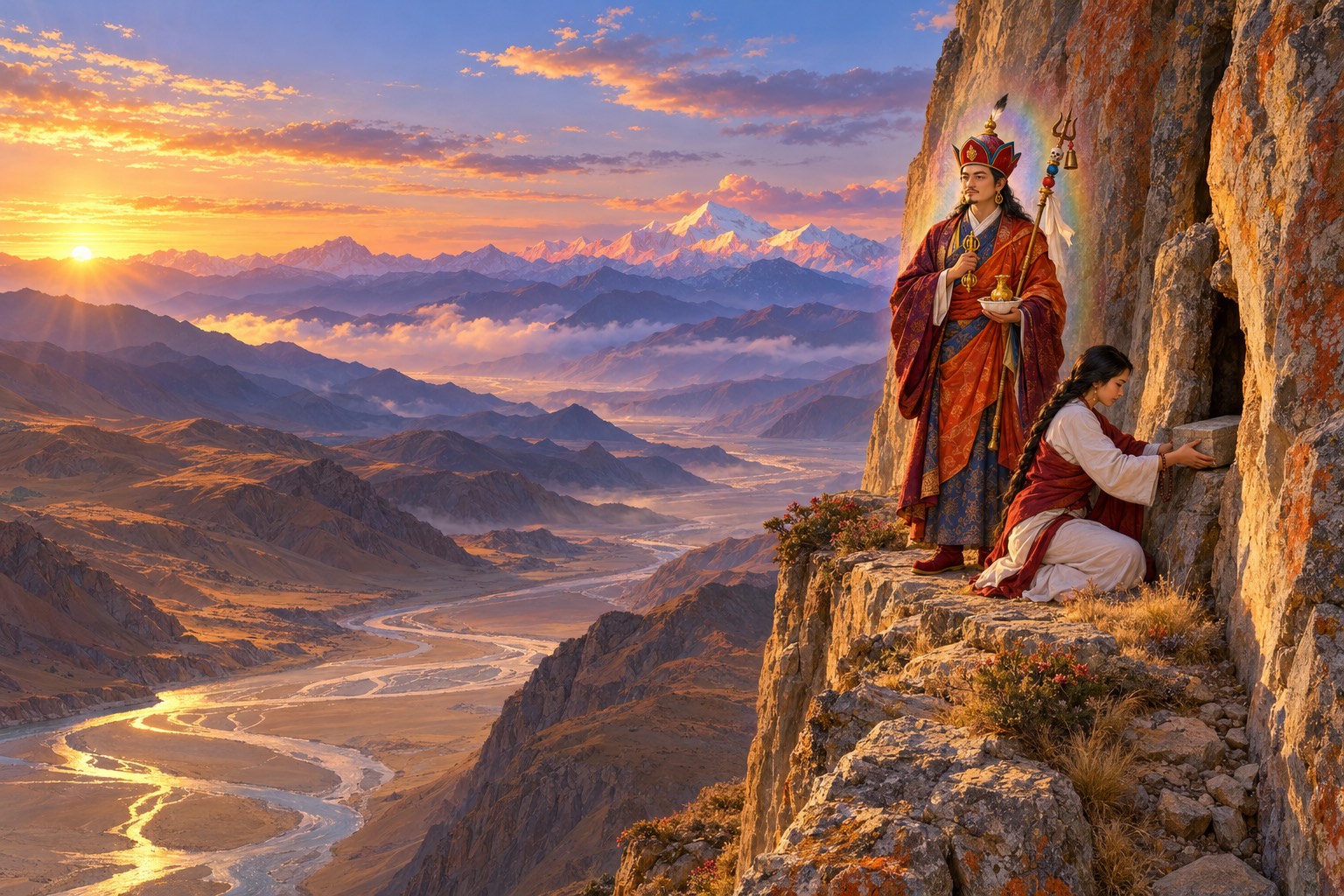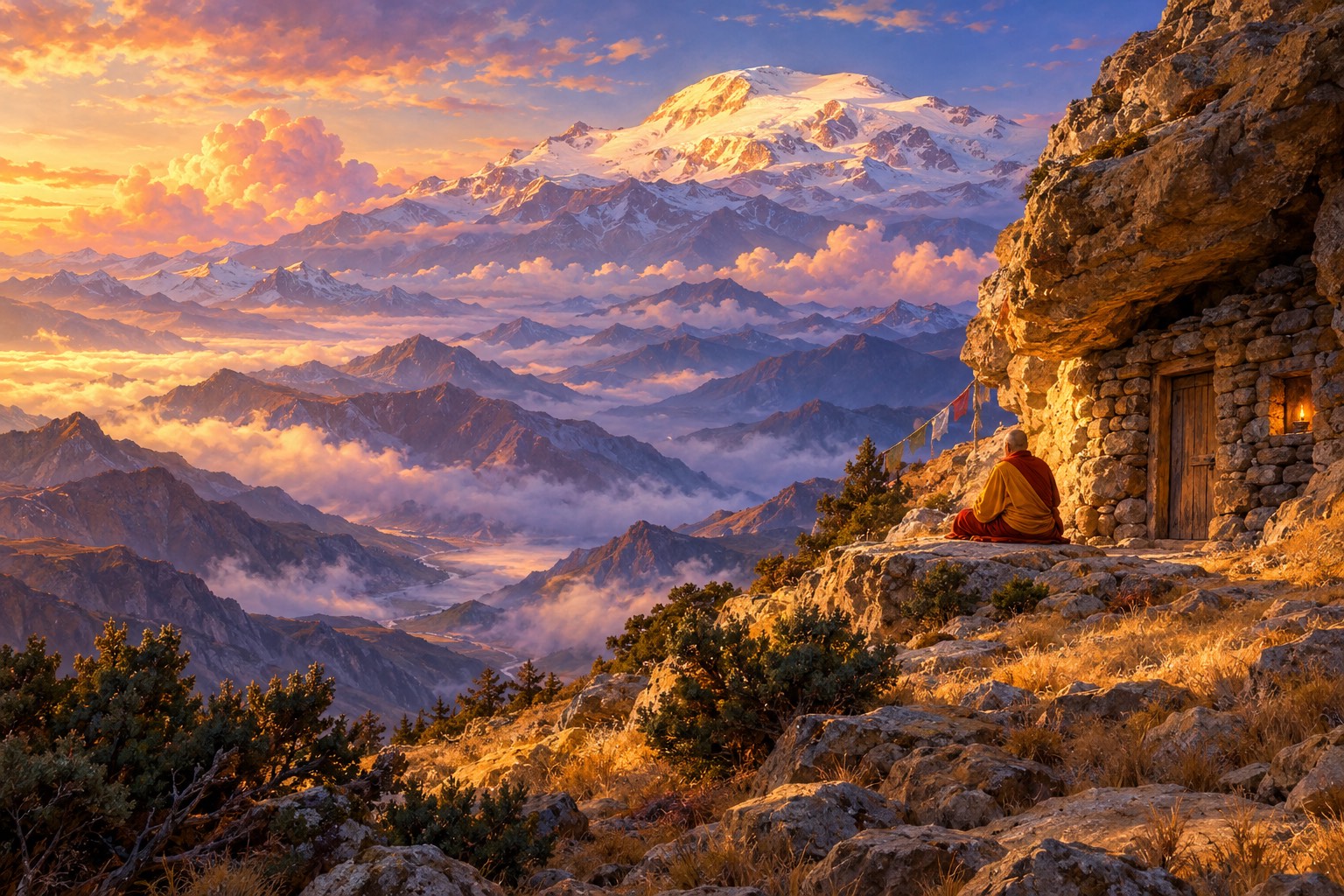
In central Bhutan the Tang river runs fast through a narrow gorge, and in one place it opens into a single dark, deep pool beneath a jutting rock. Pilgrims call it Membartsho, the Burning Lake. They come with small butter lamps and set them on the rocks and on the water.
They tell of a blacksmith who once jumped into that pool holding a lit lamp. His name was Pema Lingpa, and Bhutan still remembers him as its own great treasure revealer.
A boy of the Tang valley
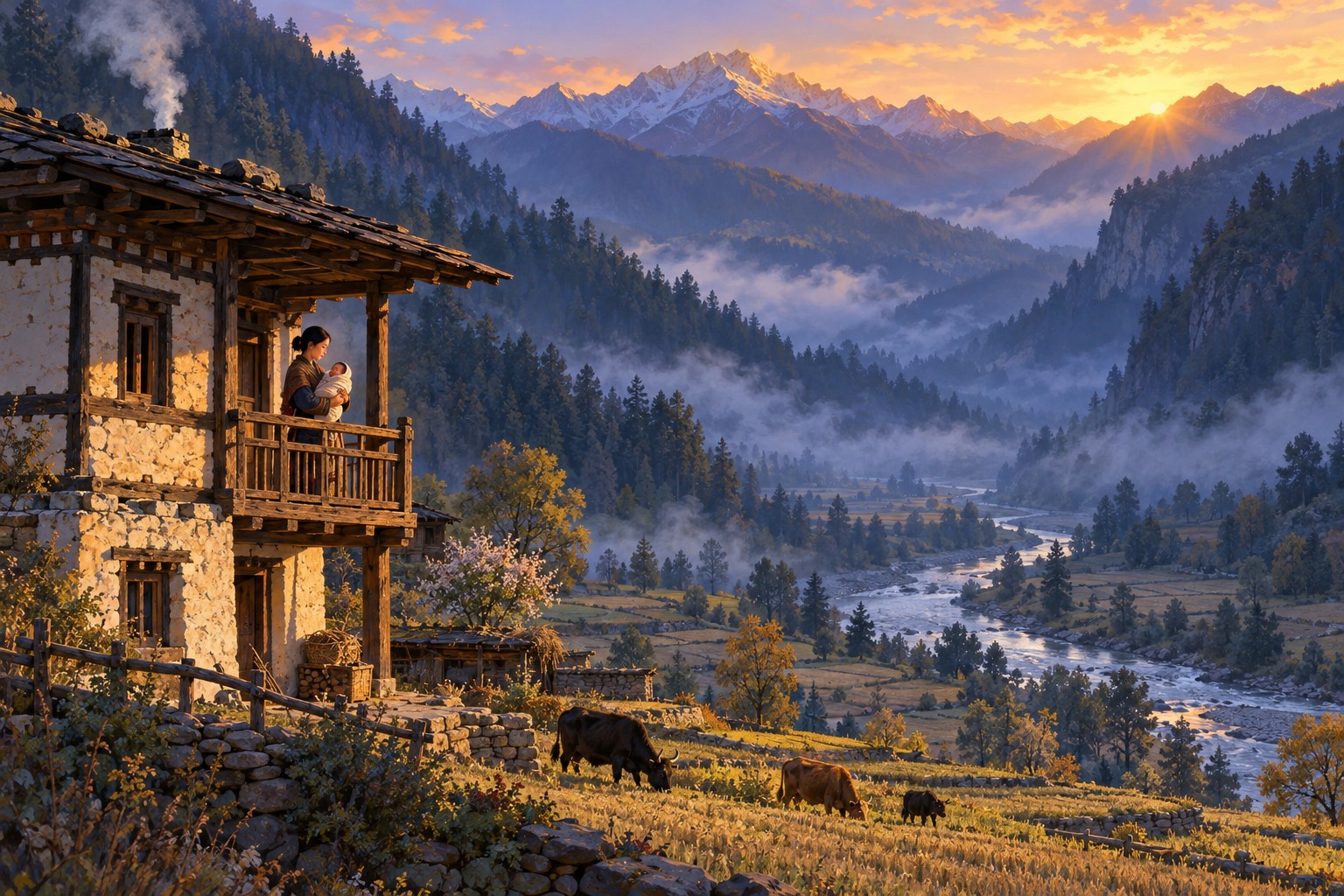
He was born in 1450 at Chel Baridrang in the Tang valley of Bumthang, a high, green region of central Bhutan. His father was Dondrub Zangpo and his mother Pema Dronma, and they named their son Dondrub Gyelpo.
While he was still small he was sent to live with his mother's father, Yonten Jangchub, who was a blacksmith. The grandfather took the boy to a lama named Choyingpa, son of an earlier treasure revealer, and this lama gave him the name he would be known by: Orgyen Pema Lingpa.
The blacksmith's apprentice
At nine he began to learn his grandfather's trade. The Treasury of Lives, an online encyclopedia of Himalayan lives, says that even as a boy he liked to play at being a lama, sitting on a pretend throne, giving pretend blessings and dancing sacred dances.
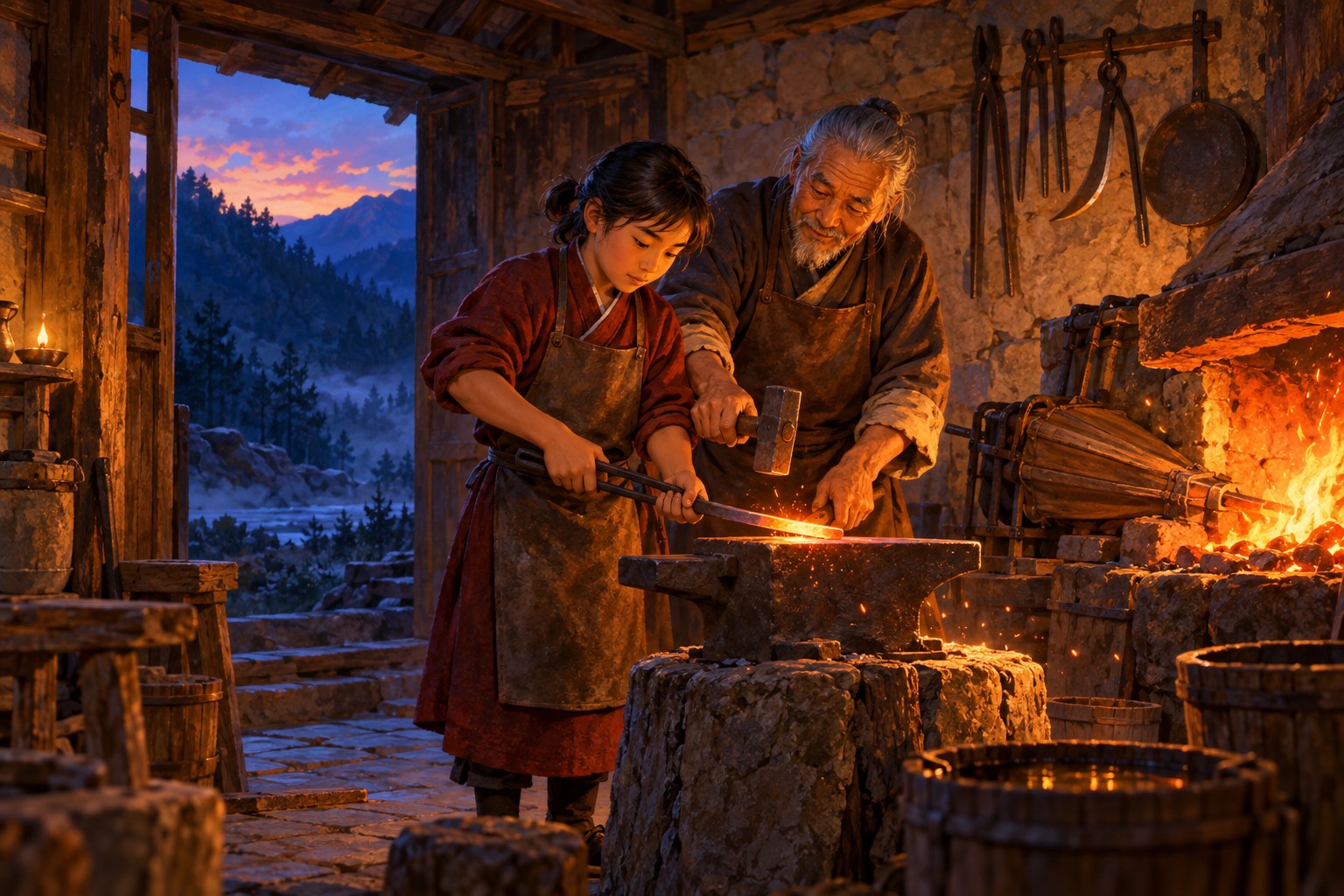
But the forge came first. He grew into a skilled smith who made millstones, knives, swords, chain mail and iron cooking pans, some of which he is said to have buried here and there around Bumthang. One of those pans is now in the National Museum of Bhutan. For most of his young adult life he was simply a working craftsman.
A ragged monk and a scroll
In his mid-twenties he had a dream he could not make sense of. Two years later came something he could not ignore.
He had gone alone into the woods near a small monastery called Mani Gonpa to look for mushrooms, his life story says, and found none. Coming back, he fell asleep in front of the temple. A voice told him to get up and work. Beside him stood a monk in ragged robes, who handed him a small paper scroll and asked for something to eat.
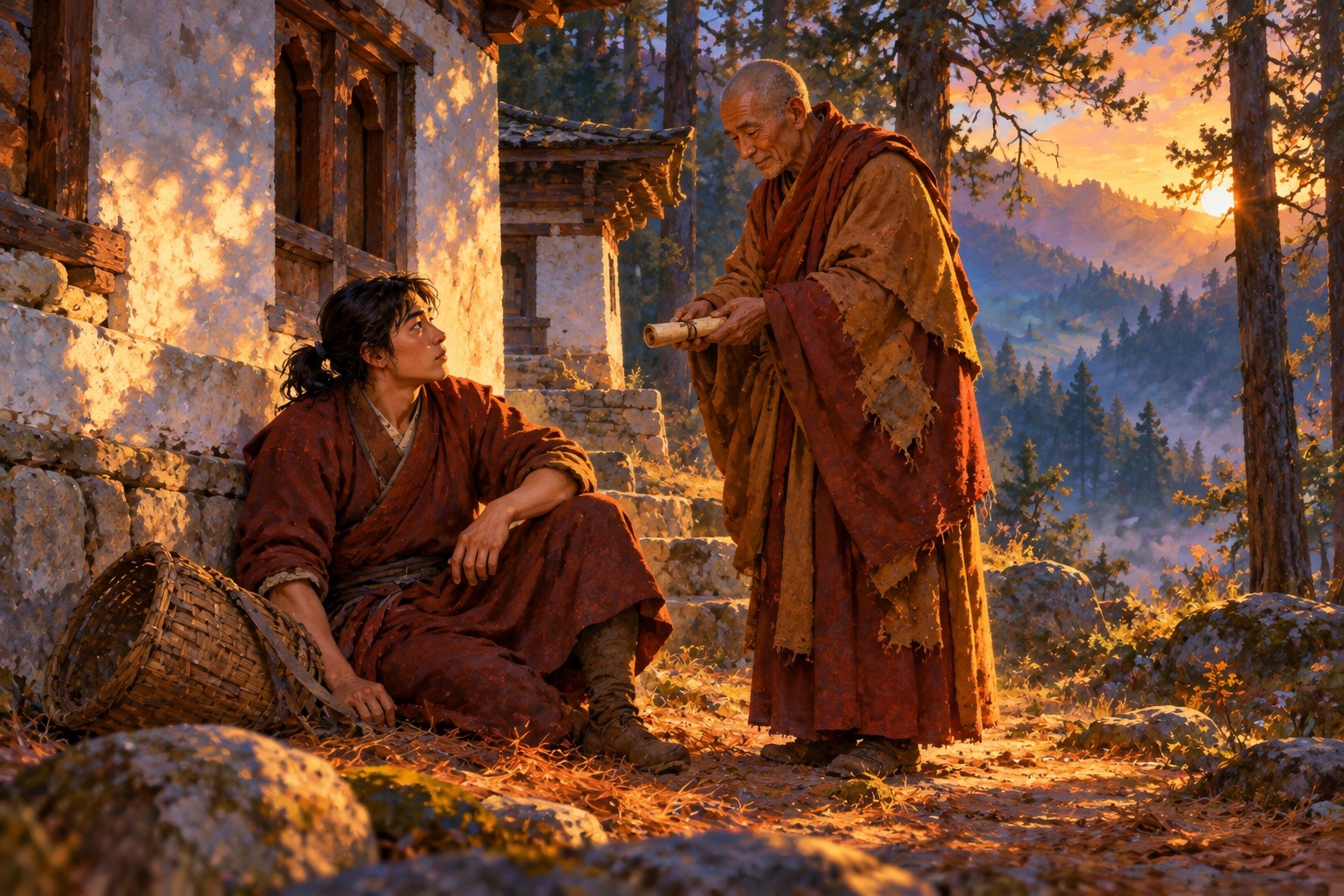
By the time the food was ready, the monk had vanished. The scroll told Pema Lingpa to take five friends, at the full moon, to Naring Drak, the "Long-Nosed Cliff" on the Tang river. Something meant for him waited there.
His father called it a lie. Someone remembered that the same had once happened to another treasure revealer, Ratna Lingpa. Sarah Harding's translation of his life story gives those words to a nun, Ani Deshek; the Treasury of Lives gives them to his mother.
The first night at the pool
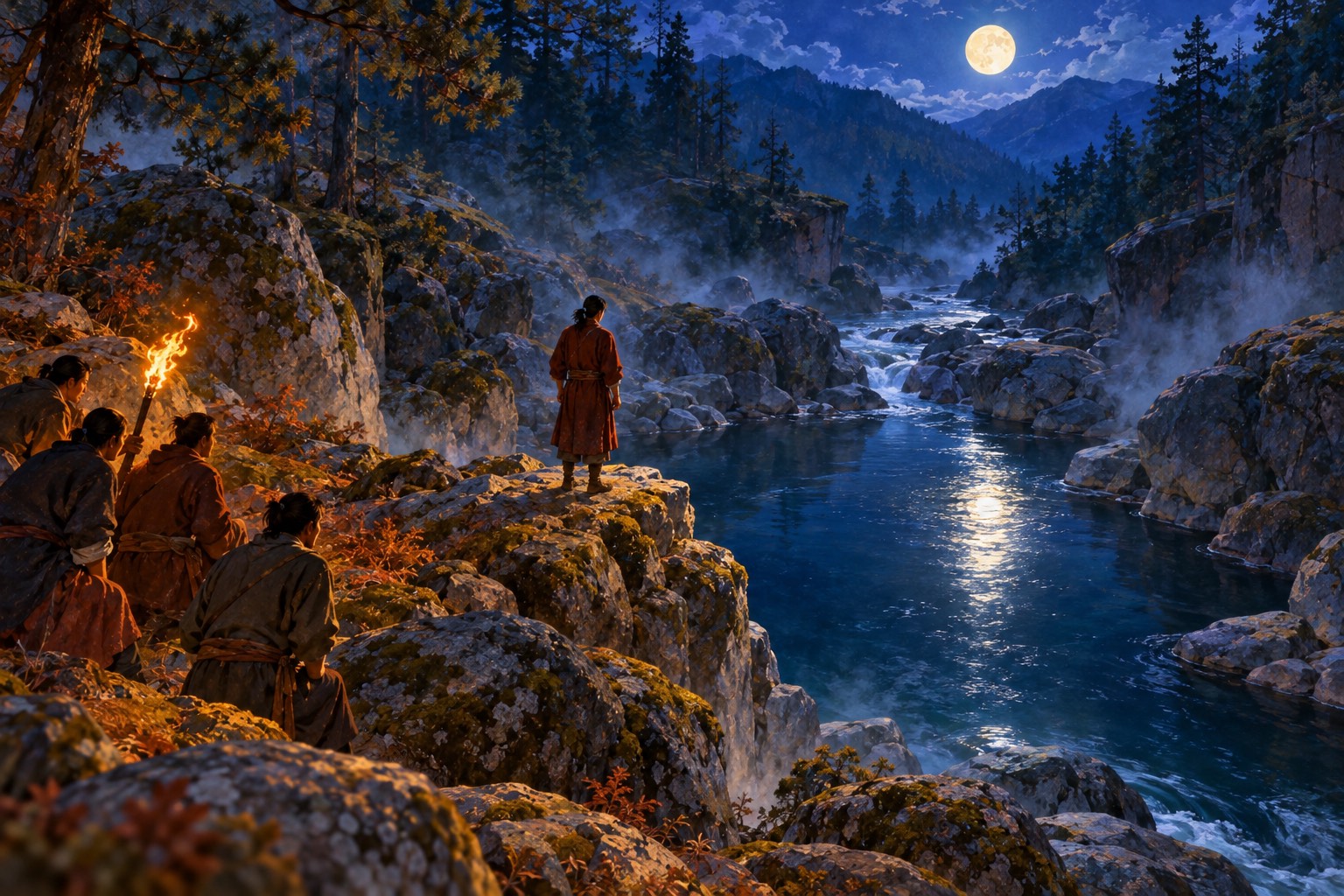
On the full-moon night he persuaded five friends to come, though they were reluctant and tried to slip away. At the water's edge, his life story says, a powerful feeling of losing all bearings came over him, and he jumped in.
What follows is told as a vision. Beneath the water, the traditional accounts say, he found a great cave with a life-size statue of the Buddha and a stack of chests. A one-eyed woman in maroon, whom the Treasury of Lives calls simply the cave's guardian, handed him one. Then, they say, he found himself back on the rock, as if carried up by the wind.
Treasure from the water
A word about treasures. Terma, "treasure," is the tradition's name for teachings and sacred objects that Guru Rinpoche, the eighth-century master the Seven-Line Prayer calls on, is said to have hidden for the future. Those who find them are called tertöns, treasure revealers.
Inside the chest was a scroll of yellow paper in signs no one could read: not his parents, and not two masters from the nearby monastery of Tharpaling.
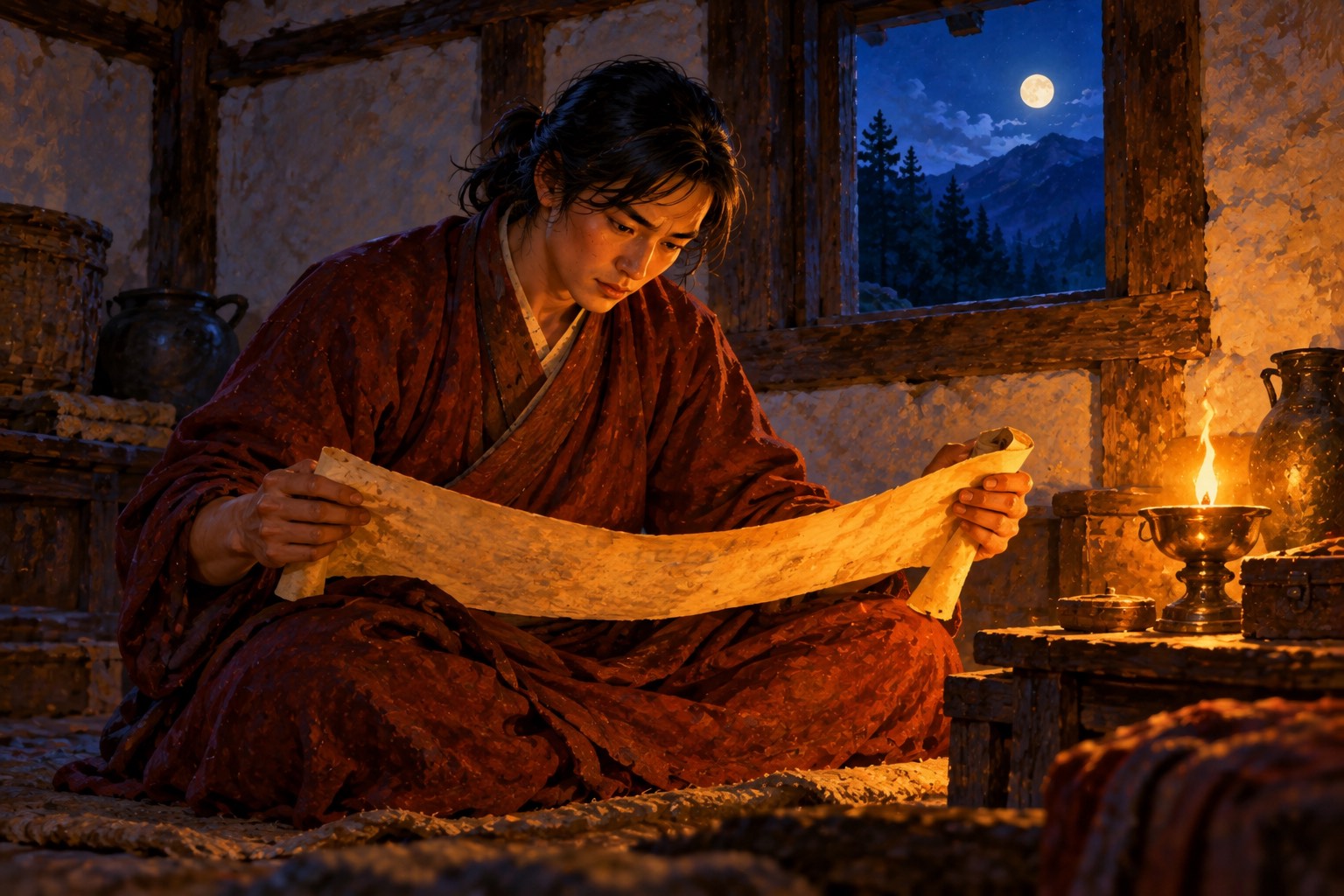
Back at Mani Gonpa, with the key the ragged monk had given him, Pema Lingpa slowly made out its title. It was a teaching on the "luminous expanse," the first of the thirty-two treasures the Treasury of Lives counts in his life.
Teachers in the night
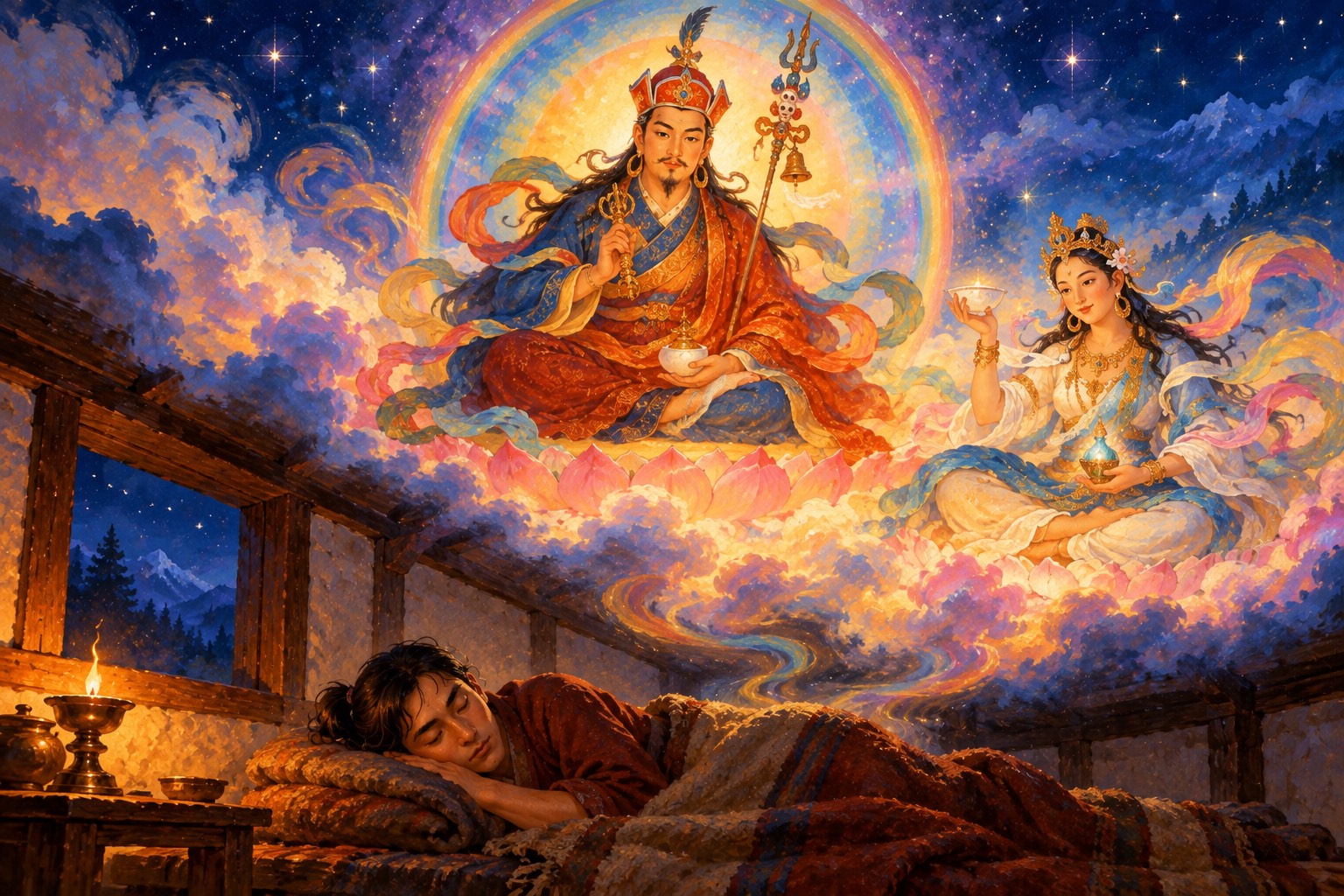
Later that year he gave his first public empowerment, a ceremony that opens a practice to students, in a village called Dungkhabi. He had been a smith, not a scholar. His life story says that every night Guru Rinpoche and Yeshe Tsogyal, the Guru's closest disciple, appeared to him and showed him how to give the empowerment, how to play the ritual music and how to perform the dances. Each day he did as they had shown him.
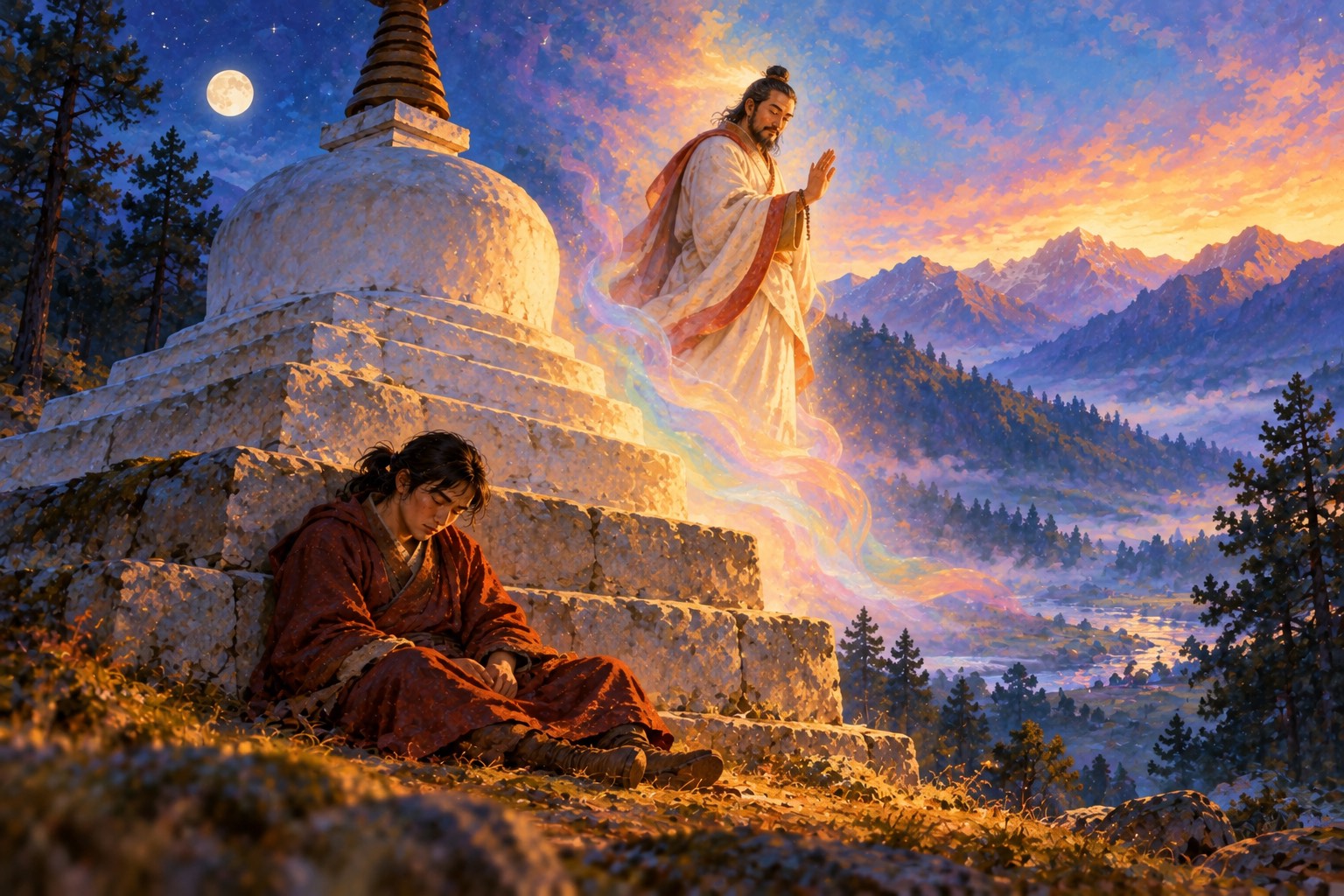
Another time, asleep on the steps of a stupa, he saw the older revealer Ratna Lingpa, who told him he was leaving and that Pema Lingpa must stay to help beings. Then he faded like a rainbow. Pema Lingpa learned afterwards, the account says, that Ratna Lingpa had died that very day.
The Burning Lake
Not everyone believed in the blacksmith. According to the Treasury of Lives, the governor of the district gathered a large crowd at Naring Drak and told him plainly: bring out a treasure and you will have my support; fail, and you will be punished for stirring up trouble.
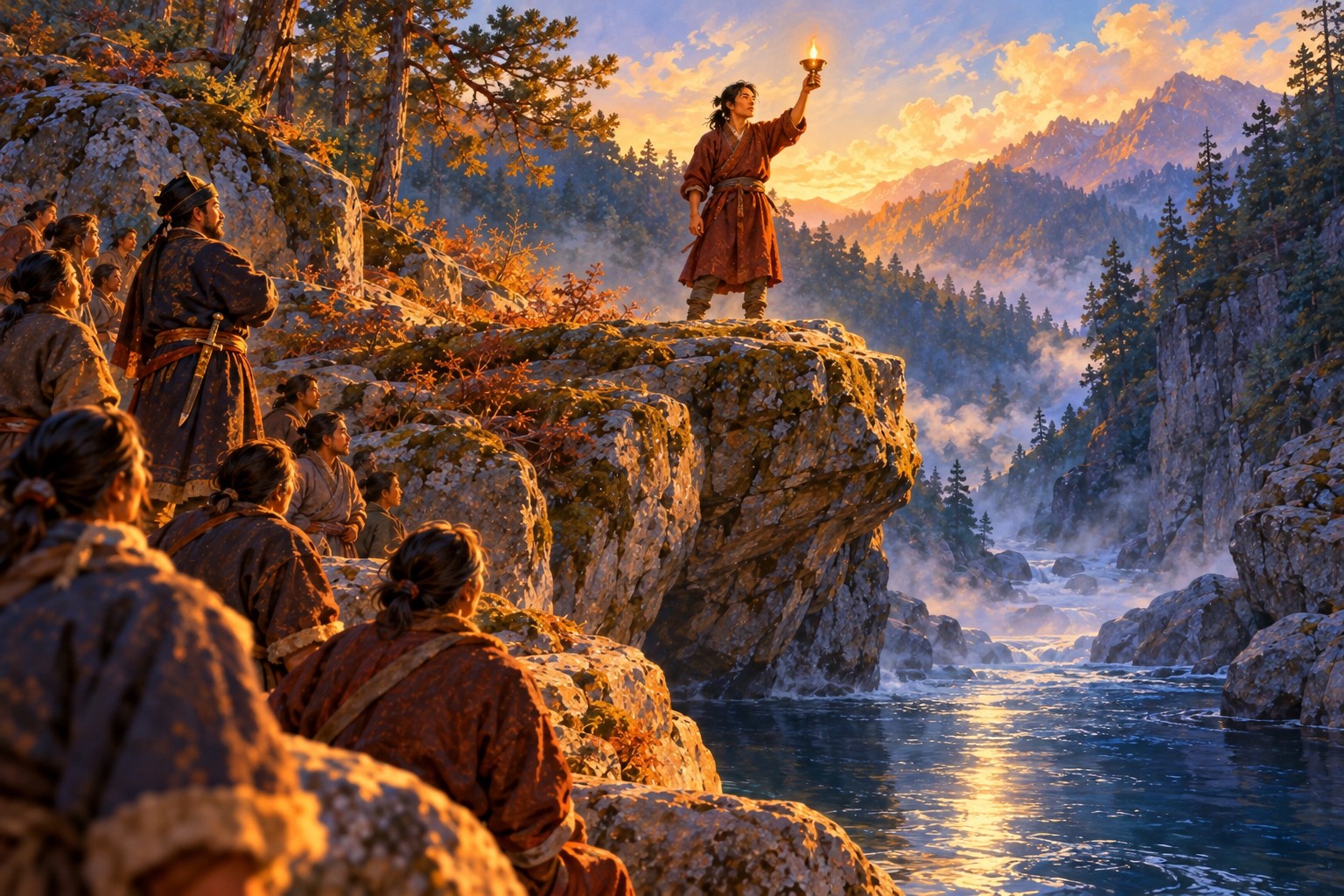
Pema Lingpa stood on the rock with a lit butter lamp in his hand and made a vow before them all. If he were a deceiver, let him die in the water. If he were truly, in Harding's translation, "a son of Orgyen," a spiritual son of Guru Rinpoche, let him find the treasure, and let the lamp stay alight. Then he jumped.
The crowd cried out. A while later, the traditional accounts say, he rose from the water holding a small statue and a sealed casket of sacred substances, and the butter lamp was still burning.
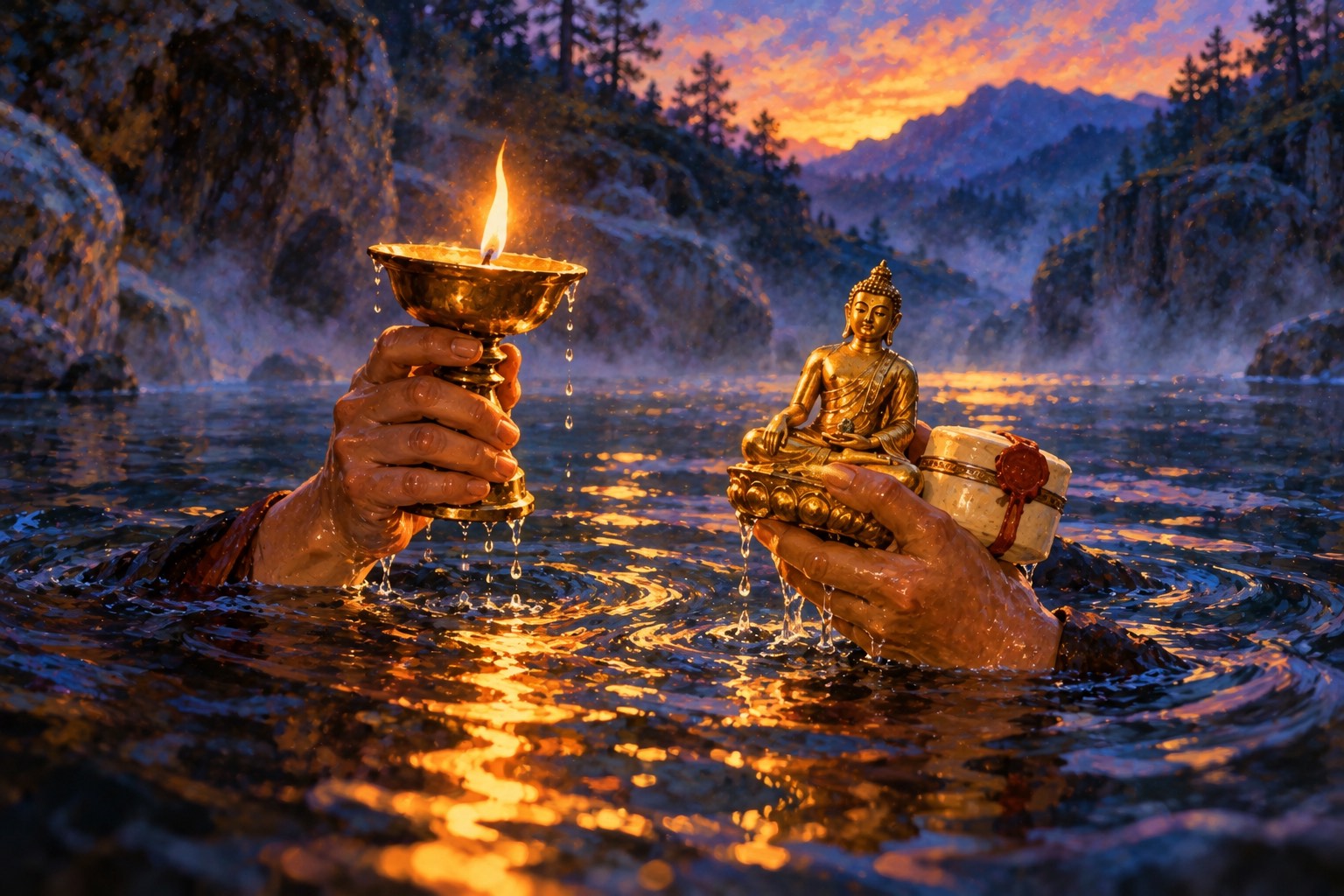
The doubters became his followers and patrons, the story goes, and from that day the pool has been called Membartsho, the Burning Lake.
The sources date these events a little differently. Harding's translation places both dives in the Fire Monkey year, 1476. Ariana Maki, an art historian writing for Himalayan Art Resources, dates the first to 1475, and pilgrim guides give other years again.
Tamzhing and the dances
Many more revelations followed, in Bumthang, in Lhodrak just across the border in southern Tibet, and as far as Samye Chimphu in central Tibet. One of the best known is the Lama Norbu Gyatso, "Lama Jewel Ocean," brought out in Lhodrak in 1483.
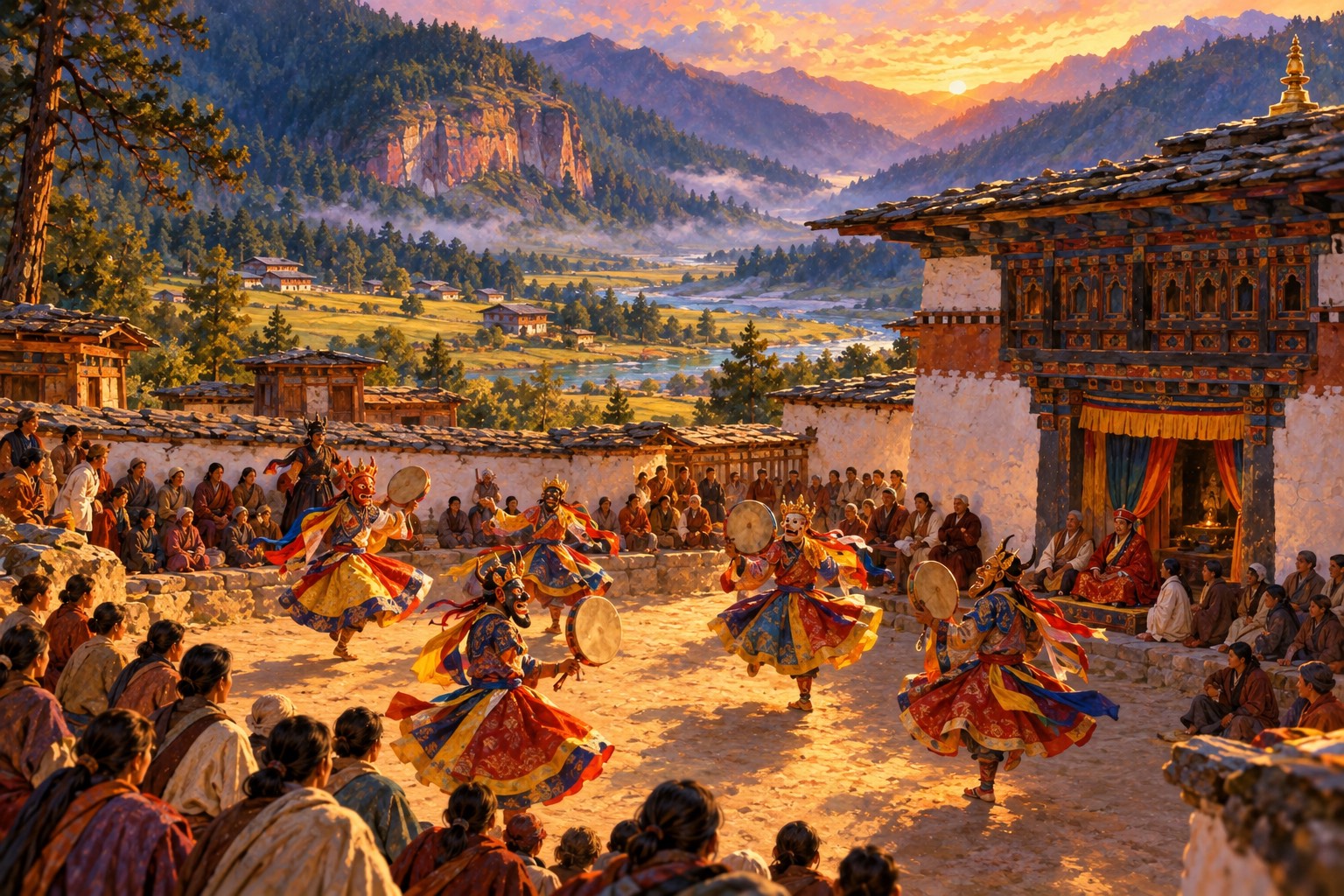
In 1501 he began his main seat, Tamzhing Lhundrub Choling, in the Chokhor valley of Bumthang, facing the cliff of Kurje where Guru Rinpoche is said to have meditated. At its consecration in 1505, Maki writes, he performed dances that had come to him in visions and in his treasures.
The Bhutan Cultural Atlas notes that many sacred masked dances he introduced are still performed across the region. Inside, the old murals still line the walls; some say he painted them himself, though his autobiography names the painters. An iron coat of chain mail said to be his work is still carried by pilgrims around the shrine.
A family and a lineage
He married and had sons, among them Dawa Gyeltsen and Drakpa Gyeltsen. His friends and students included the Seventh Karmapa and the wandering yogi Drukpa Kunley. He also left a long autobiography. The historian Michael Aris drew on it in Hidden Treasures and Secret Lives (1989), a study its publisher describes as an attempt to show the human side of a saint.
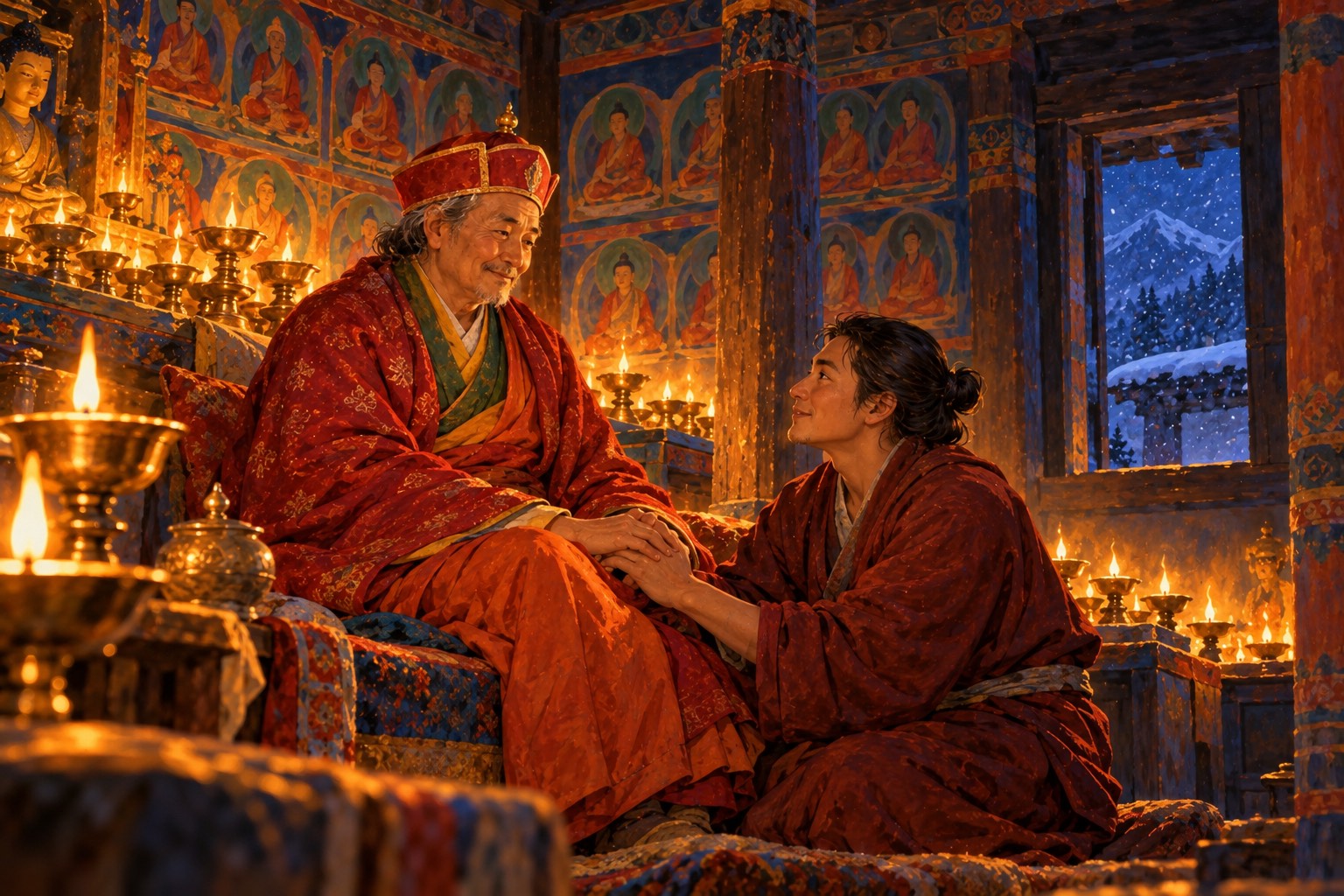
On the third day of the first month of 1521, he died at Tamzhing, holding his son Dawa Gyeltsen's hand.
His teachings passed down through three lines of incarnations, the Peling Sungtrul, the Peling Tukse and the Gangteng Tulku, which still carry them in Bhutan today. Bhutanese sources also trace the royal family to him: the Dungkar Choje family descends from his son Kuenga Wangpo, and from that family came Ugyen Wangchuck, the first King of Bhutan.
A princess, a master and a smith
Tradition sees in his life more than one lifetime. It holds that he was a rebirth of Princess Pemasal, daughter of King Trisong Detsen, who invited Guru Rinpoche to Tibet. According to Rigpa Wiki, she died at eight, and Guru Rinpoche restored her to life just long enough to entrust her with heart teachings that were then hidden as treasure.
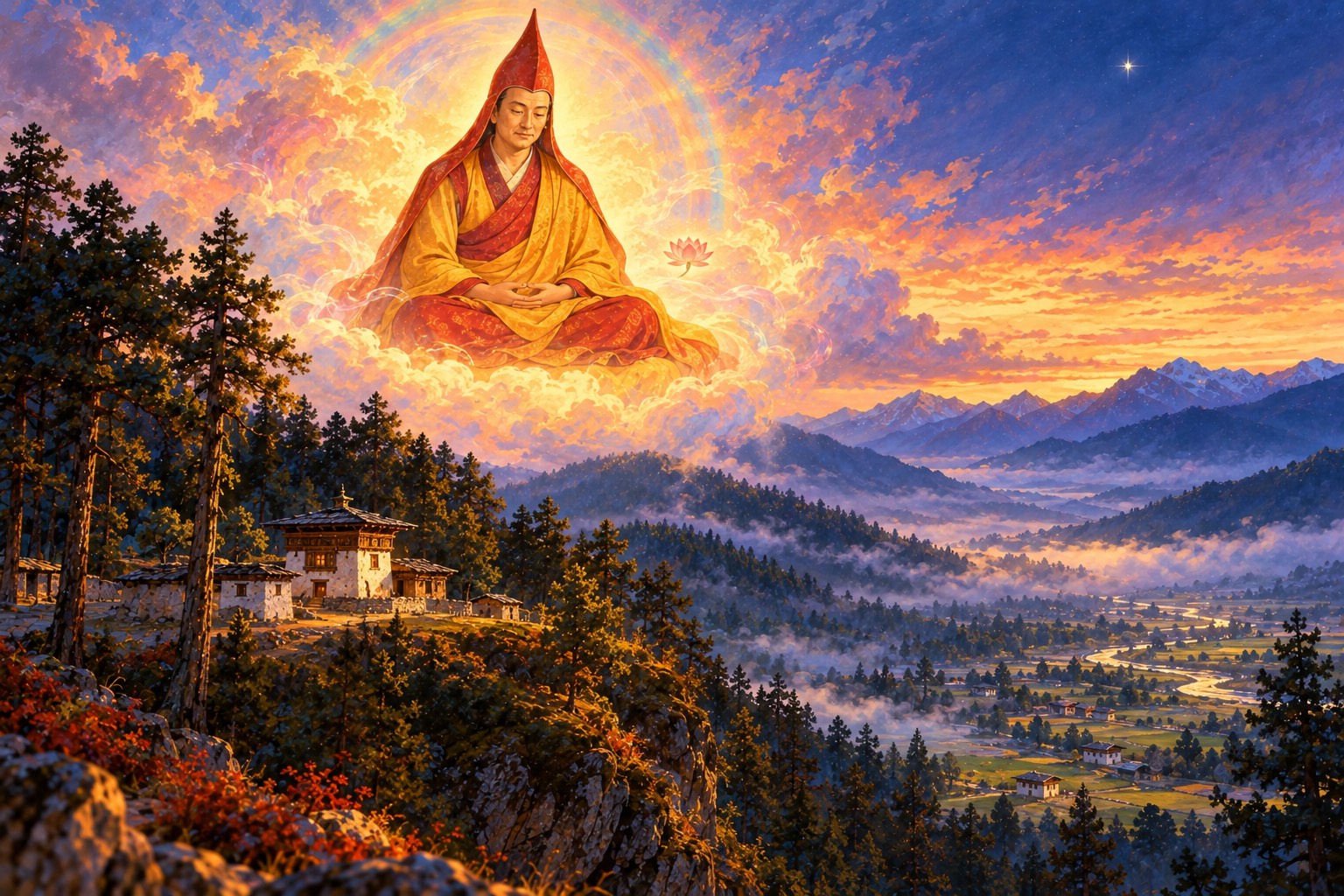
Among her later births, the Treasury of Lives lists the great master Longchenpa, who had lived in Bumthang a century before Pema Lingpa was born. Rigpa Wiki describes Pema Lingpa both as the last of Pemasal's five incarnations and, quoting Nyoshul Khenpo, as the first of Longchenpa's. Fittingly, one of his own treasures, translated by Harding, is a dialogue in which the young Pemasal asks Guru Rinpoche how to awaken in this very life.
The lamp that stays lit
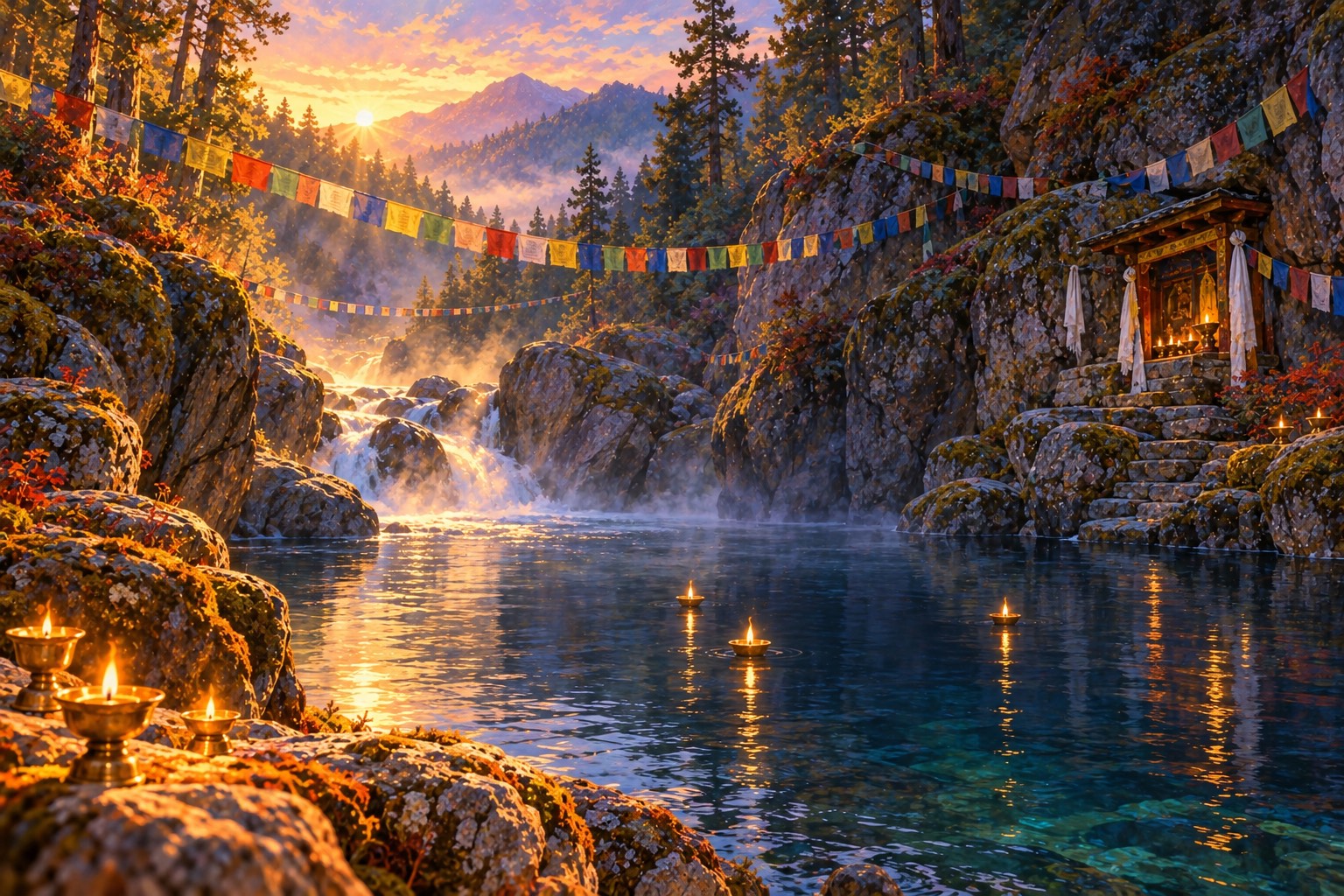
Pilgrims still come to the gorge and look into the dark pool. The current is fast and dangerous, and their lamps are offered from the bank.
What happened under that water, no one can show us. What the story keeps alive is a working man who carried a small flame into the dark on the strength of his trust in Guru Rinpoche, and came back with it still burning.
About the art
Pema Lingpa is drawn as his traditional portraits show him, as a lay master, not a monk. Paintings, a mural and a bronze published by Himalayan Art Resources give him a round, gentle face, a red hat with gold trim, short upturned flaps and a small point on top, and a red cloak over layered robes. In the portraits he holds a small golden long-life vase in his lap. His hat is never Guru Rinpoche's lotus hat, which carries a vulture feather and a half-vajra. Most scenes show him before he became a famous master, so he is bareheaded in the plain wool robe of a working smith, with his hair tied back. No portrait shows his hair, so that detail is the site's choice.
Membartsho follows Ariana Maki's photographs of the site: a dark pool between grey boulders, rust-coloured ferns and blue pines. In the scenes from his lifetime the gorge is left bare; the shrine in the rock and the prayer flags appear only in the last picture, which shows the site today. The butter lamp is the Tibetan and Bhutanese kind, a shallow metal bowl on a slender stem. The treasure casket is shown as a small sealed ivory-coloured box. The sources call it a box of joined skulls, but the site keeps its pictures gentle.
Guru Rinpoche appears once, in a dream, in his main form: the lotus hat, a five-pronged vajra at his heart, a skull cup with a long-life vase and the slender khatvanga staff at his left shoulder. Beside him sits Yeshe Tsogyal as a radiant dakini. The older revealer in the stupa scene is a generic figure, not a portrait of Ratna Lingpa. Longchenpa is shown in his usual tall, pointed red scholar's hat, glowing as a vision, to stand for the tradition's teaching about past lives. The masked dancers at Tamzhing are not a reconstruction of any particular dance.
Why this matters for practice
The Seven-Line Prayer ends by asking Guru Rinpoche to come and grant his blessings. Pema Lingpa's life is remembered as that request answered, again and again, in an ordinary working man: in dreams, in a scroll from a stranger, in a flame that did not go out. Whatever we make of the miracle, his story invites us to bring our own small light, a few words of prayer, into whatever dark water we are facing.

If something in this story stayed with you, you might picture a small flame held steady over dark water, and recite the prayer once. Its last line asks Guru Rinpoche to come and grant his blessings.
Sources and further reading
- Pema Lingpa, by Ariana Maki (2011), Treasury of Lives (Internet Archive snapshot, 2015)
- The Life and Revelations of Pema Lingpa, trans. Sarah Harding (Snow Lion, 2003): excerpt, Shambhala / Snow Lion (Internet Archive snapshot, 2022)
- The Life and Revelations of Pema Lingpa, trans. Sarah Harding (Snow Lion, 2003), Book
- Hidden Treasures and Secret Lives: A Study of Pemalingpa (1450–1521) and the Sixth Dalai Lama (1683–1706), by Michael Aris (Kegan Paul, 1989), Book
- Pema Lingpa, Rigpa Wiki (Internet Archive snapshot)
- Pema Sal, Rigpa Wiki (Internet Archive snapshot)
- Pema Lingpa (author page), Lotsawa House
- Teacher: Pema Lingpa (set), with items 203536, 43737, 203581 and 66251, Himalayan Art Resources
- Bumthang Tang Mebartsho, by Ariana Maki (2012), Himalayan Art Resources
- Bumthang Chamkhar Tamzhing, by Ariana Maki (2012), Himalayan Art Resources
- Tamshing Temple, by Ariana Maki (2023), Project Himalayan Art, Rubin Museum of Art
- Tamshing Lhundrup Choling, Bhutan Cultural Atlas (Internet Archive snapshot, 2019)
- Tamzhing Lhakhang, the Temple of Good Message of Pema Lingpa; Mebar Tsho, the Burning Lake of Bhutan, Bhutan Pilgrimage
- Their Majesties and HRH The Gyalsey in Dungkhar on auspicious occasion, The Bhutanese (newspaper)
This retelling is waiting to be read by a knowledgeable practitioner. Where the traditional accounts differ, the story says so; if you notice a mistake, please tell us through Share Your Story.