High above the Paro valley in Bhutan, a cluster of white temples clings to a sheer granite cliff, some nine hundred metres above the fields. Pilgrims climb for hours through pine forest to reach it. The place is called Taktsang, "the Tiger's Nest," or more exactly, the tigress's lair.
The temples are only about three hundred years old. The story of the cliff is far older. It begins, the traditional accounts say, in the eighth century, when there was nothing on the rock at all but cloud, forest and a cave.
The land of Mon
In Guru Rinpoche's time the green hill country south of Tibet was not yet one kingdom. Tibetan writers called it Mon, the southern lands of forests and hidden valleys. Bhutanese tradition remembers Guru Rinpoche, Padmasambhava, the "Lotus-Born" master, travelling through these valleys more than once and blessing caves and cliffs as places of practice.
Two journeys are remembered best. One took him to Bumthang, in the middle of the country, to help a king. Another brought him to the cliff above Paro. The order of events changes from telling to telling, so it is best to read what follows as a handful of treasured scenes rather than one timeline.
The king of Bumthang
In Bumthang, the story goes, there ruled a king remembered as Sindhu Raja. He lost a son in a war with a neighbouring king, and in his grief he turned on the local guardian spirits, whose help had failed him, and pulled down their shrines.
The chief of those spirits, Shelging Karpo, is said to have answered by taking the king's sog, his life force, the vital energy that holds body and mind together. The king fell gravely ill and no healer could help him. At last his ministers sent to Nepal for Guru Rinpoche.
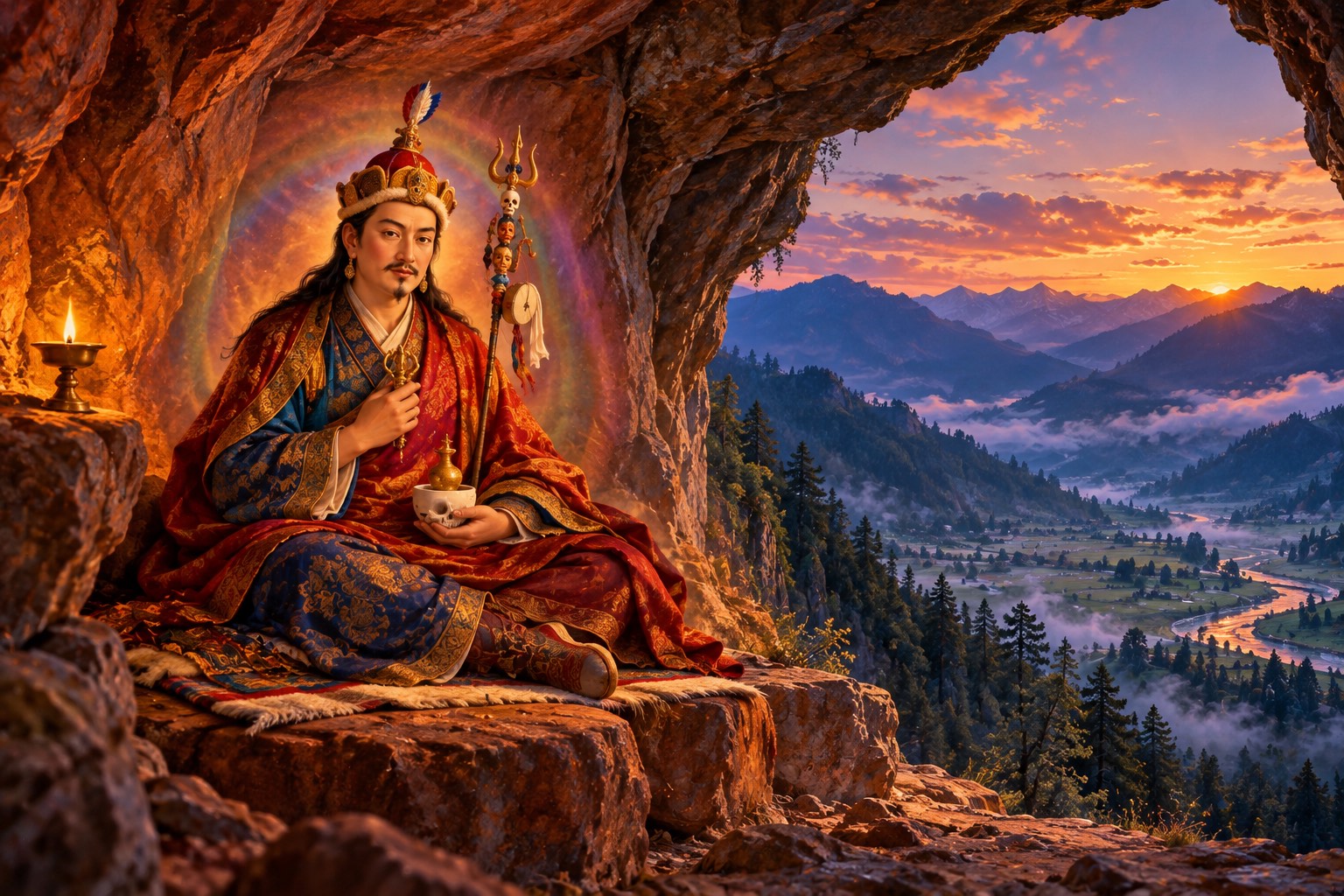
Guru Rinpoche, the accounts say, sat in meditation in a cave at the foot of a red cliff above the river. He sat so long and so still that the shape of his body was left in the rock. That imprint gave the place its name, Kurje, "body imprint." A temple, Kurje Lhakhang, now stands over the cave.
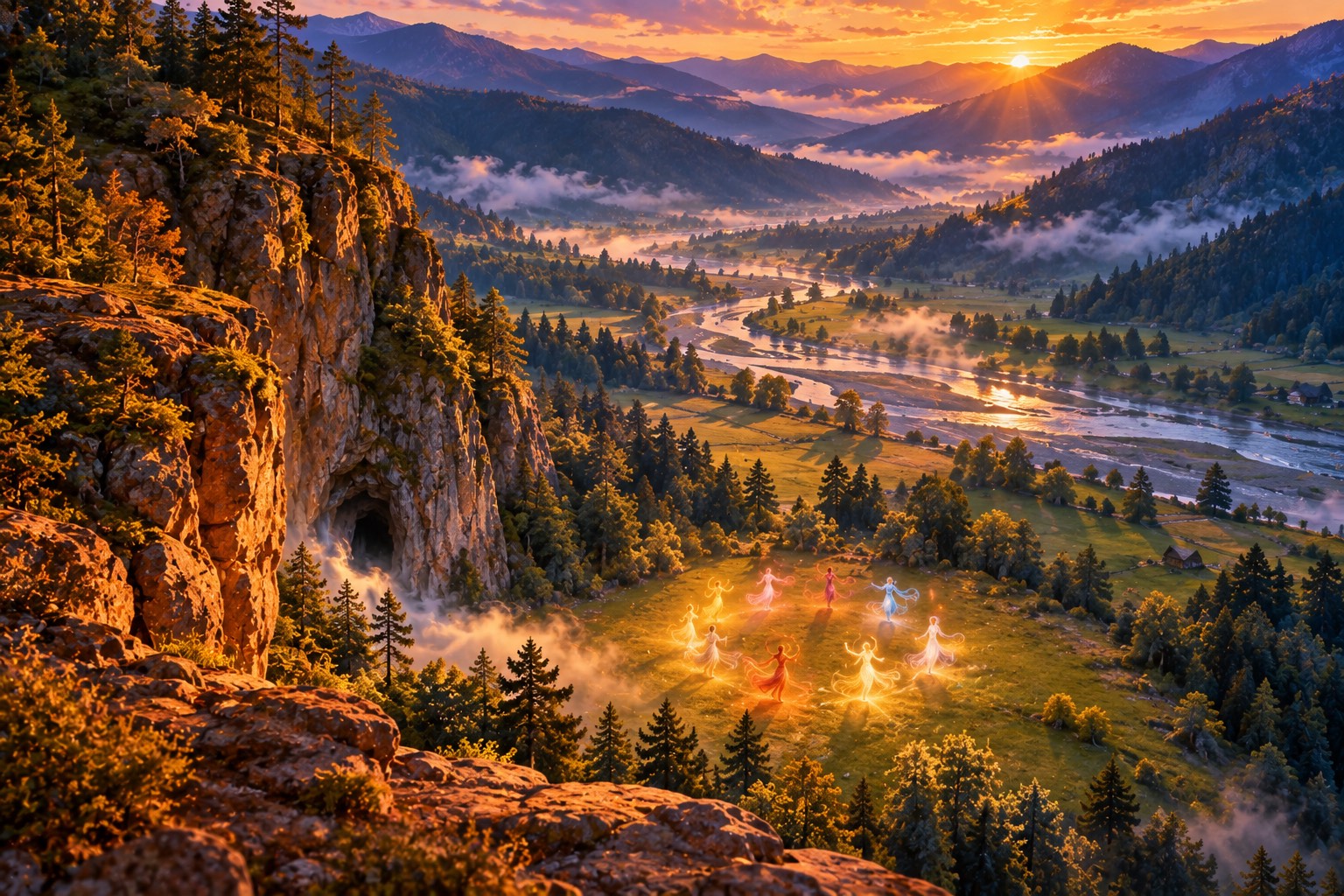
The spirit, though, stayed hidden. One Bhutanese telling says Guru Rinpoche then appeared in eight forms at once, dancing in the meadow below, and that Shelging Karpo could not resist coming out to watch. Drawn into the open, he yielded.
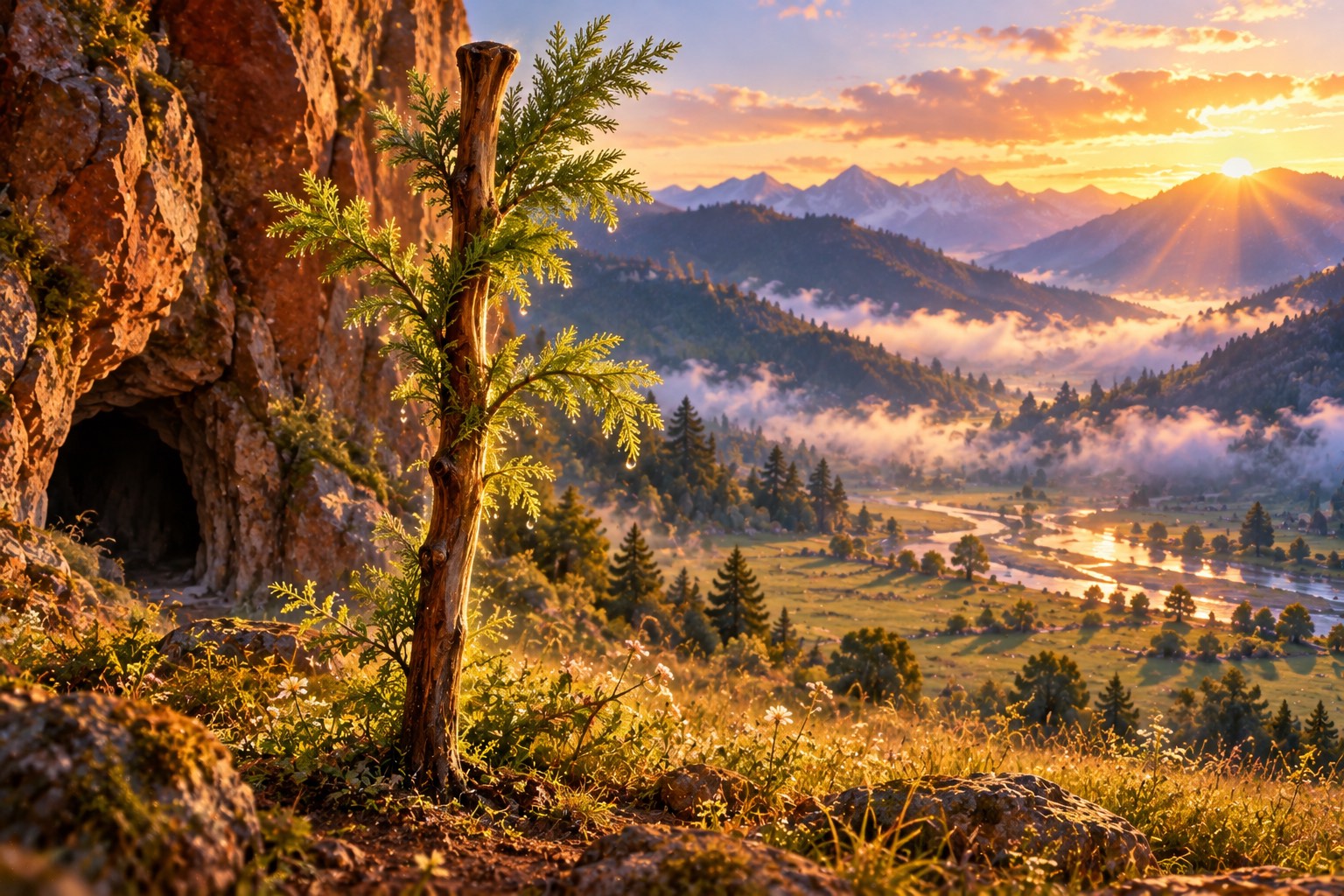
He gave back the king's life force and promised to protect the teachings from then on. To seal the promise, the story says, Guru Rinpoche planted his walking staff in the earth. The great cypress that stands behind the temple today is said to have grown from it, and the king, restored to health, became a friend of the Dharma.
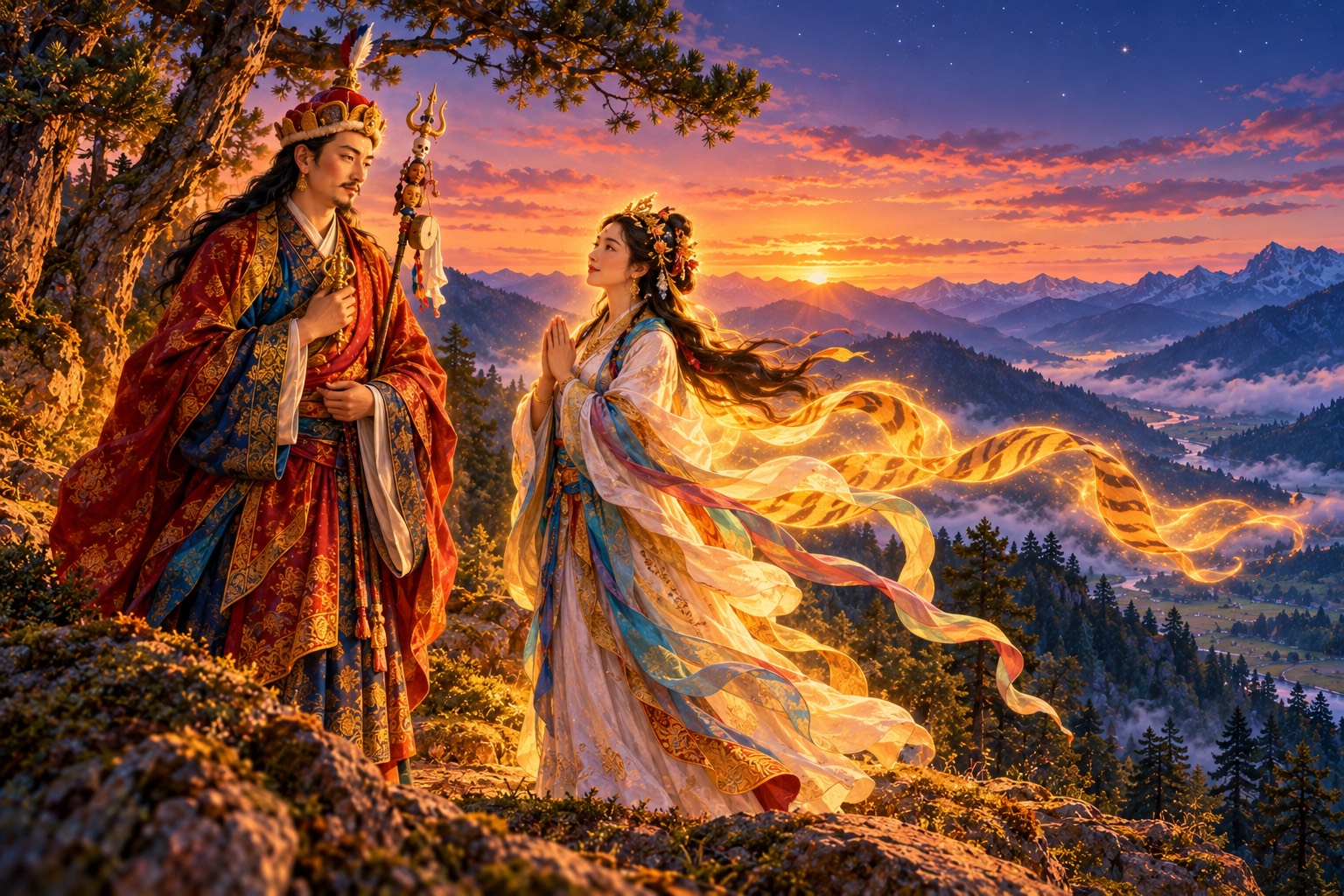
Some tellings add one more figure: the king's daughter, Tashi Khyidren (her name is also spelled Kheudron). Keep her name in mind. She returns in the story of the tigress.
A flight on a tigress
The most famous journey ends at Taktsang, and here the sources part ways in a way worth noticing.
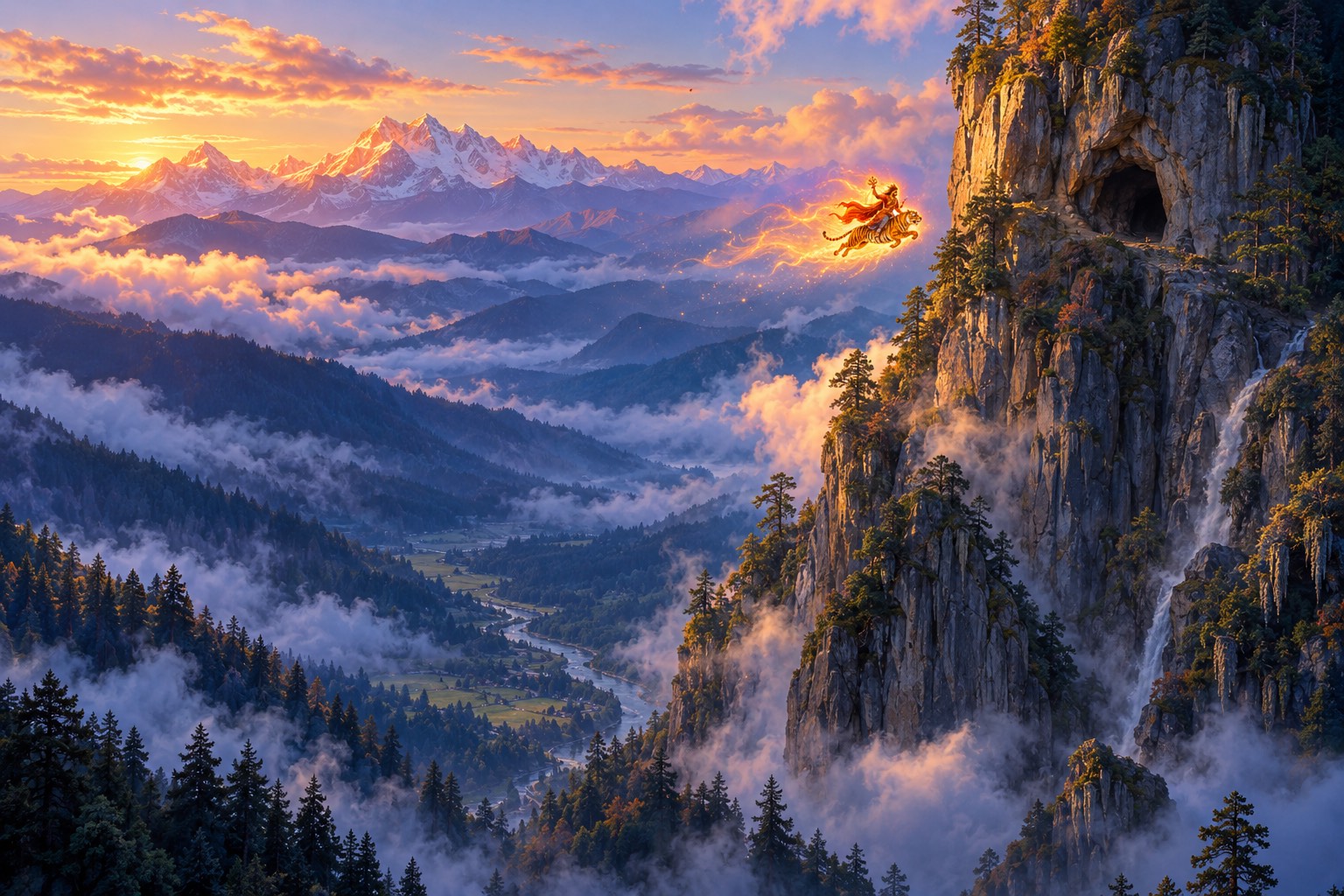
Many tellings, including a note on Himalayan Art Resources, say the tigress who carried Guru Rinpoche was Yeshe Tsogyal, his great Tibetan disciple and consort, who took that form. Bhutan's Tourism Council says his consort became a tigress and carried him from Singye Dzong, a remote cave site in eastern Bhutan. The Paro district's own account names Tashi Khyidren of Mon as the tigress. One painting record on Himalayan Art Resources even links her to Mandarava, his Indian consort.
The Bhutanese scholar Sonam Kinga has written a whole paper asking who the tigress really was. The tradition does not force a single answer. What every version shares is a woman of deep realization who chose to carry her teacher's work.
Dorje Drolö
When they reached the cliff, the accounts say, Guru Rinpoche appeared in a form called Dorje Drolö, the "Wild Wrathful Vajra." It is one of his Eight Manifestations, the eight forms he is said to have shown at different moments of his life, as each situation required.
Dorje Drolö looks nothing like the calm master of most paintings. He is deep maroon-red, with three wide eyes and bared teeth. He stands on the tigress's back in a blaze of flame, a vajra (a ritual sceptre that stands for unshakeable awakening) raised in his right hand and a ritual dagger held pointing downward in his left.
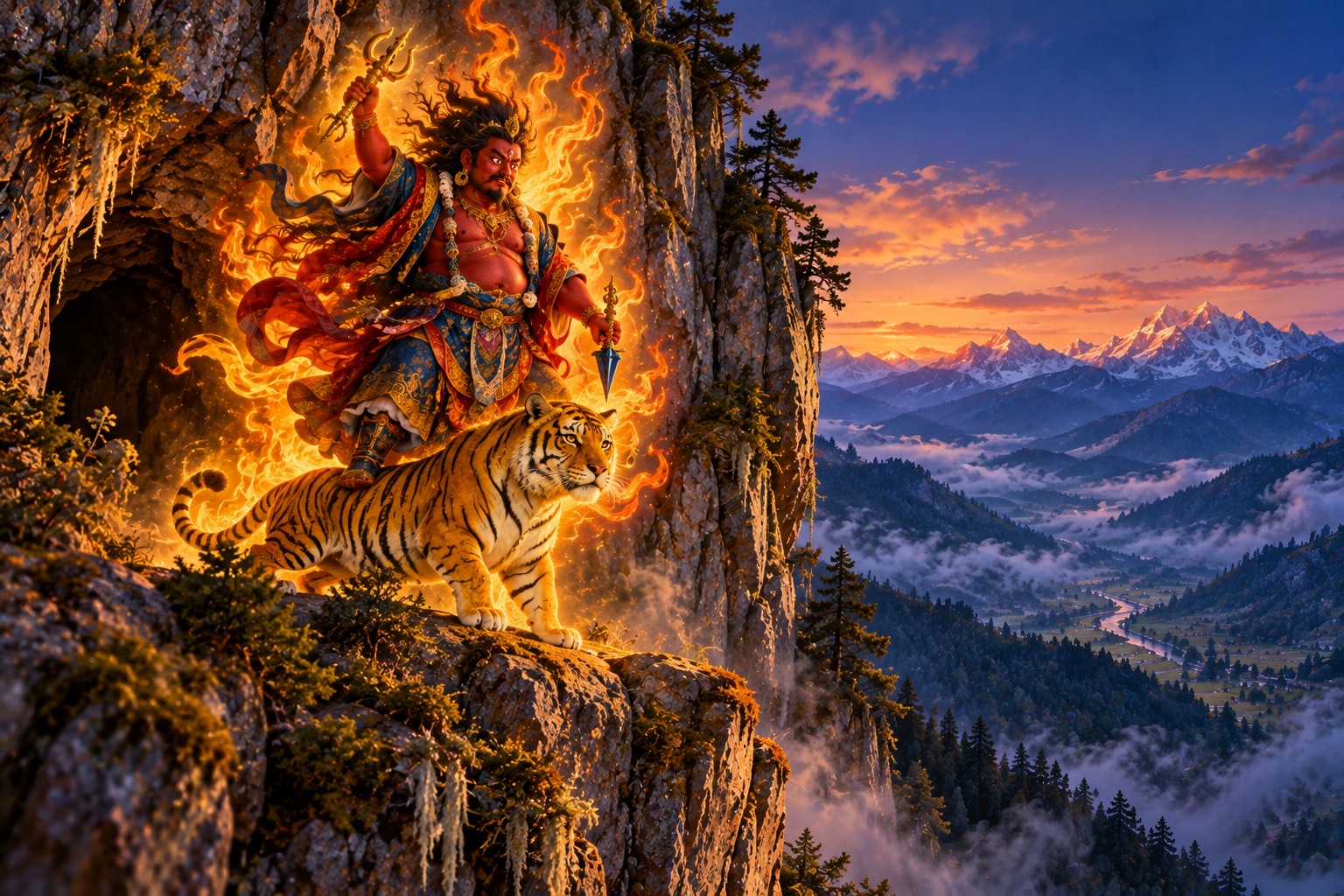
It would be easy to read this as anger. The tradition reads it quite differently. A wrathful form is the same compassion as the peaceful Guru, turned with full force against whatever keeps beings from freedom: fear, confusion, and the obstacles inside and around them.
Writing for the Rubin Museum, Annabella Pitkin puts it simply: such figures are "not angry in the conventional sense." An everyday picture may help. A gentle parent who shouts as a child runs toward a busy road is not angry at the child. The fierceness is the love, moving fast.
The cave and the spirits of the cliff
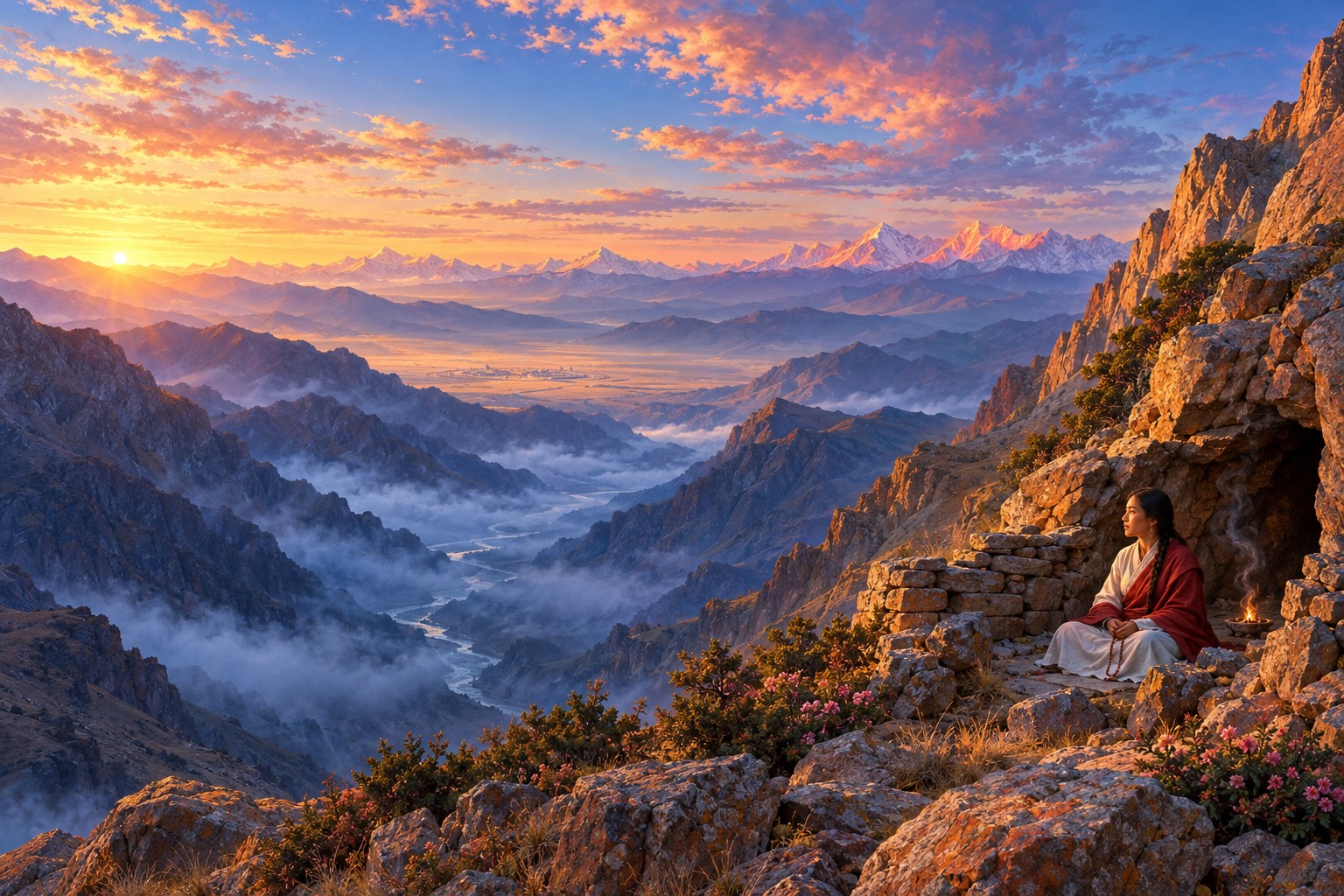
The cliff, the stories say, was home to local forces, spirits of rock and forest who troubled the people of the valley. Guru Rinpoche settled into a cave in the cliff face to meditate. Accounts of how long he stayed differ. Bhutan's Tourism Council says three months; other tellings stretch it to three years, three months, three weeks and three days.
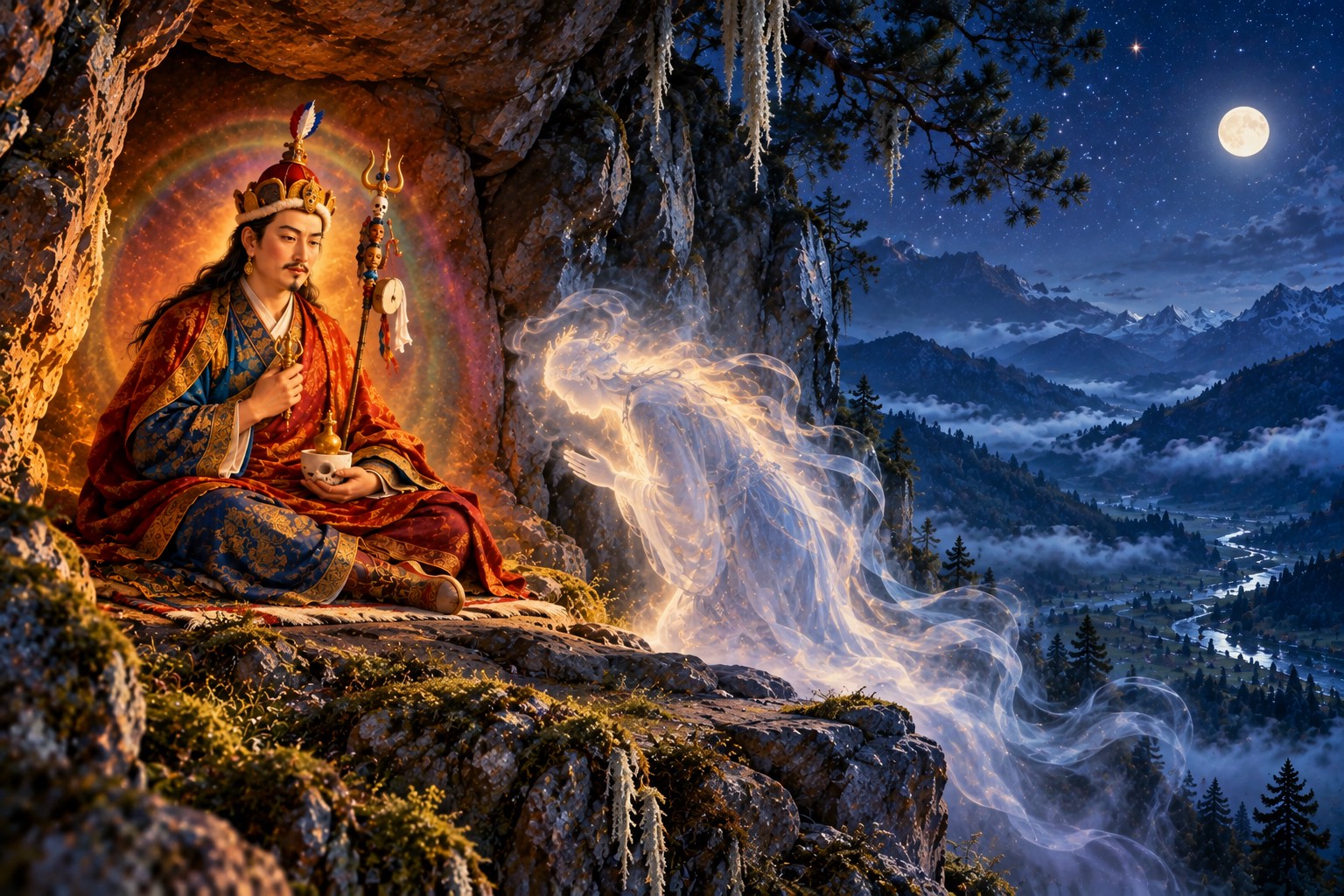
The taming, in these accounts, is not a battle. The spirits were bound by oath: they promised to stop doing harm and to guard the teachings and the people instead. Rigpa Wiki describes this as the very purpose of Dorje Drolö's appearances. Guru Rinpoche is also said to have hidden terma here, treasure teachings concealed for later generations to find.
One of the spirits of the place, the guardian Senge Samdrup, is still honoured at Taktsang. Himalayan Art Resources gives the same name to the cave where Guru Rinpoche is thought to have meditated.
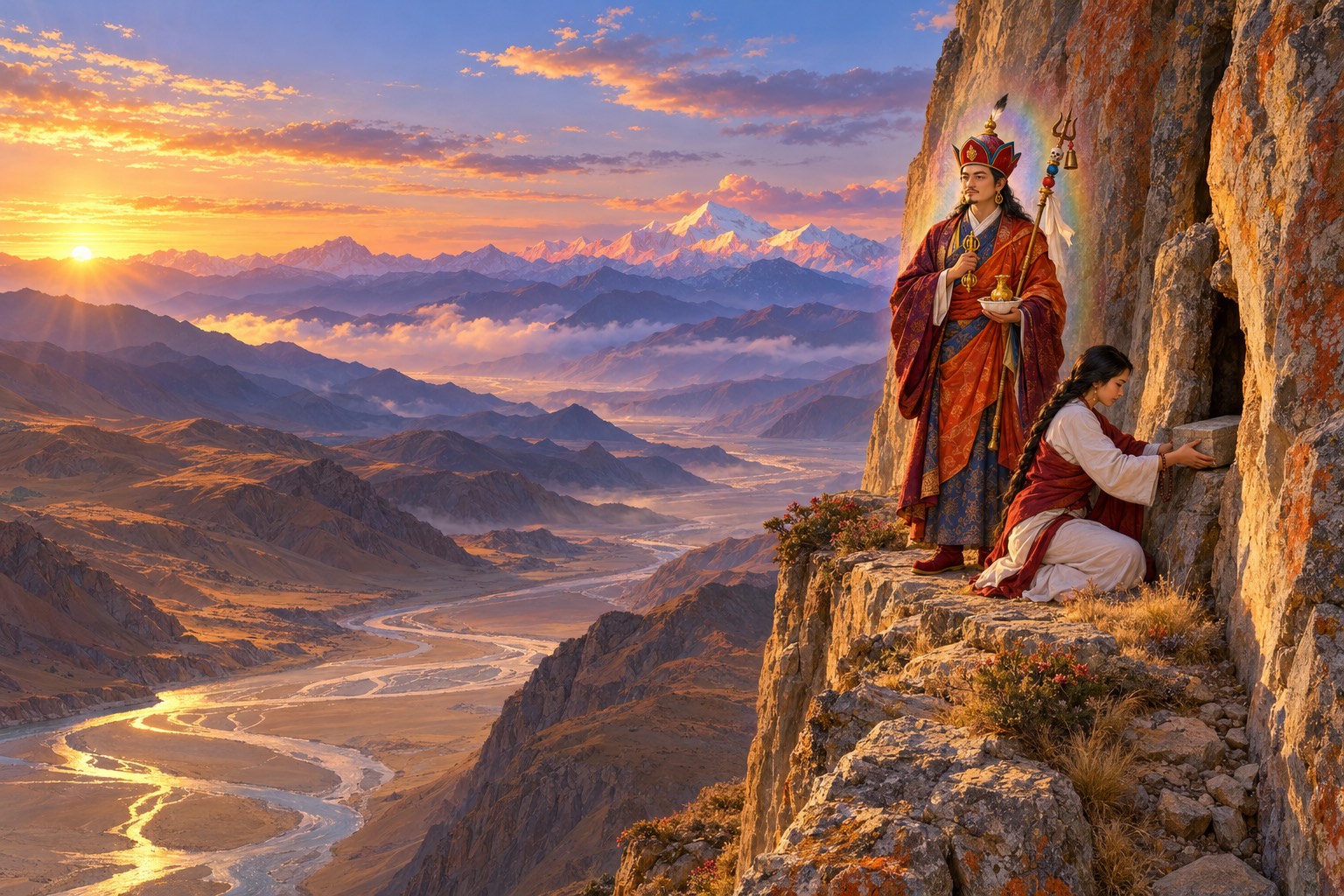
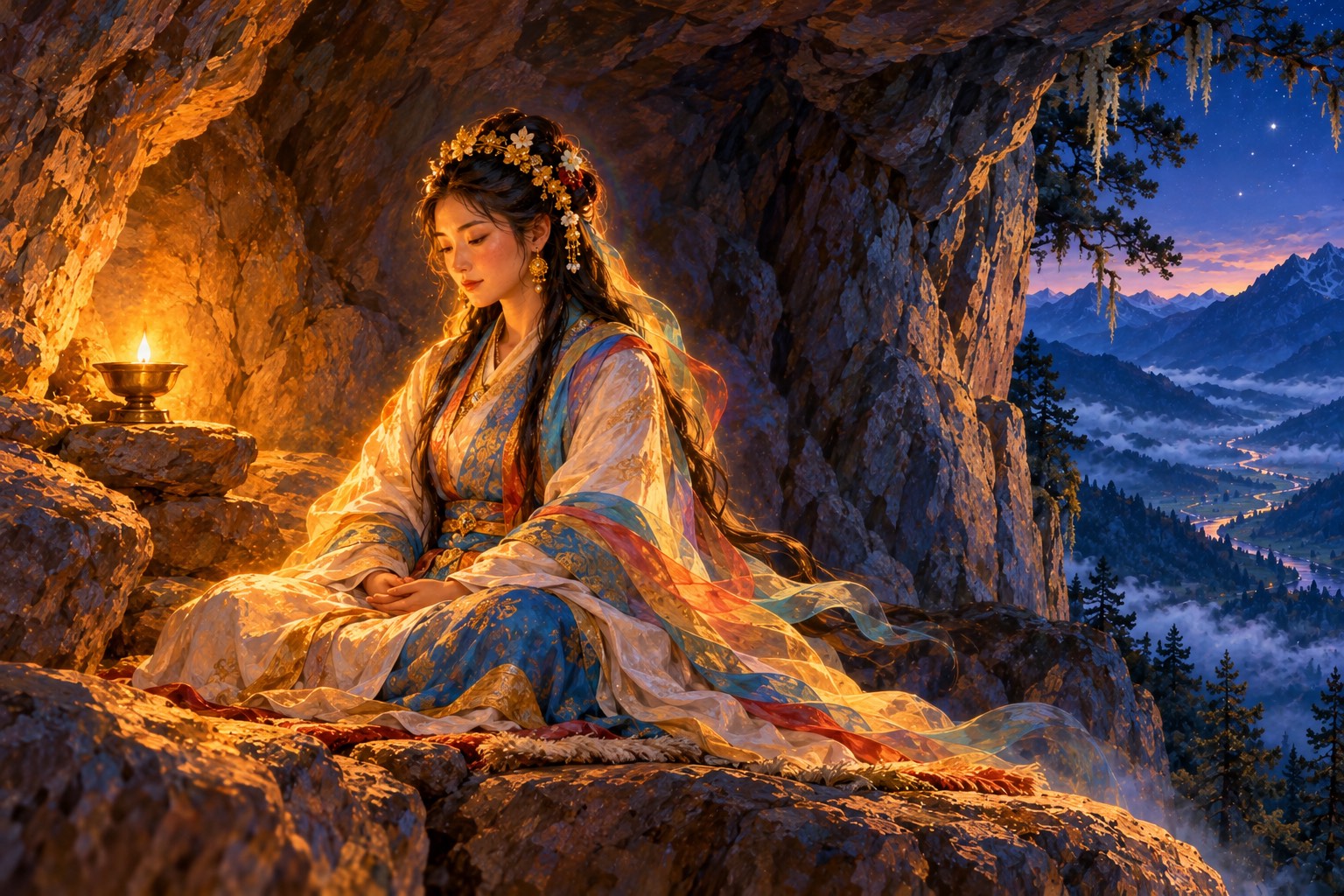
The Paro account goes on. Yeshe Tsogyal and Tashi Khyidren stayed and practised in the cave for four months, it says, and a ritual dagger flew into the cave and is still kept there. Himalayan Art Resources notes that the cave's daggers are shown to the public one day each year, and that a meditation place of Yeshe Tsogyal lies nearby.
Not the only Tiger's Nest
Paro's Taktsang is the best known, but the tradition counts thirteen places called Tiger's Lair across Tibet and the Himalaya, where Guru Rinpoche is said to have appeared as Dorje Drolö. Rigpa Wiki notes that, according to Tulku Urgyen Rinpoche, only about five are known today; among them is Rongmé Karmo Taktsang in eastern Tibet.
The Paro account itself says that afterwards Guru Rinpoche returned to Yönphu Taktsang in Tibet. So the tigress belongs to more than one cliff, and Bhutanese and Tibetan tellings each hold her close.
The temple on the ledge
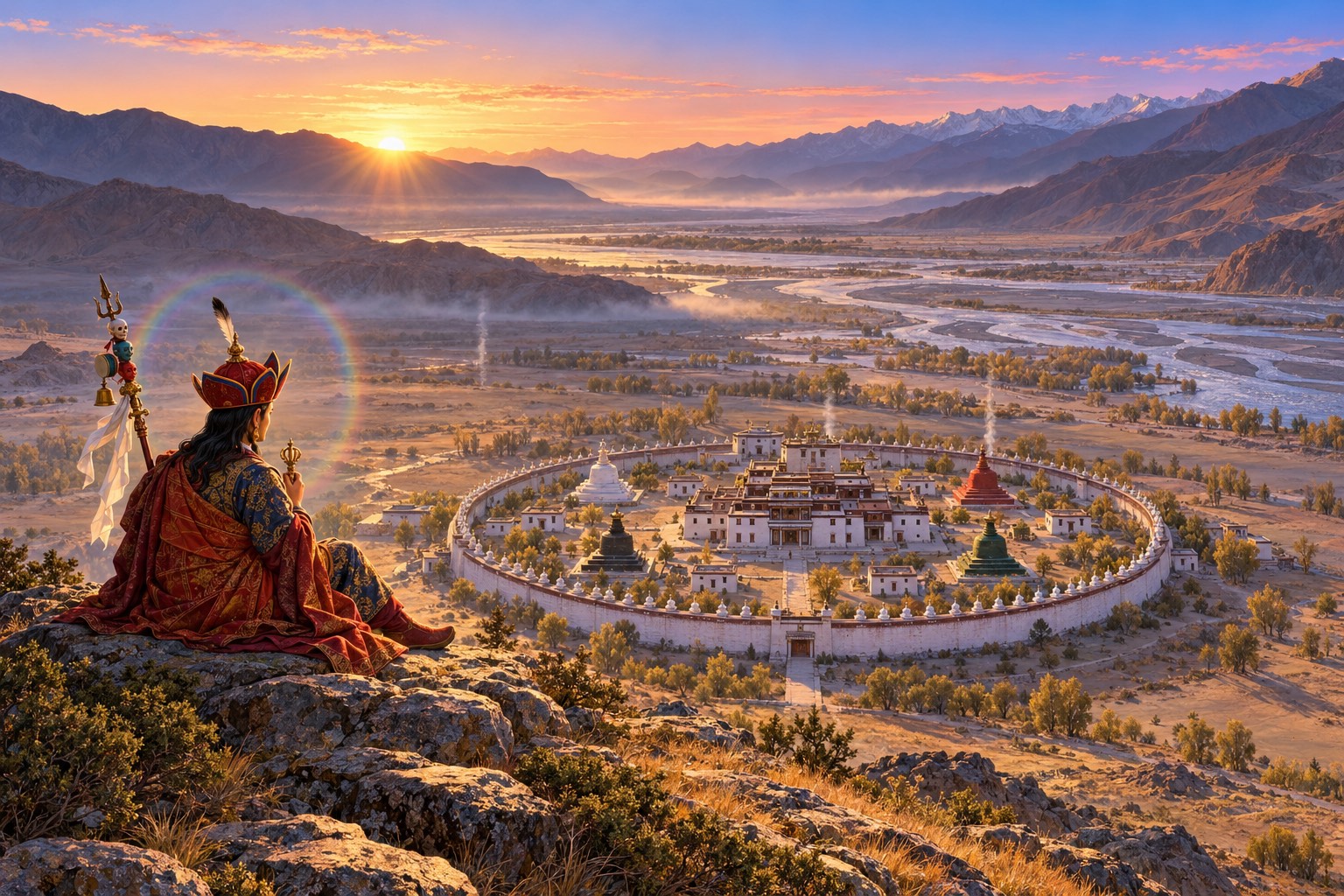
After Guru Rinpoche, the cliff drew meditators for centuries. Milarepa, Machik Labdrön and Thangtong Gyalpo are among those remembered there. In 1646, the Paro account says, Zhabdrung Ngawang Namgyal, who unified Bhutan, visited and resolved that a temple should be built. He entrusted the task to his spiritual heir, Tenzin Rabgye.
Tenzin Rabgye later became the fourth Druk Desi, the civil ruler of Bhutan. In 1692 the foundations were laid on the ledge around the cave. The stones kept slipping on the steep rock, the story goes, until he mixed hair from his own head into the mortar. The work was finished in 1694.
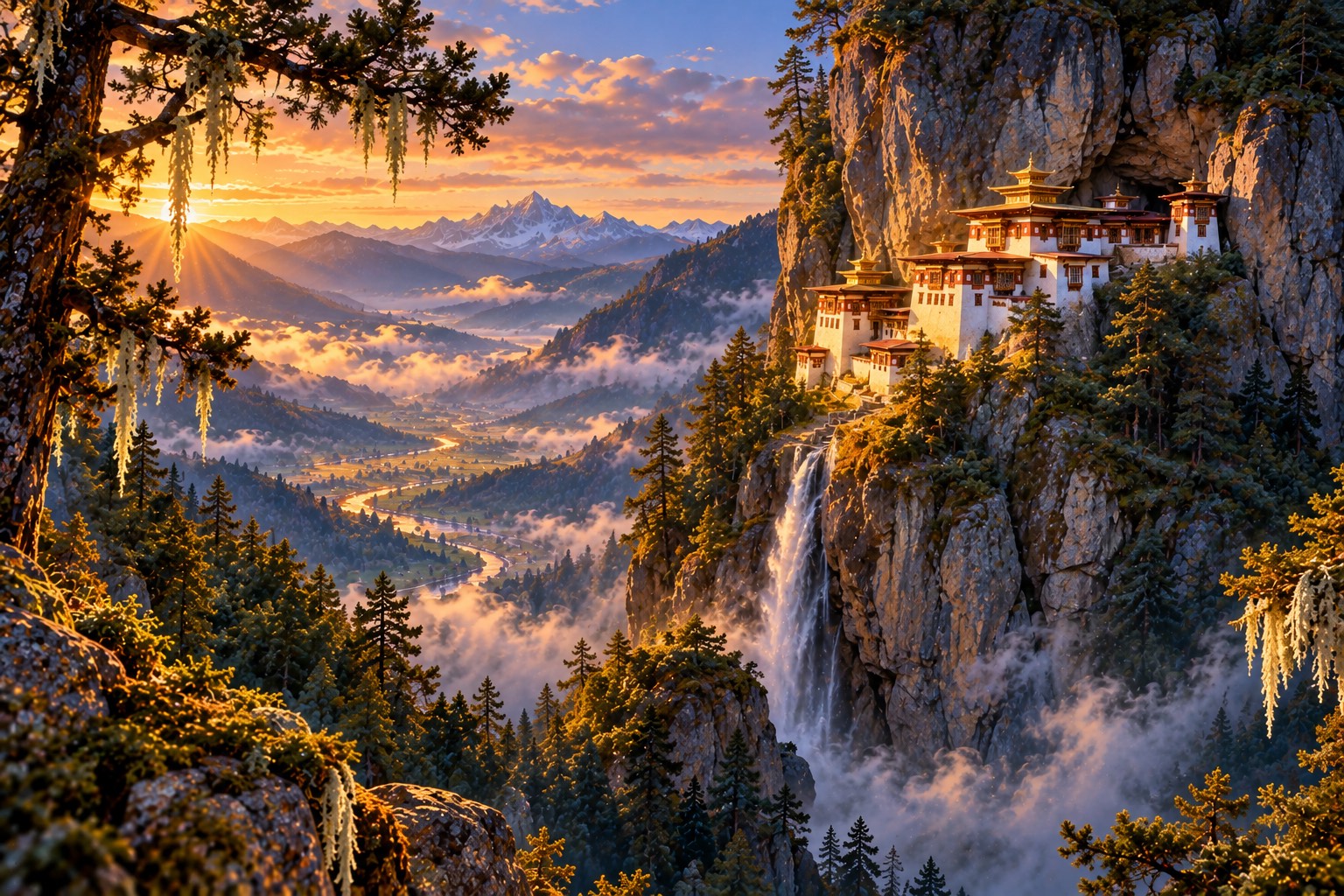
In April 1998 a fire destroyed much of the main building, with its wall paintings and treasures. It was rebuilt with great care and consecrated again in 2005. Pilgrims still make the long climb, for the view and for the cave behind the walls.
For those who recite the Seven-Line Prayer, the cliff is a picture of its third line, which speaks of Guru Rinpoche's wondrous supreme accomplishment. In the tradition's telling, that accomplishment showed itself here in two ways: in stillness in a cave, and in a kindness fierce enough to tame what frightened people.
About the art
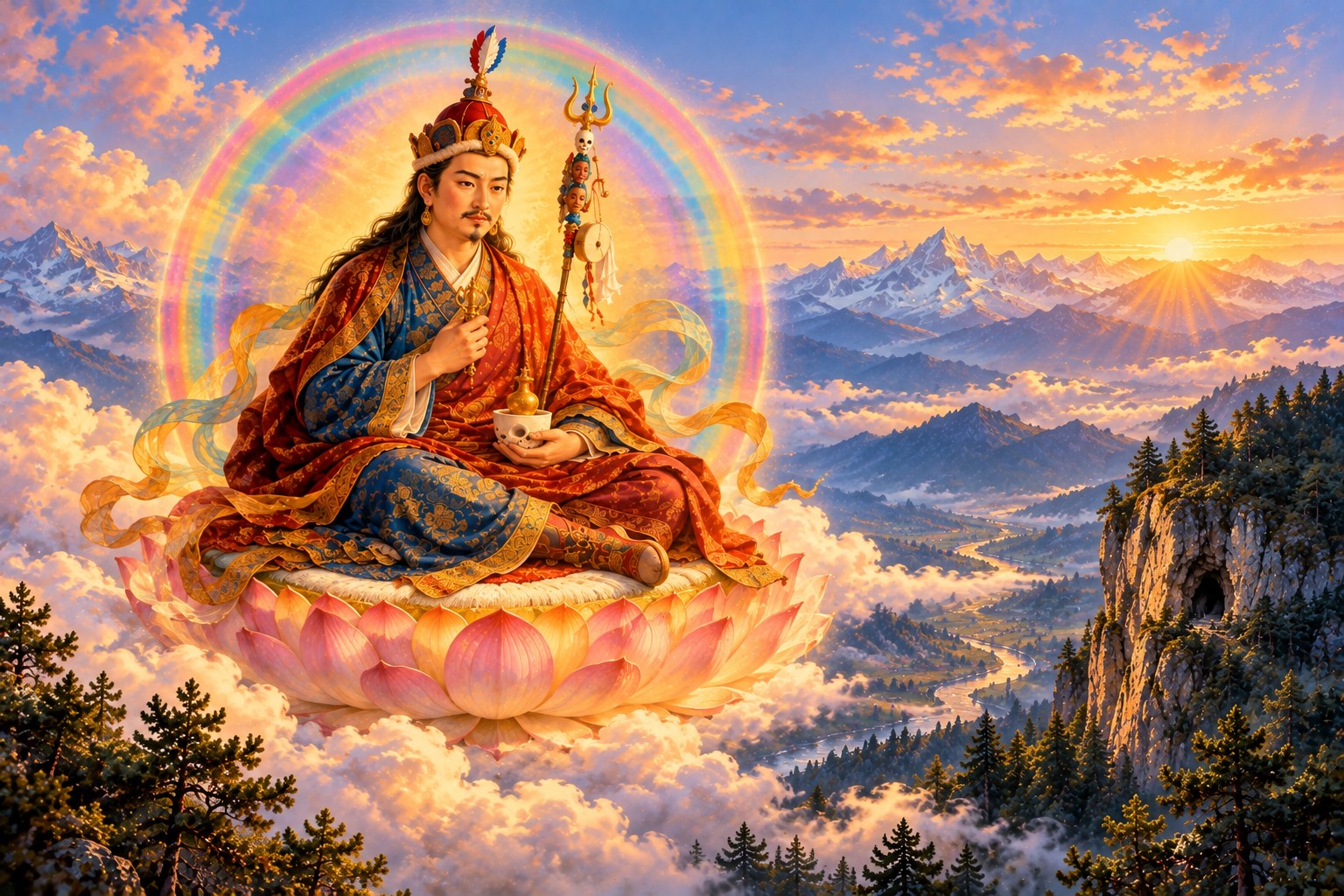
Two forms of Guru Rinpoche appear on this page. In most scenes he is in his main, peaceful form: the lotus hat with a half-vajra, sun and moon and a single vulture feather, layered robes, a five-pronged vajra at his heart, and the khatvanga, a slender staff crowned with a trident, resting against his left shoulder. In scenes 1 and 6 he appears as Dorje Drolö, one of the Eight Manifestations.
Dorje Drolö is painted as Himalayan Art Resources and Robert Beer describe him: deep maroon-red, three eyes, fangs biting the lower lip, flame-like hair, embroidered robes, a brocade cloak and felt boots, a vajra raised in the right hand and a ritual dagger (phurba) held downward in the left, standing on a pregnant tigress amid the flames of wisdom. The flames stand for awareness that burns away obstacles, not for destruction. Traditional paintings also show a garland of heads, symbolising the cutting of ego and confusion; here it is kept tiny and pale, and the figures some paintings show under his feet are left out.
Yeshe Tsogyal appears in her dakini form, with a golden flower diadem and silks of white, sky blue and gold. A dakini is a female embodiment of awakened wisdom. The spirits of the cliff are shown only as mist and light, never as monsters, because the tradition tells this as a story of beings won over, not destroyed. The eight dancing figures at Kurje are kept tiny and luminous so as not to blend the features of the eight forms.
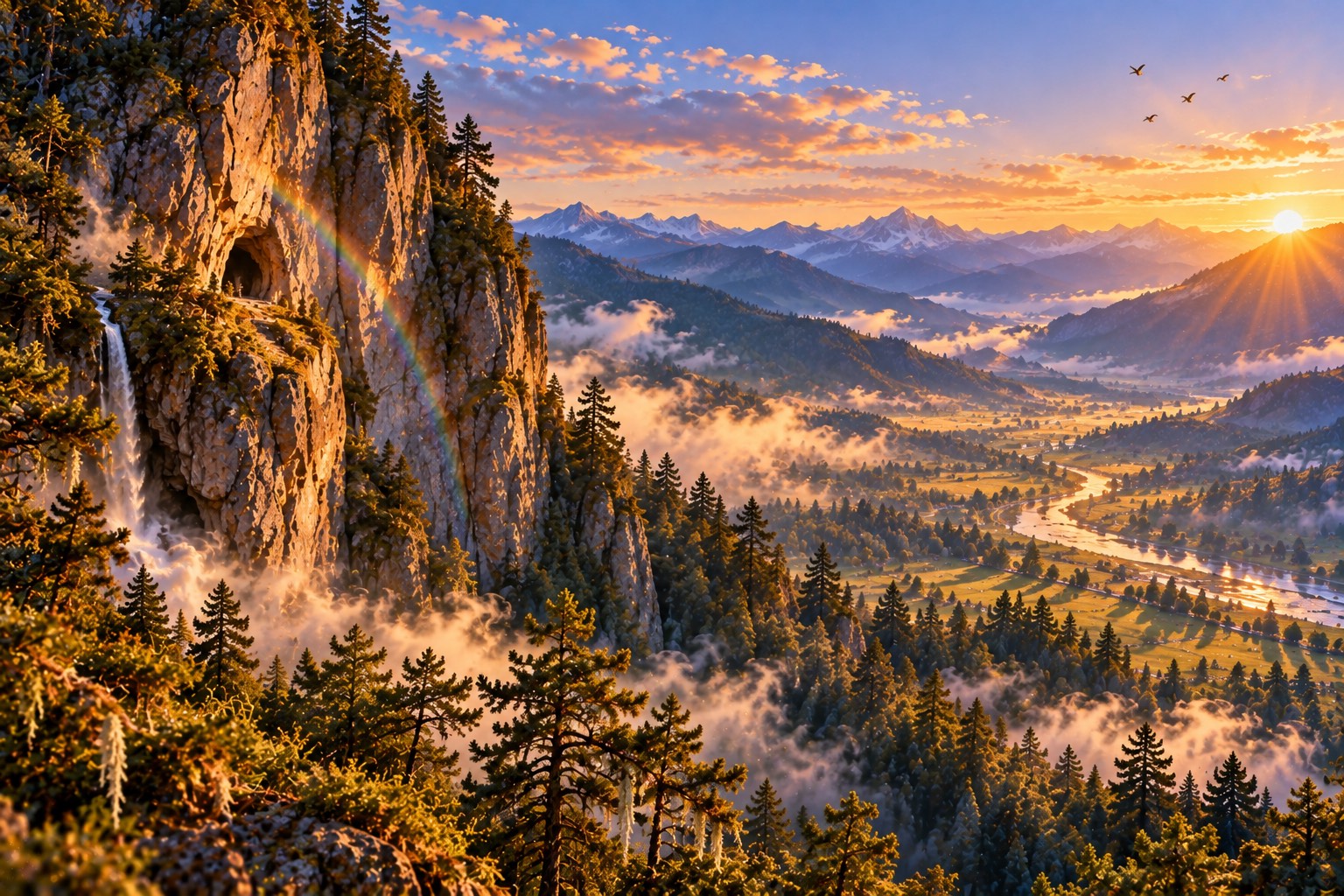
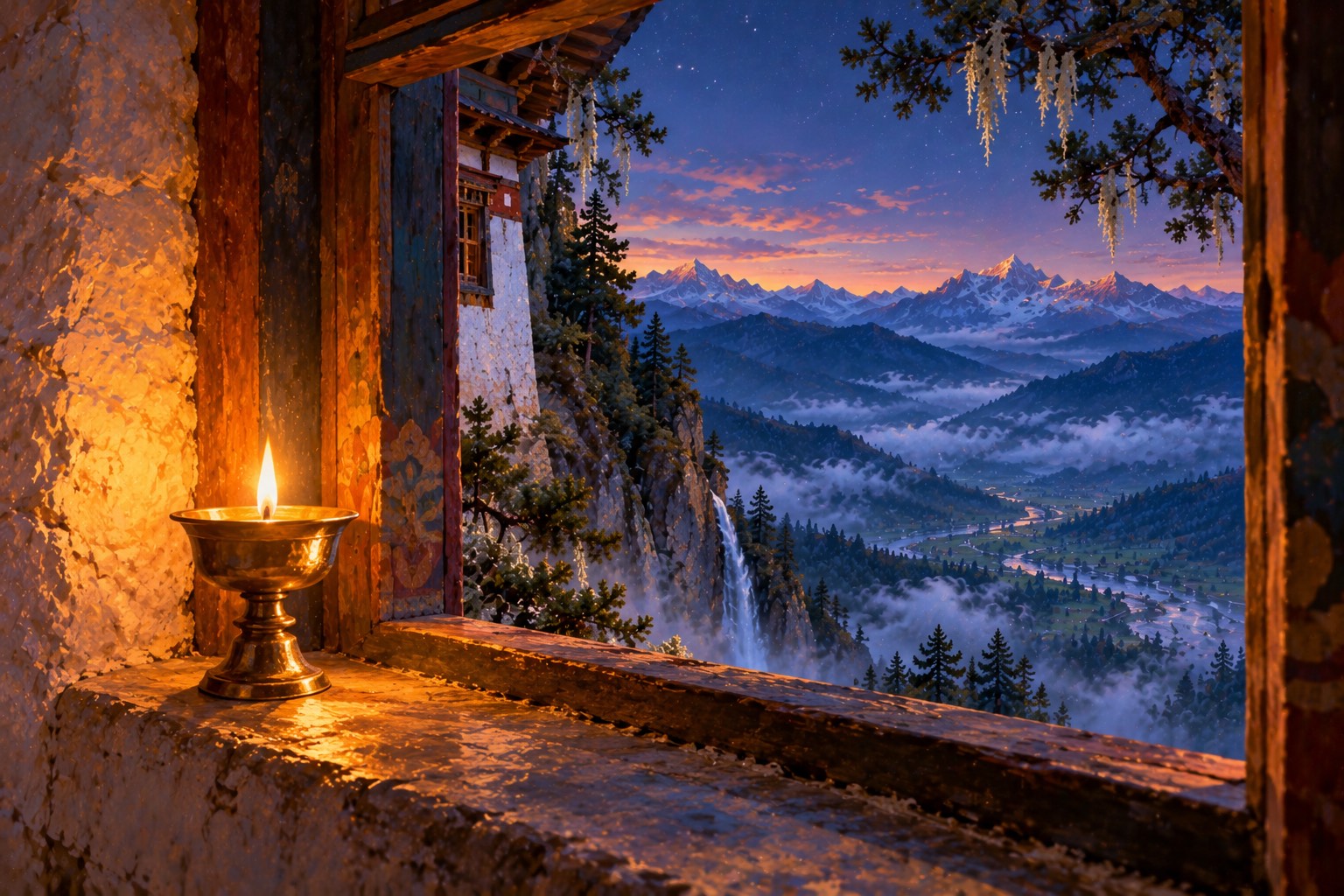
The temple is shown as it has looked since the seventeenth century, without people and without prayer flags, which carry printed text. The eighth-century scenes show the cliff bare of buildings.
Why this matters for practice
The third line of the Seven-Line Prayer speaks of Guru Rinpoche's wondrous supreme accomplishment. Taktsang shows two faces of that accomplishment: long stillness in a cave, and a compassion fierce enough to turn harm into protection. Reciting the prayer is a simple way of calling on both, the calm and the courage, in our own lives.

If something in this story moved you, the tigress, the quiet cave, or the idea of a compassion strong enough to be fierce, you might pause and recite the prayer once. There is no cliff to climb. Wherever you are tonight is enough.
Sources and further reading
- Guru Dorje Drolö, Rigpa Wiki (archived snapshot)
- Taktsang, Rigpa Wiki (archived snapshot)
- Taktsang Monastery, Rigpa Wiki (archived snapshot)
- Eight Manifestations of Guru Rinpoche, Rigpa Wiki (archived snapshot)
- Bhutan: Taktsang (A. Maki Archive), Himalayan Art Resources (Ariana Maki, Jeff Watt)
- Padmasambhava: Dorje Drolo, Himalayan Art Resources
- Dorje Drollo (Padmasambhava, Eight Forms), item 731, Himalayan Art Resources (Rubin Museum)
- Padmasambhava and his Eight Manifestations, Robert Beer, tibetanart.com
- Dorje Drolö (topic page), Lotsawa House
- The Annihilator of Damsi Demons: A Prayer to the Lineage of Dorje Drolö (Jamyang Khyentse Chökyi Lodrö, trans. Adam Pearcey, 2022), Lotsawa House
- Taktshang (Tiger Nest) Monastery, Paro Dzongkhag Administration (archived snapshot)
- Bhutan Travel (Tourism Council of Bhutan), bhutan.travel
- The Fourth Druk Desi, Tenzin Rabgye (Ariana Maki, 2010), Treasury of Lives (archived snapshot)
- Wrathful Imagery in Tibetan Buddhist Art (Annabella Pitkin), Rubin Museum of Art
- Kurjey: a cave of the red cliff where Guru Rinpoche left an impression of his body, Bhutan Pilgrimage
- Kurjey Lhakhang, Wikipedia
- Paro Taktsang, Wikipedia
- Who is the Tigress in the Lair? A Preliminary Enquiry About Khandro Yeshe Tshogyel's Visit to Taktsang (Sonam Kinga), Journal of Bhutan Studies 40
This retelling is waiting to be read by a knowledgeable practitioner. Where the traditional accounts differ, the story says so; if you notice a mistake, please tell us through Share Your Story.