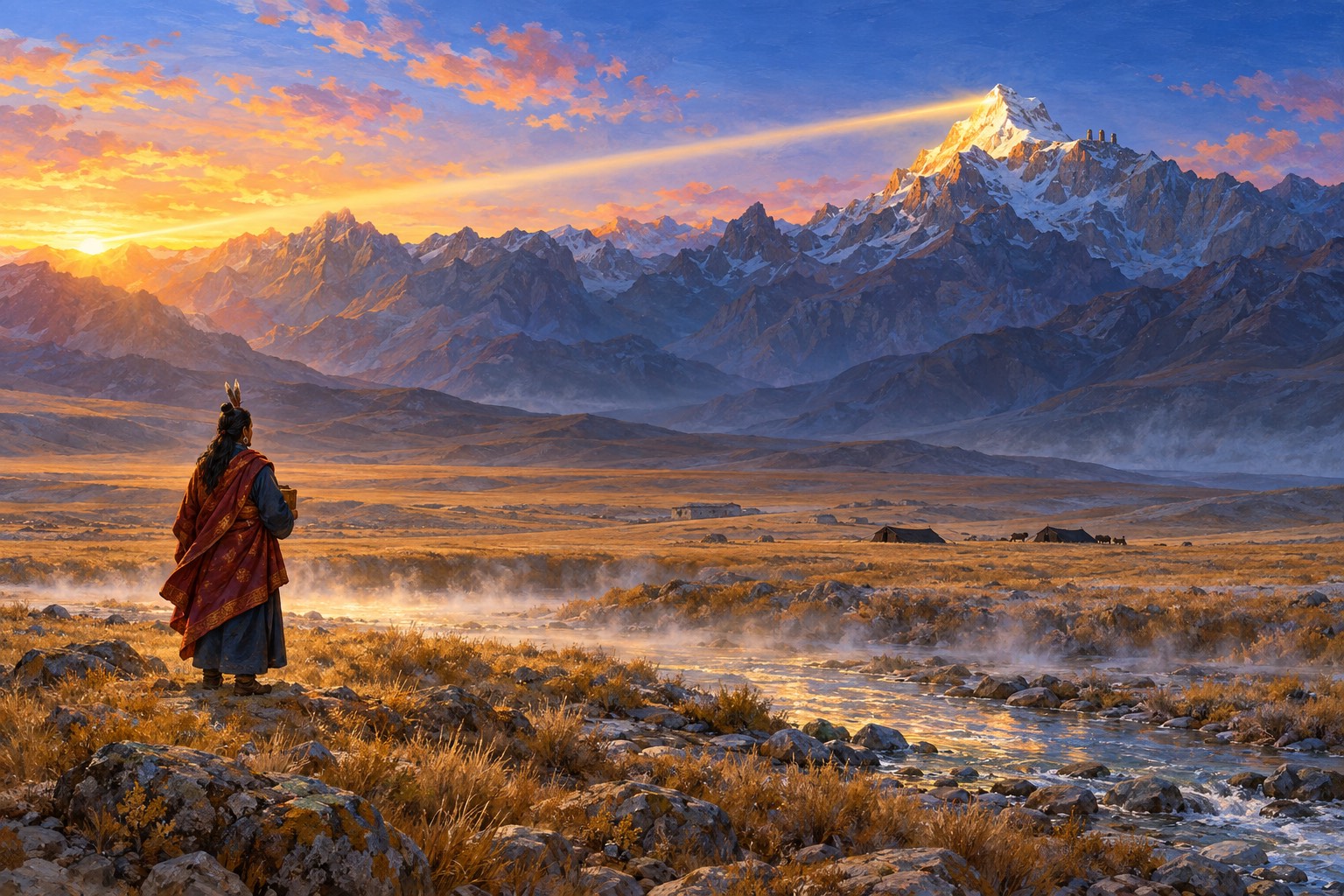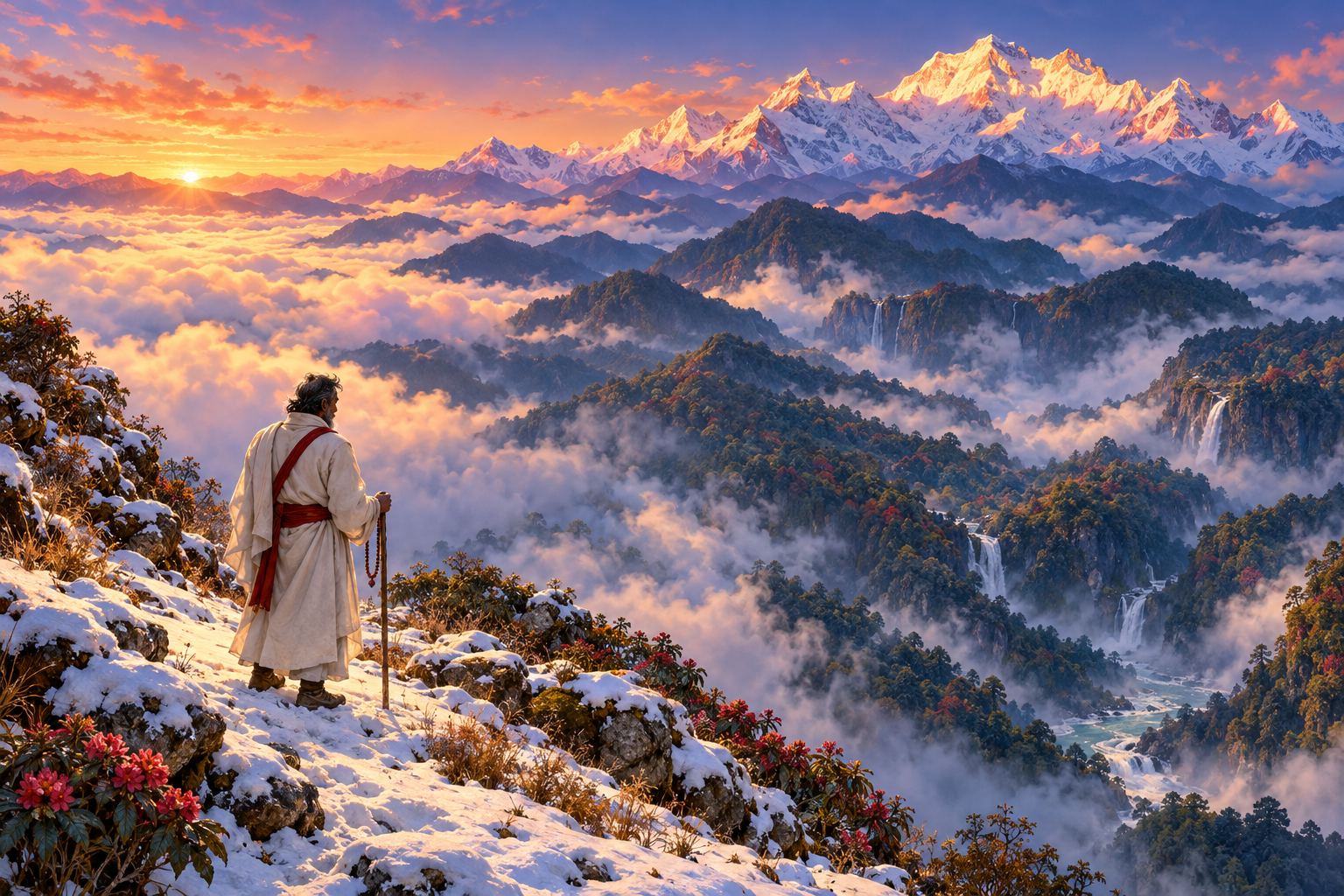
High on a snowy pass in the far north of Sikkim, in the autumn of 1646 by one Sikkimese reckoning, a man of about fifty stood looking down into a sea of forest and cloud. Behind him lay Tibet. Ahead lay the land Tibetans call Demojong, “the valley of rice,” which the tradition remembers as a hidden land blessed long before by Guru Rinpoche, the “Precious Teacher” Padmasambhava.
His name was Lhatsün Namkha Jigme. Sikkim still calls him Lhatsün Chenpo, “the great Lhatsün,” and a short life published in Gangtok calls him the patron saint of the land.
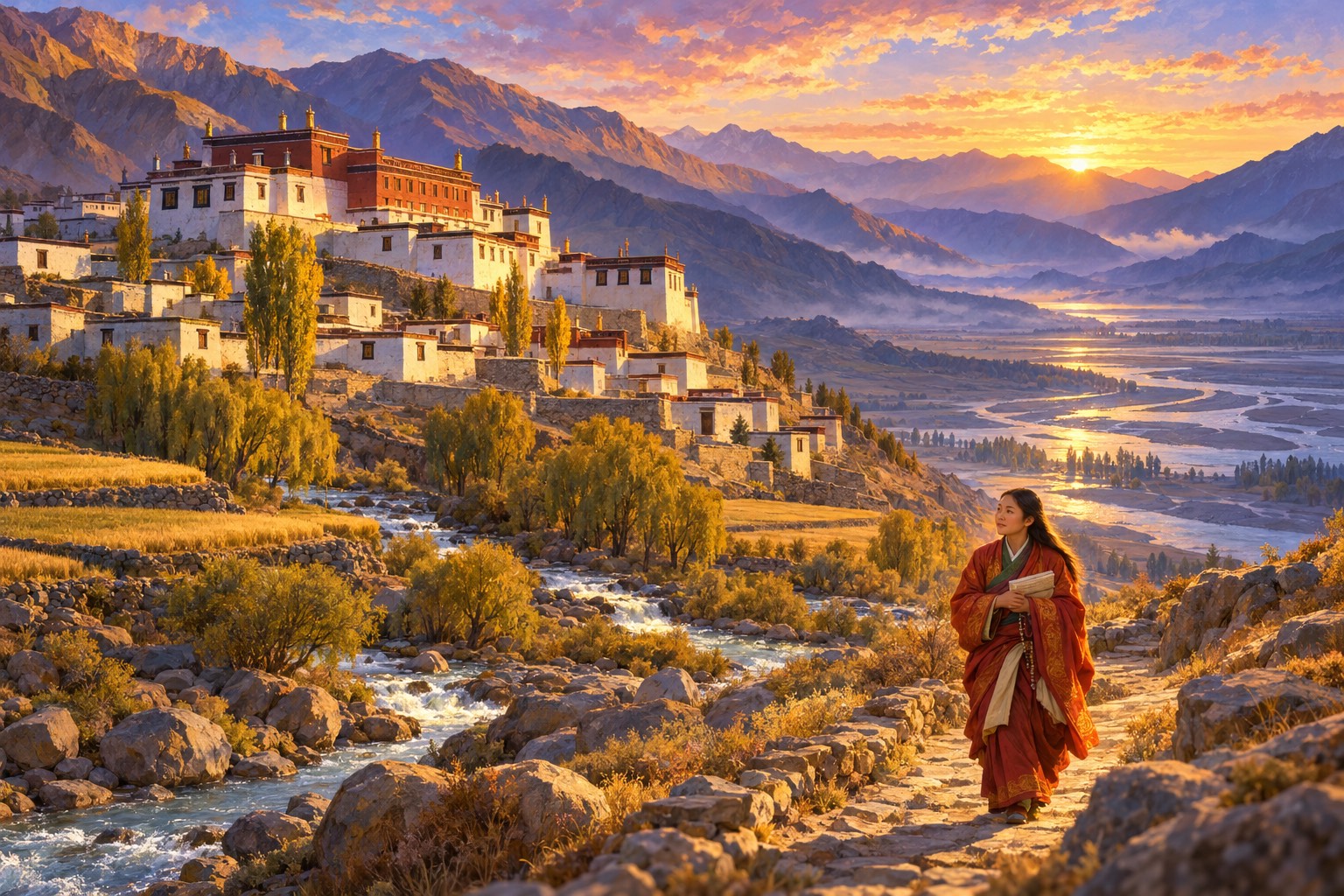
A novice from the south
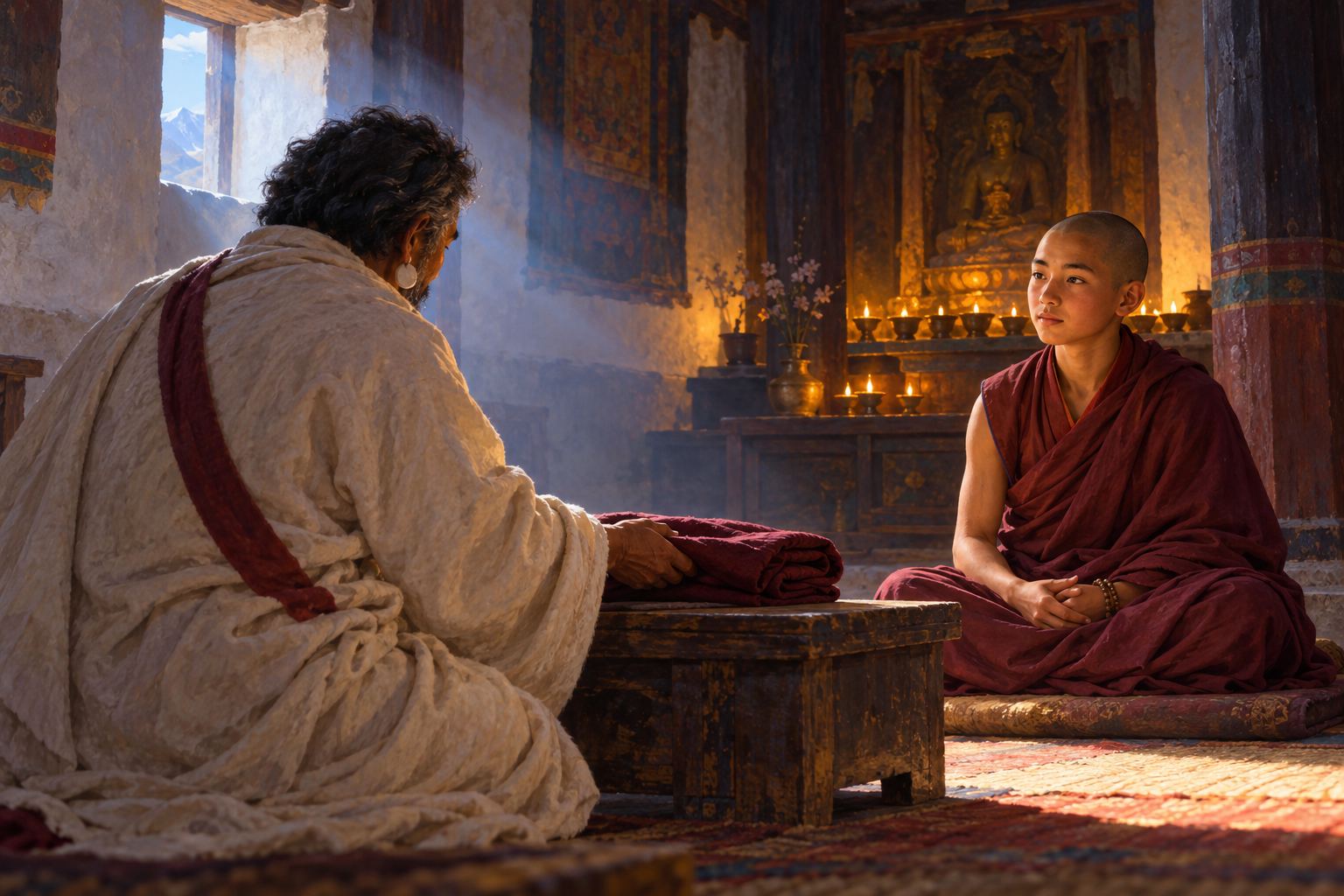
He was born in 1597 at Jaryül in southern Tibet. The tradition counts him as an emanation of two great masters of Dzogchen, the “Great Perfection,” the Nyingma teaching on the mind's own nature: Vimalamitra, the Indian teacher of the eighth century, and Longchenpa, the Tibetan master of the fourteenth.
As a young man he was ordained at a hermitage called Sungnyen and given the name Kunzang Namgyal. He studied at a college at Thangdrok and then, Rigpa Wiki says, spent seventeen years with the Dzogchen master Sonam Wangpo, receiving the innermost instructions of that tradition.
Years in the mountains
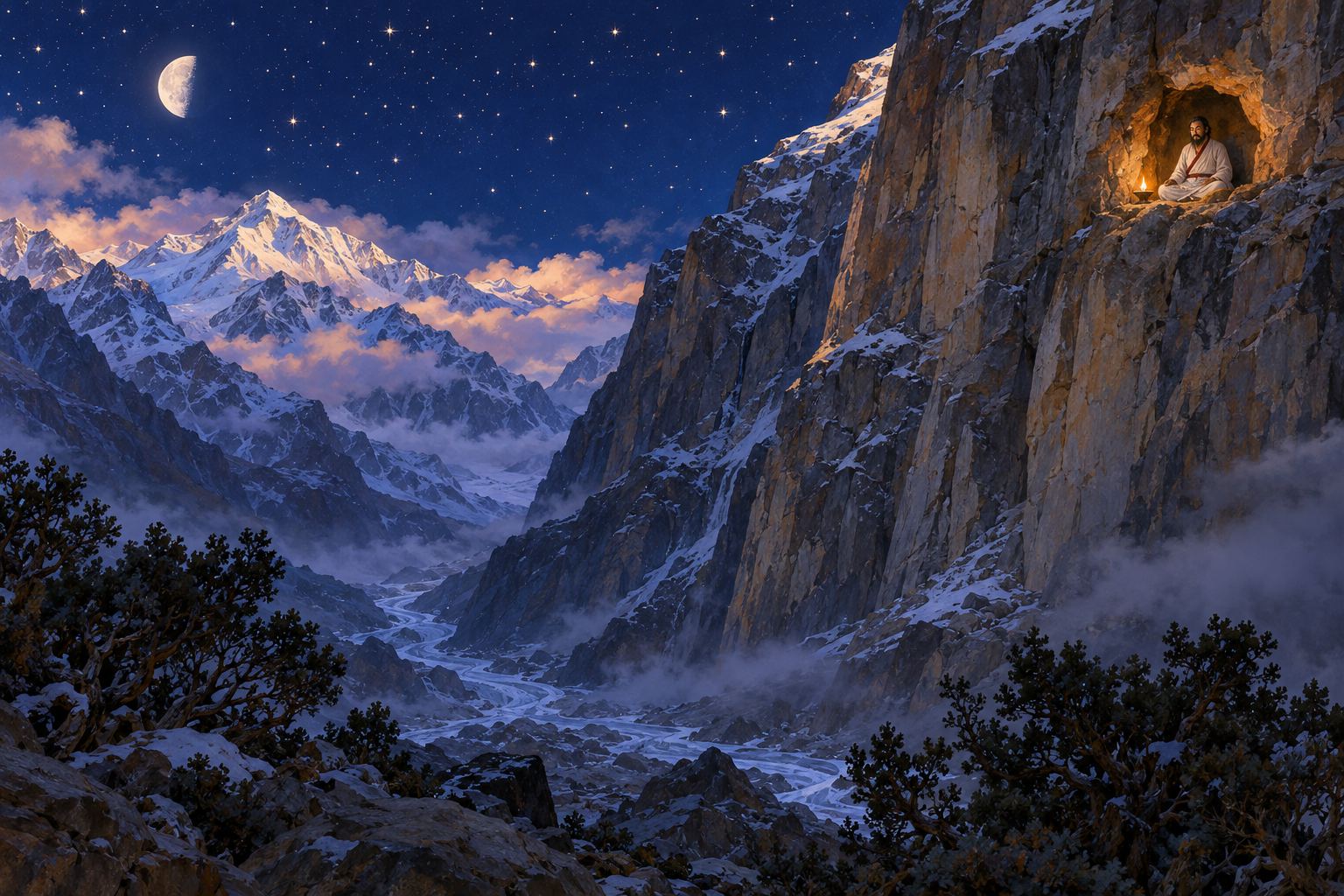
Learning was only the beginning. He carried it into the mountains, staying for years at remote pilgrimage places in central and western Tibet. Rigpa Wiki adds that he helped restore Samye, Tibet's first monastery.
Stories gathered around him, as they do around such yogis. At Tsari, the accounts say, he stopped an avalanche with a single fierce gaze. During his retreats pure visions came to him, and from one came a treasure teaching called the Dorje Nyingpo, the “Indestructible Essence.” Rigpa Wiki places that vision in Tibet; the short life from Gangtok places its discovery later, in a cave in Sikkim.
The call to the hidden land
Two words will help here. A terma is a “treasure,” a teaching the tradition says Guru Rinpoche concealed for a later time. A tertön is the one destined to reveal it. Lhatsün's most important teachers, Jatsön Nyingpo and Düdul Dorje, were both great tertöns.
When he was about fifty, these two teachers told him the time had come to go to Sikkim. They pointed to a prophecy that his going would benefit the Dharma, the Buddha's teaching, throughout the Himalayas. The Gangtok life says he set out from Samye; Rigpa Wiki says simply that he went on foot.
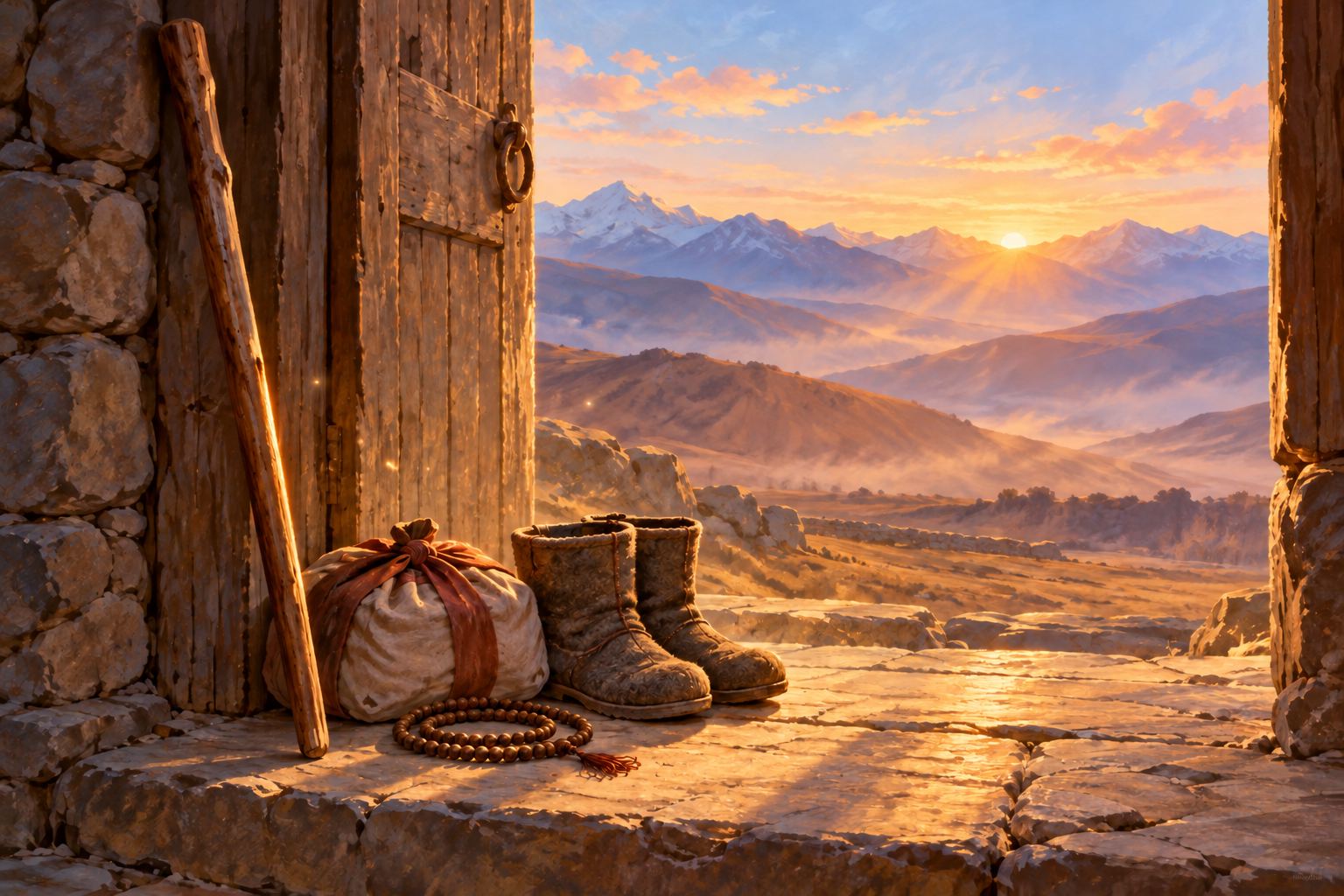
He was not the first to come. Nearly three centuries earlier Rigdzin Gödem had crossed from the north and opened the hidden valley, as told in the story Rigdzin Gödem and the Hidden Valleys. Lhatsün too came in by the northern gate, over a high pass that one source names Tsö La and another the Dzongri route.
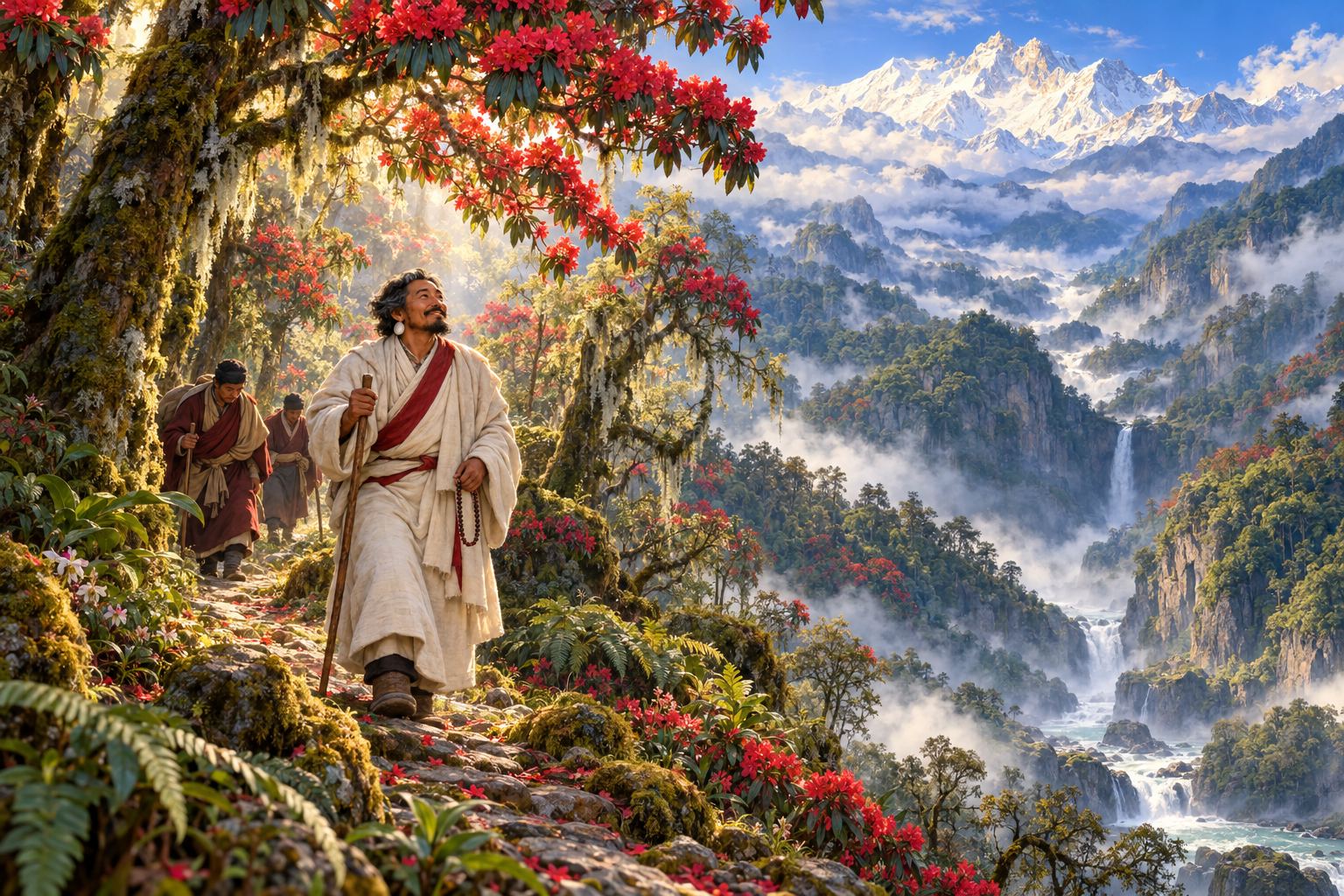
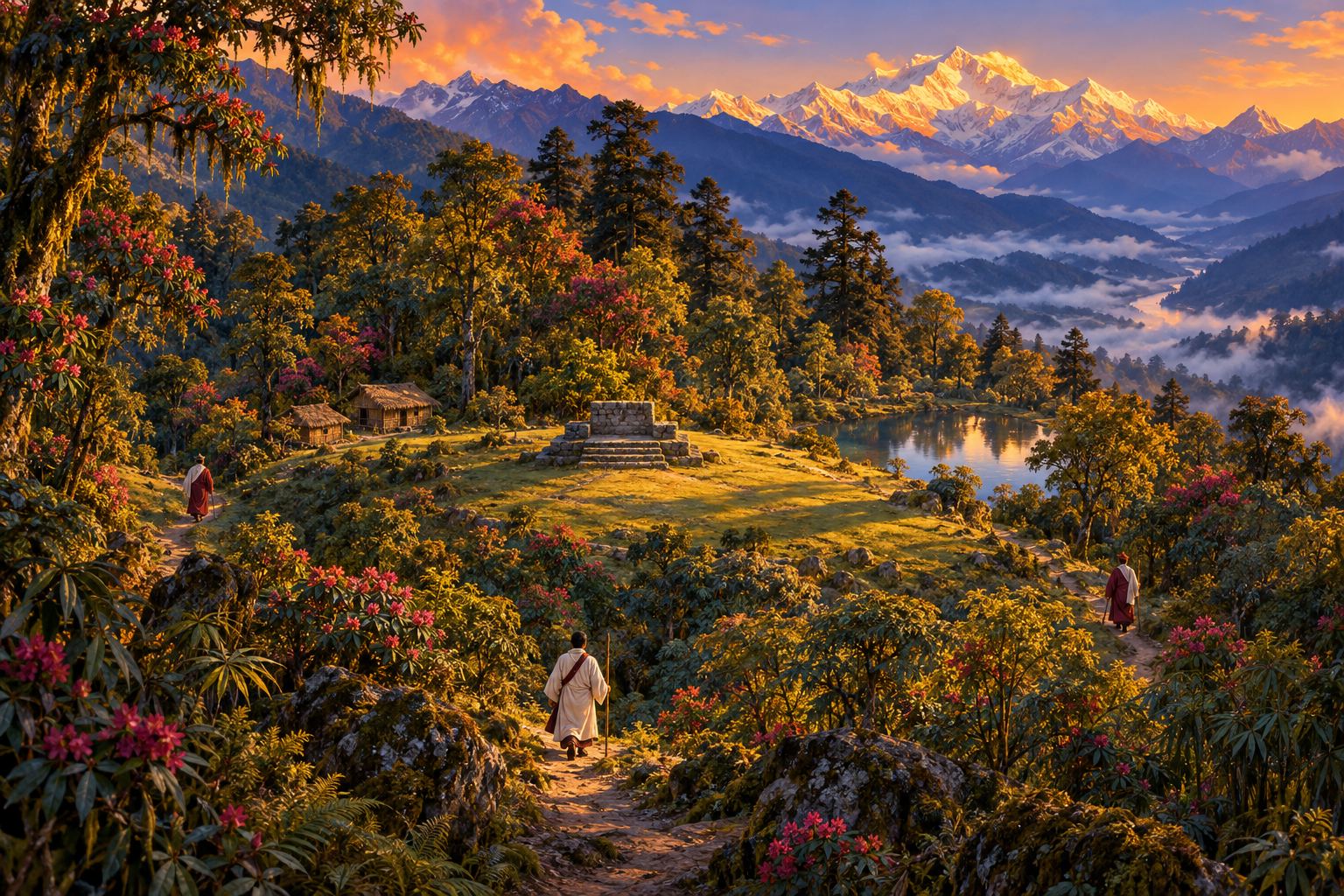
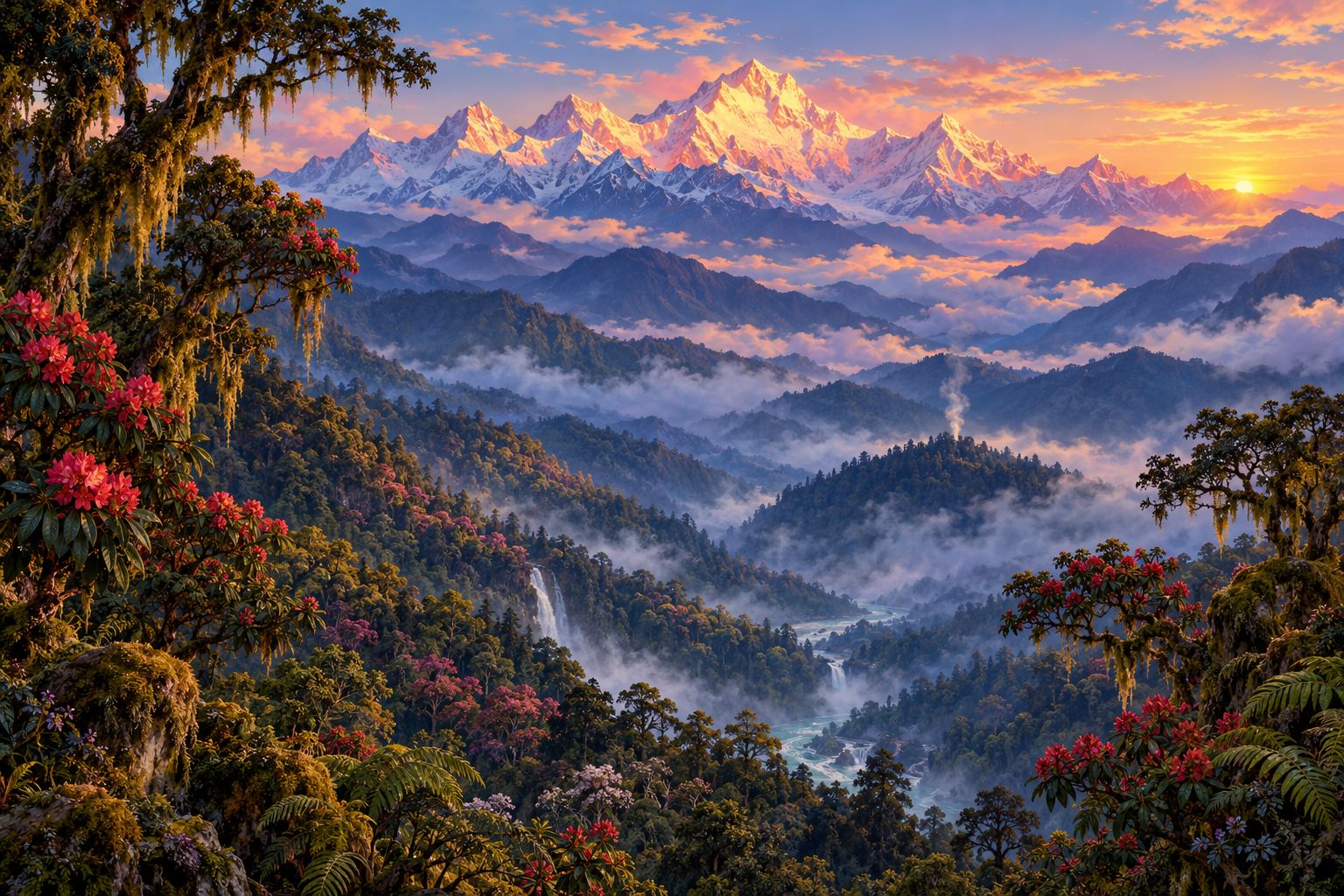
Below the snows the path dropped into another world: steep forests of oak, magnolia and red rhododendron, moss hanging from the branches, rivers roaring in the ravines, and mist rising out of every valley.
Three lamas at Yuksom
The best-known part of his story happens at Yuksom, in the upper Rathong valley of West Sikkim. Its name is popularly explained as “the meeting place of the three learned monks.”
Three lamas, the tradition says, came into Sikkim from three directions: Kathok Rigdzin Chenpo from the west, Ngadak Sempa Chenpo Phuntsok Rigdzin from the south, and Lhatsün from the north. There they met.
A prophecy, people said, called for a fourth man, from the east. A well-loved story tells that he was found near present-day Gangtok: Phuntsok, a man of a family that had come from Tibet generations before, who welcomed travelers kindly.
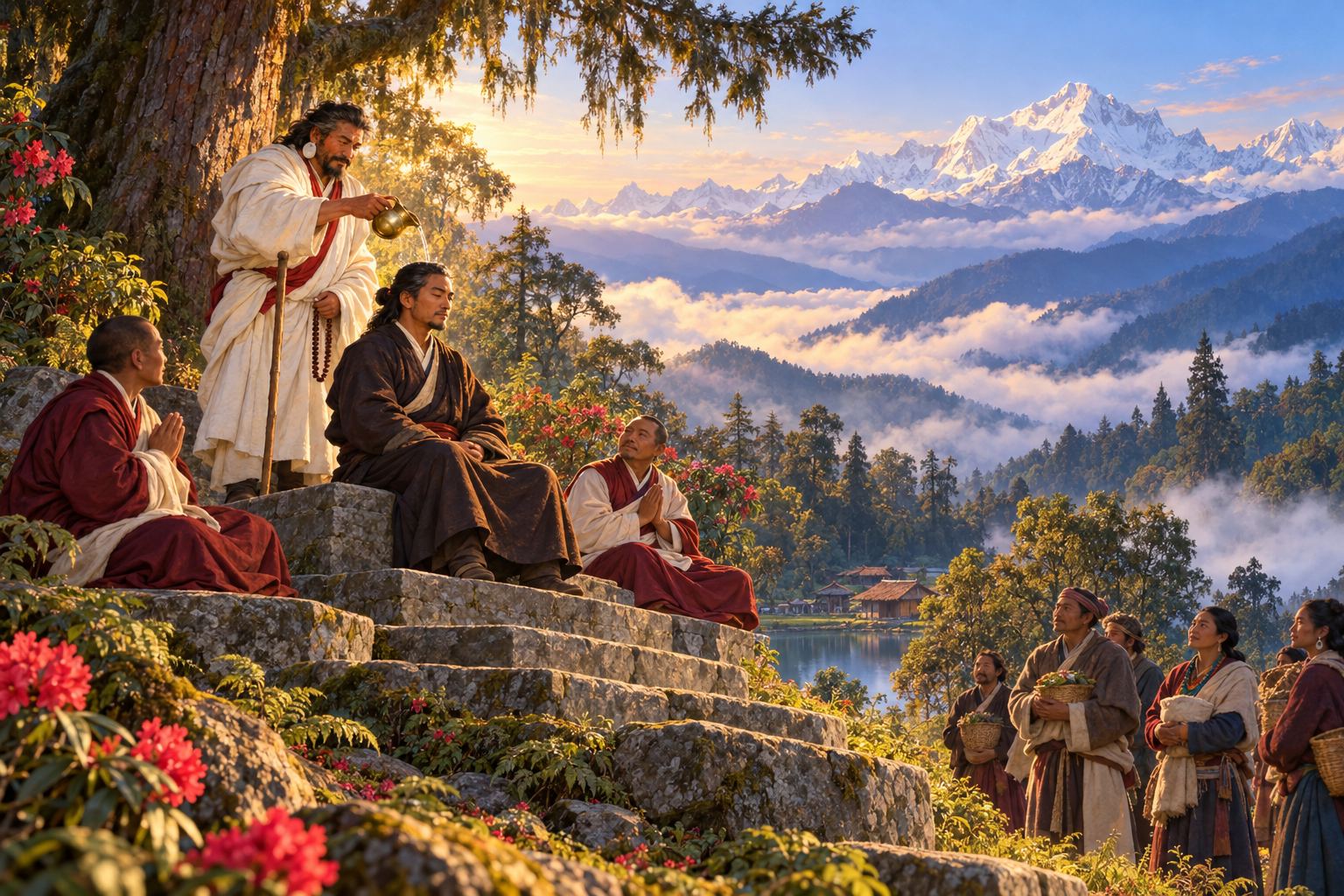
On a forested hill called Norbugang, the lamas seated him on a throne of stone and anointed him with water from a sacred vase. He became Phuntsok Namgyal, the first Chogyal, “Dharma king,” of Sikkim. The line of kings that began there lasted until 1975.
The dates are told differently, and it seems right to say so. Most histories, and Yuksom itself, give 1642 for the meeting and the enthronement. A researcher at the Namgyal Institute of Tibetology in Gangtok, working from Tibetan sources, gives a fuller order: Ngadak Sempa Chenpo arrived in 1642 and sent for Phuntsok Namgyal that year, and Lhatsün reached Yuksom in 1646, when the three lamas formally confirmed the king. Rigpa Wiki also dates Lhatsün's journey to 1646.
The land was not empty before them. The Lepcha people had long lived among these forests, with sacred stories of the mountains of their own, and one account says local people came to Norbugang bearing gifts.
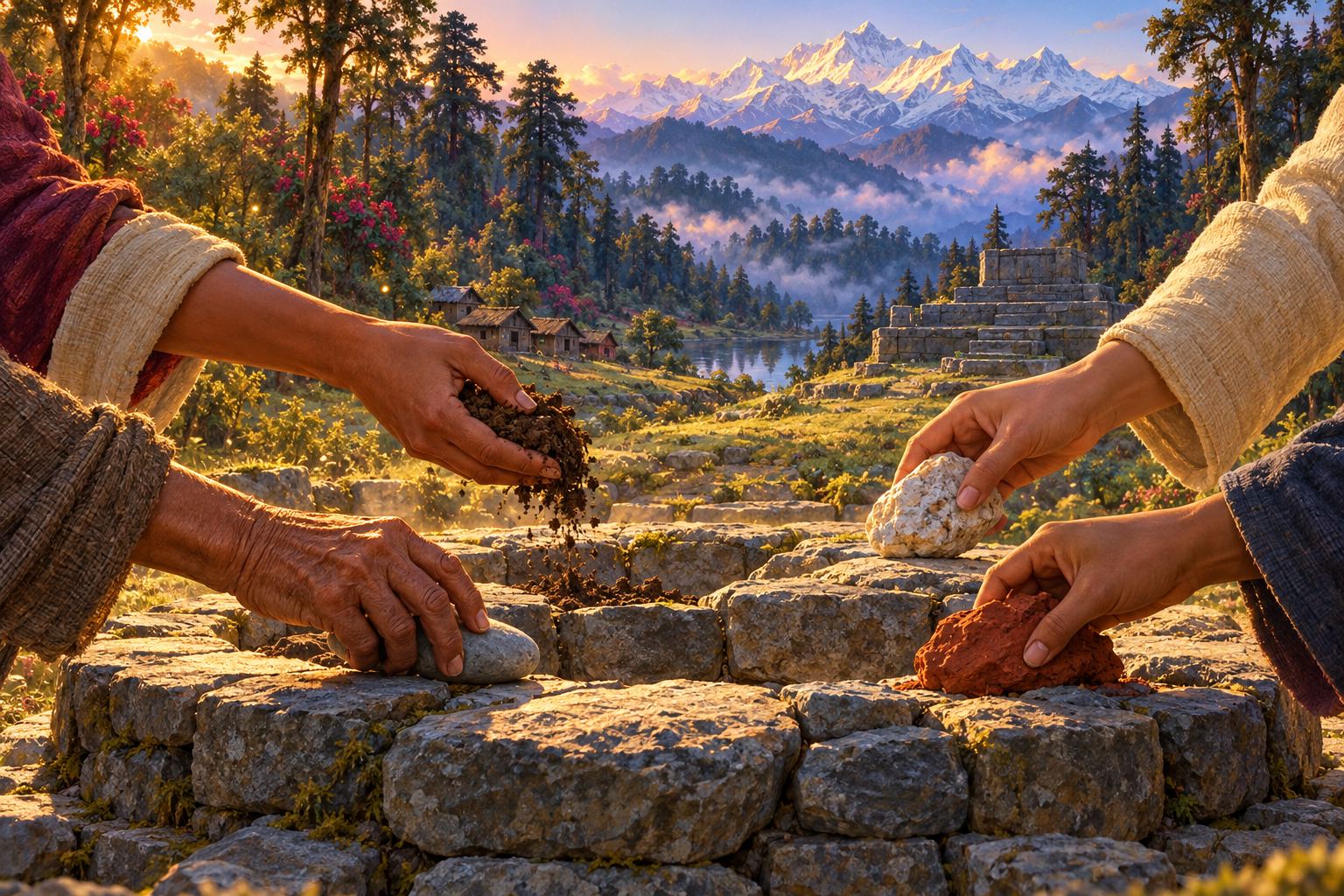
After the ceremony, the lamas gathered earth and stones from every part of the land and built a stupa, or chorten, at Norbugang, named Tashi Ödbar. The gifts Lhatsün had received are said to be sealed inside. The stone throne, with four stepped seats and the highest for Lhatsün, can still be seen beneath a great old tree.
The hermit's cell
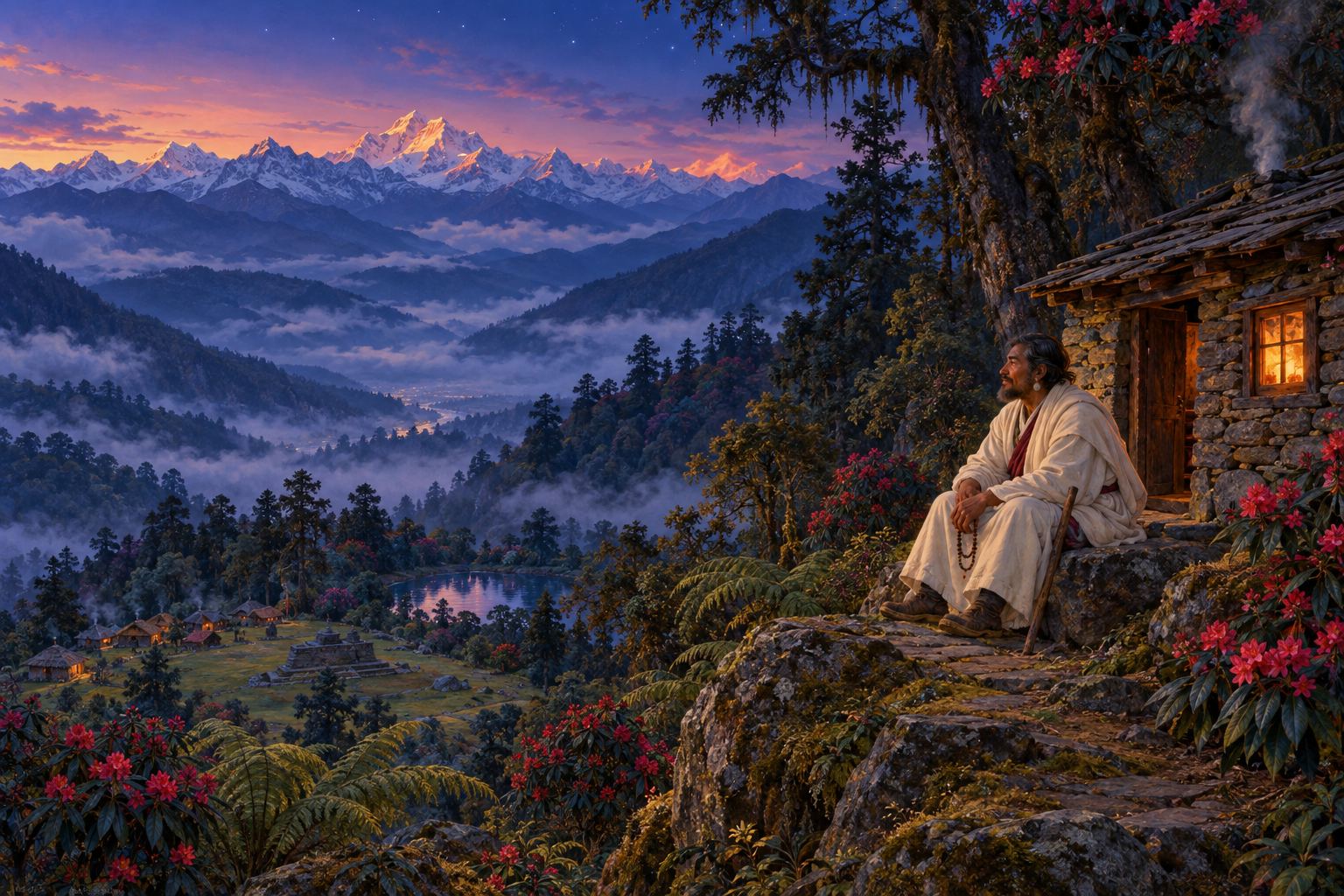
On a forested spur above Yuksom, Lhatsün made a place for retreat. It came to be called Dubdi, which local people explain as “the retreat,” and it was also known as the Hermit's Cell. The Gangtok note suggests his hermitage was perhaps the first Buddhist foundation in the land.
One Sikkimese history dates his founding of Dubdi to 1647. The stone temple standing there today is dated 1701, in the time of a later king, and it holds images of the three lamas. Perhaps the hermitage came first and the temple later; the sources do not say so outright.
The life-force of the awareness-holders
The treasure most linked with his name came to him in Sikkim. It is the Rigdzin Sokdrup, “Accomplishing the Life-Force of the Vidyadharas,” the awareness-holders who have realized the nature of mind.
Rigpa Wiki and Nekhor's pilgrimage guide say it arose in a pure vision while he was in retreat at Lhari Nyingphuk, a cave in the north of the land, days of walking above Tashiding. The Gangtok note links the find to Tashiding itself. The Namgyal Institute researcher describes the vision: dakinis, female wisdom beings, appeared playing a drum and a flute, and he wrote down what their music meant.
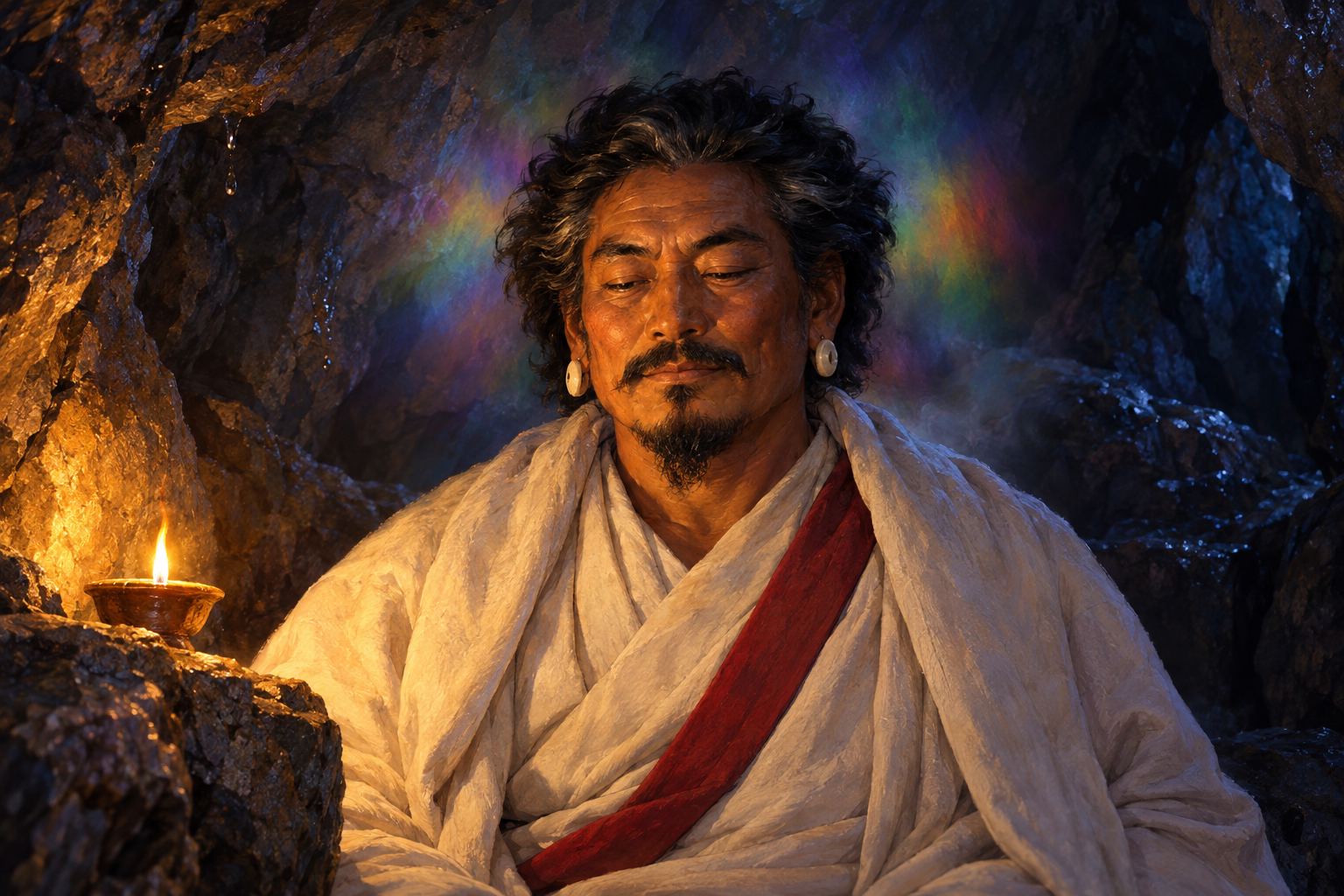
The Rigdzin Sokdrup is a practice cycle received from a qualified teacher, so this page names it and goes no further. If it calls to you, a teacher is the place to begin; the Find a Teacher page on this site is one starting point. One part of it has traveled far beyond Sikkim: the Riwo Sangchö, the “Mountain Smoke Offering,” now offered in Nyingma communities in many countries. Rigpa Wiki says that through it Lhatsün cleared the obstacles to the Dharma in Sikkim and opened it as a secret land of the teachings.
The mountain and the hill
Over all of West Sikkim stands Kangchenjunga, which Sikkim calls Gangchen Dzönga, “the five treasuries of the great snow.” In Sikkimese Buddhism the mountain is the great guardian of the north, honored each year at the festival of Pang Lhabsol.
Popular accounts say Lhatsün, meditating near Dzongri, saw the mountain's guardian and named it the protector of the land. I could not confirm this in a scholarly source, so it is offered here as the story people tell.
South of Yuksom, on a hill between the Rathong and Rangeet rivers, rises Drakar Tashiding. The Sikkimese histories say Guru Rinpoche blessed it as the heart of the hidden land, inseparable from his own pure realm. Ngadak Sempa Chenpo built the first temple there in the 1640s.
Lhatsün is credited with the Thongwa Rangdrol chorten at Tashiding, whose name means “liberation on seeing.” One account gives it to the first Chogyal instead. Pilgrims still walk around it.
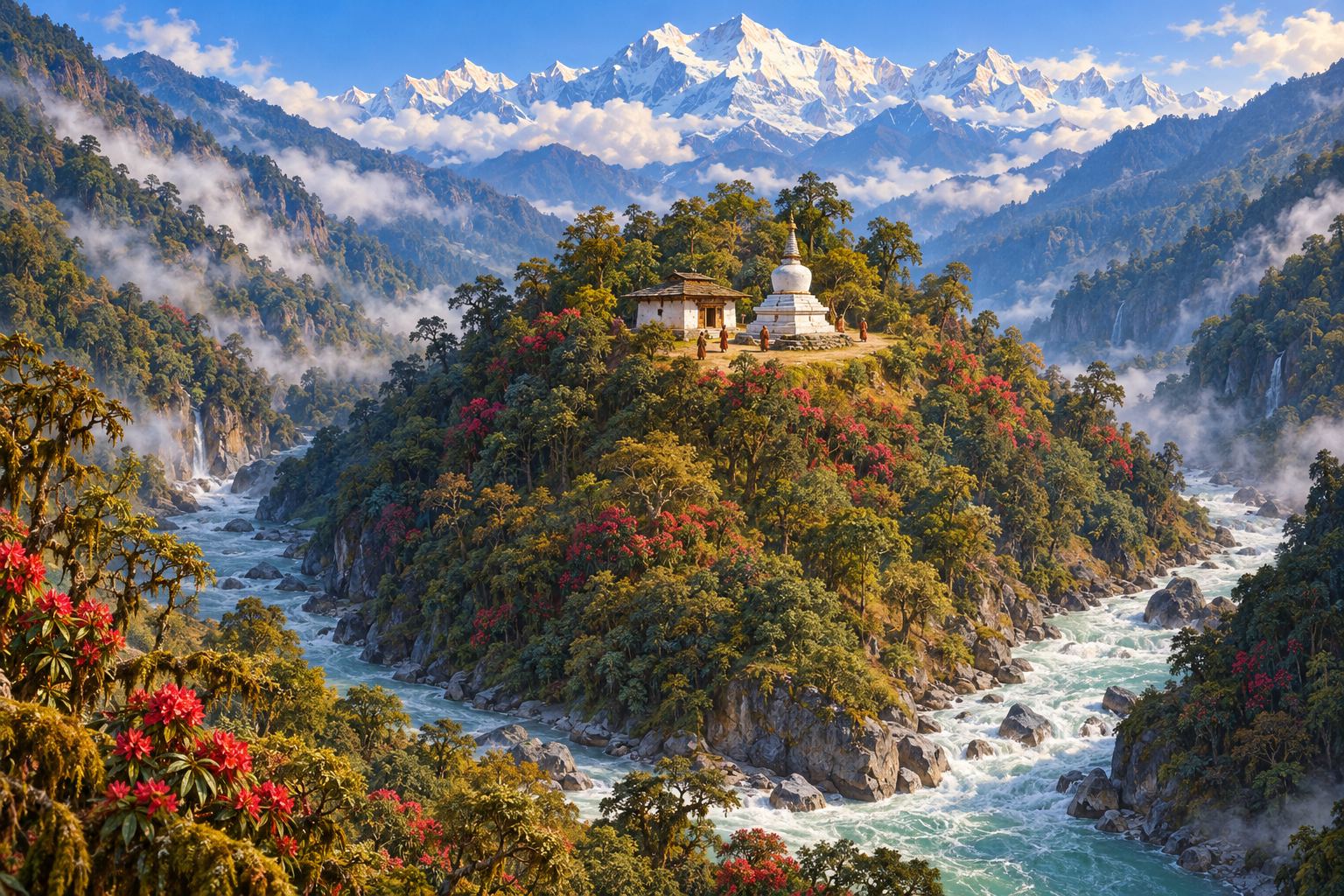
Sikkimese histories and the Treasury of Lives also credit him, or his lineage, with the first temple at Pemayangtse, and the Gangtok note adds Sangngak Chöling. Pemayangtse grew much larger later; one chapter of that story is told in Jetsün Mingyur Paldrön of Mindrolling.
Sikkim Dzogchen
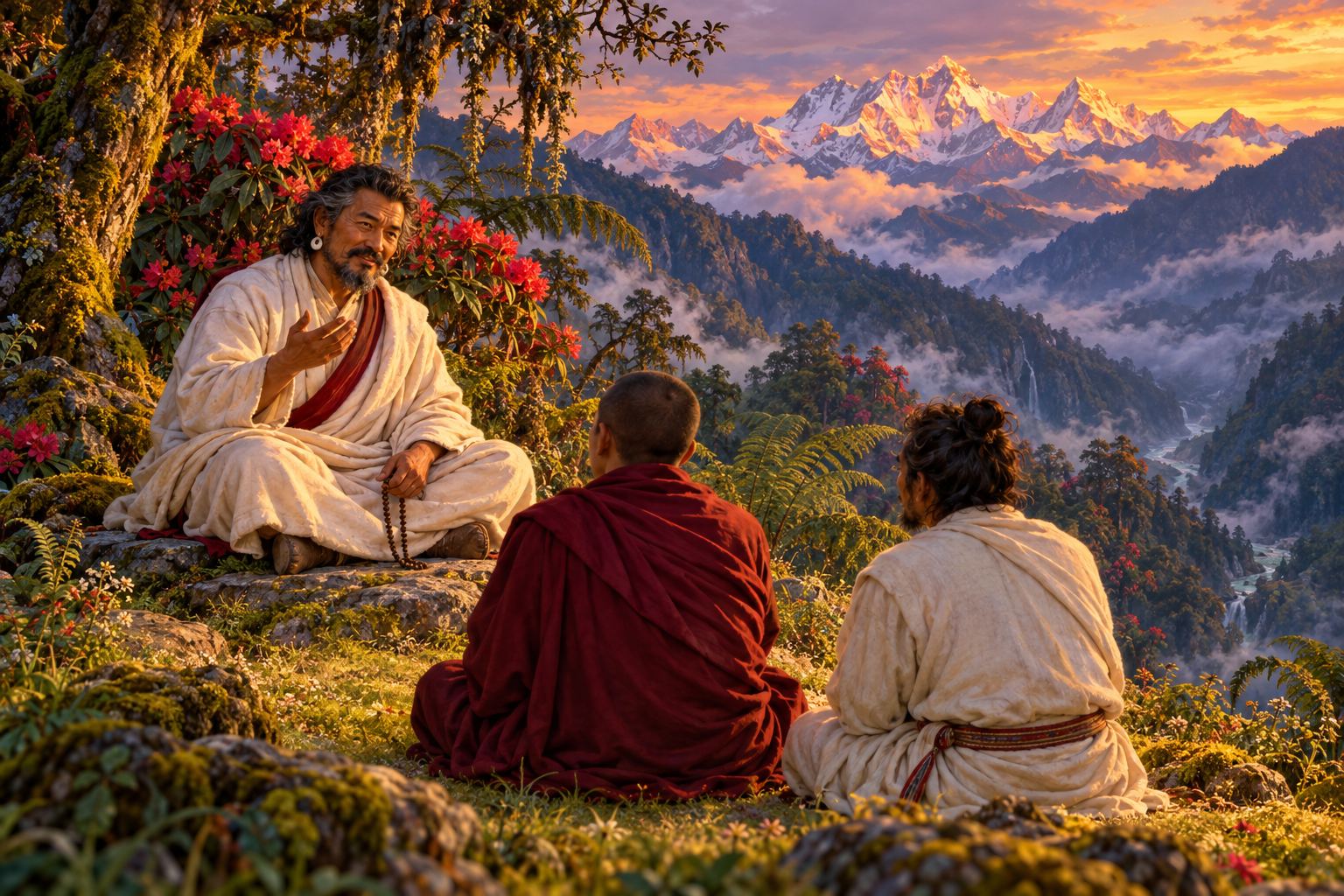
In his last years he taught Dzogchen so widely that his followers came to be called Dzogchenpa. Rigpa Wiki calls the lineage he left simply “Sikkim Dzogchen,” and says it has never been broken.
His death is dated 1650 by the Treasury of Lives and Lotsawa House, and 1653 by Rigpa Wiki. The Gangtok life says he lived fifty-eight years and, before he went, told his students not to grieve, since they had his teachings and his chief disciple. The accounts add that his body grew small and turned to relics.
Centuries later, the great master Jamyang Khyentse Chökyi Lodrö wrote that he remembered being Lhatsün. His own relics now rest in a stupa at Tashiding, near the chortens Lhatsün raised.
About the art
Lhatsün Namkha Jigme is drawn from two photographs of a traditional painting on Himalayan Art Resources, which show a yogi with thick, short black hair, a moustache and small pointed beard, large white earrings and a red meditation strap across his chest. In that painting he is bare-chested, wears bone ornaments and holds a trident staff and a skull cup. On this page he wears a plain white cotton shawl instead and carries only a walking staff and a mala, so that he is never confused with Guru Rinpoche and the tantric implements stay where they belong.
The red strap is a meditation strap, worn by yogis in long retreat to support the body in sitting. In scene 2 he appears as a young novice, with a shaved head and a maroon robe, because the life stories say he was ordained young before he became a wandering yogi.
The stone throne at Norbugang is shown as it might have looked in the 1640s, plain grey stone with four stepped seats, the highest for Lhatsün. Today it is whitewashed and stands in a small park. The stupa, or chorten, is a Buddhist monument holding relics and sacred objects; its stepped base, dome and spire stand for the path to awakening.
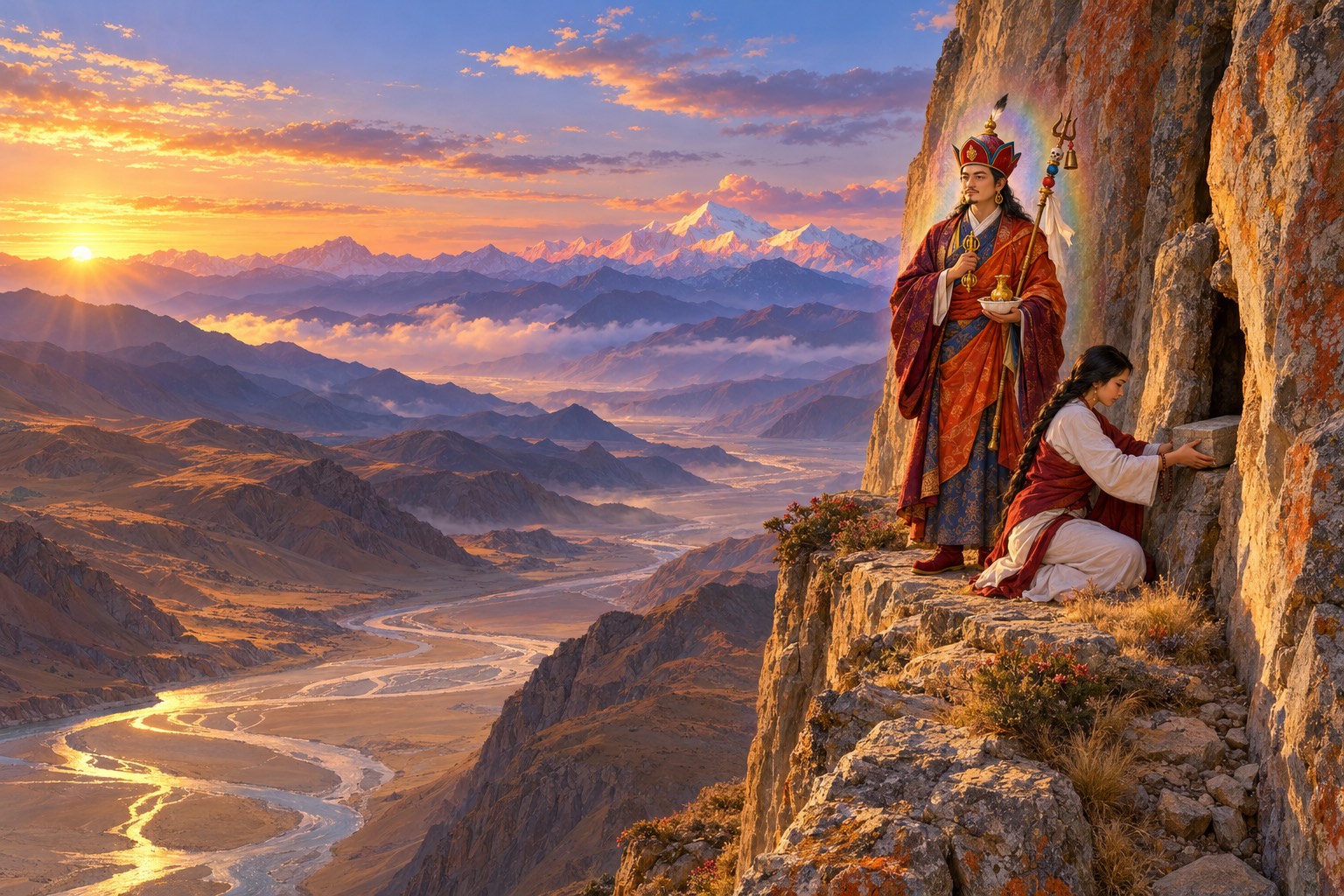
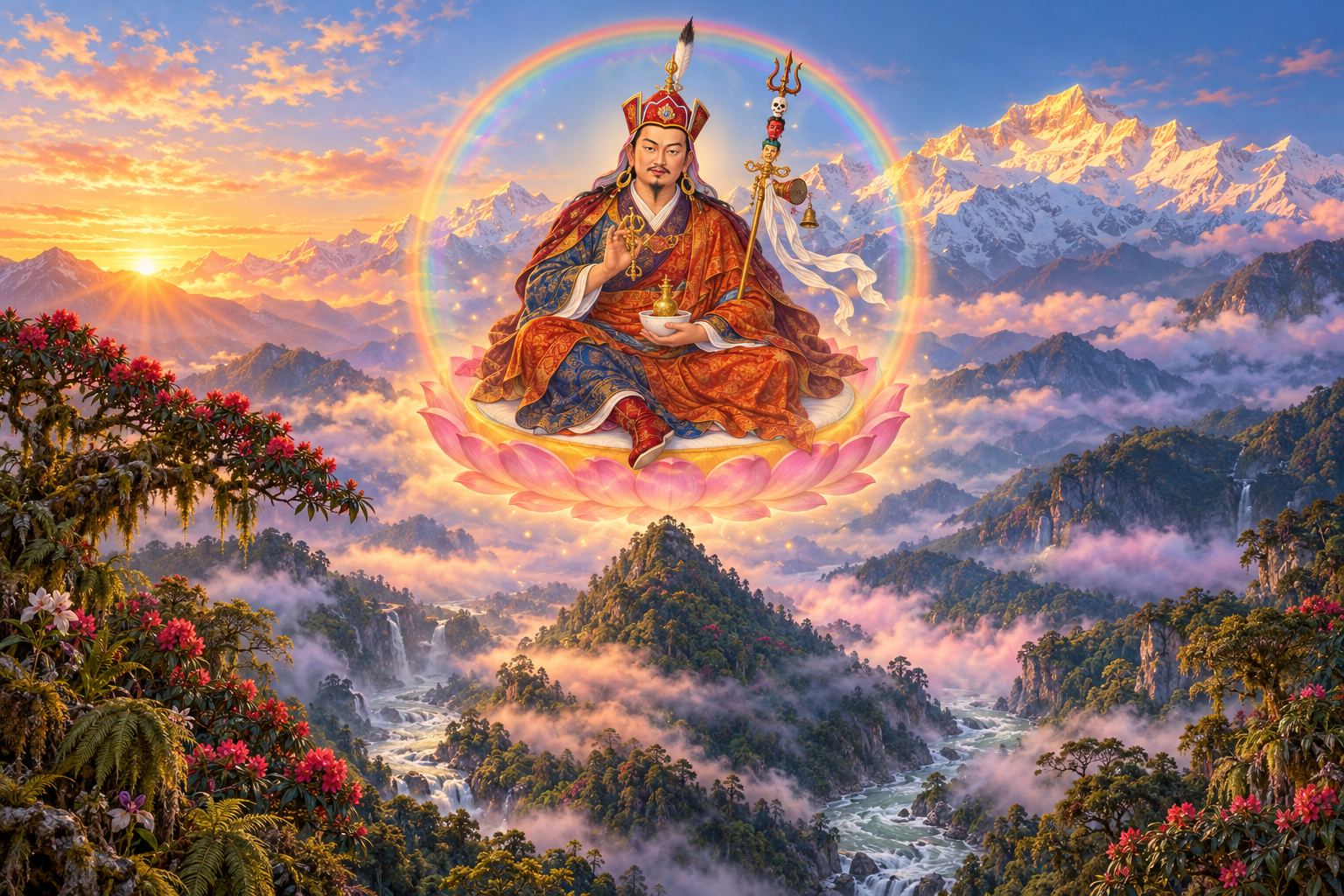
Guru Rinpoche appears once, in the closing image, in his main form: the lotus hat with a half-vajra and a single vulture feather, a five-pronged vajra at his heart, a skull cup holding a small vase of long life in his lap, and the khatvanga staff against his left shoulder, all within a rainbow sphere of light above the hills he is said to have blessed.
Why this matters for practice
The Seven-Line Prayer opens by naming a place, and Lhatsün's story is about how a place becomes holy ground: a hidden valley the tradition says Guru Rinpoche had already blessed, opened by a yogi who trusted that blessing enough to walk into it at fifty. Reciting the prayer can be a small version of that trust, a way of remembering that wherever we are, his blessing is said to have arrived first.

If something in this story moved you, you might pause tonight and recite the Seven-Line Prayer once, and think of a man of fifty walking down into an unknown valley because he trusted that Guru Rinpoche had been there first.
Sources and further reading
- Lhatsün Namkha Jikmé, Rigpa Wiki (Internet Archive snapshot, 20 April 2024)
- Note on the Biography of Lha-btsun Nam-mkha' 'Jigs-med (1597–1650 A.D.), the Patron Saint of Sikkim, by Rigzin Ngodub Dokham, Bulletin of Tibetology vol. 30 (1994), Namgyal Institute of Tibetology, via the University of Cambridge repository
- The Legacy of Guru Padmasambhava in the Dissemination of Buddhism in Sikkim, by Thupten Tenzing (Namgyal Institute of Tibetology), Sahapedia
- Lhatsün Namkha Jigme (author page), Lotsawa House
- Pemayangtse (institution page), The Treasury of Lives (Internet Archive snapshot, 15 November 2023)
- The Guru in West Sikkim, Nekhor
- Teacher: Lhatsun Namka Jigme (set), with items 15547 and 73407, Himalayan Art Resources
- Norbugang Chorten; Dubdi Monastery; Yuksom; Phuntsog Namgyal; Tashiding Monastery, Wikipedia
This retelling is waiting to be read by a knowledgeable practitioner. Where the traditional accounts differ, the story says so; if you notice a mistake, please tell us through Share Your Story.