
High above Samye, Tibet's first monastery, a scatter of small caves clings to a dry mountainside called Chimphu. Guru Rinpoche is said to have meditated there in the eighth century. A thousand years later a long-haired yogi named Jigme Lingpa sat in those same caves, and the tradition says that the great master Longchenpa came to him there three times.
This is the story of that yogi, of the teachings he brought to light, and of how they travelled from a cave in central Tibet to the whole world.
A boy who liked to play
Jigme Lingpa was born in 1730 (some sources say 1729) near Chongye, a side valley of the Yarlung region in south-central Tibet, not far from the great burial mounds of Tibet's early kings. At about six he went to live at Palri, a small monastery of the Nyingma, the "Ancient" school that traces itself to Guru Rinpoche.
He did not begin as a model student. His Treasury of Lives biography says that until about thirteen he cared more for play than for study. In a verse autobiography written later in life, he admits that as a young monk he knew few of the rules and was careless with the offerings people made to the temple.
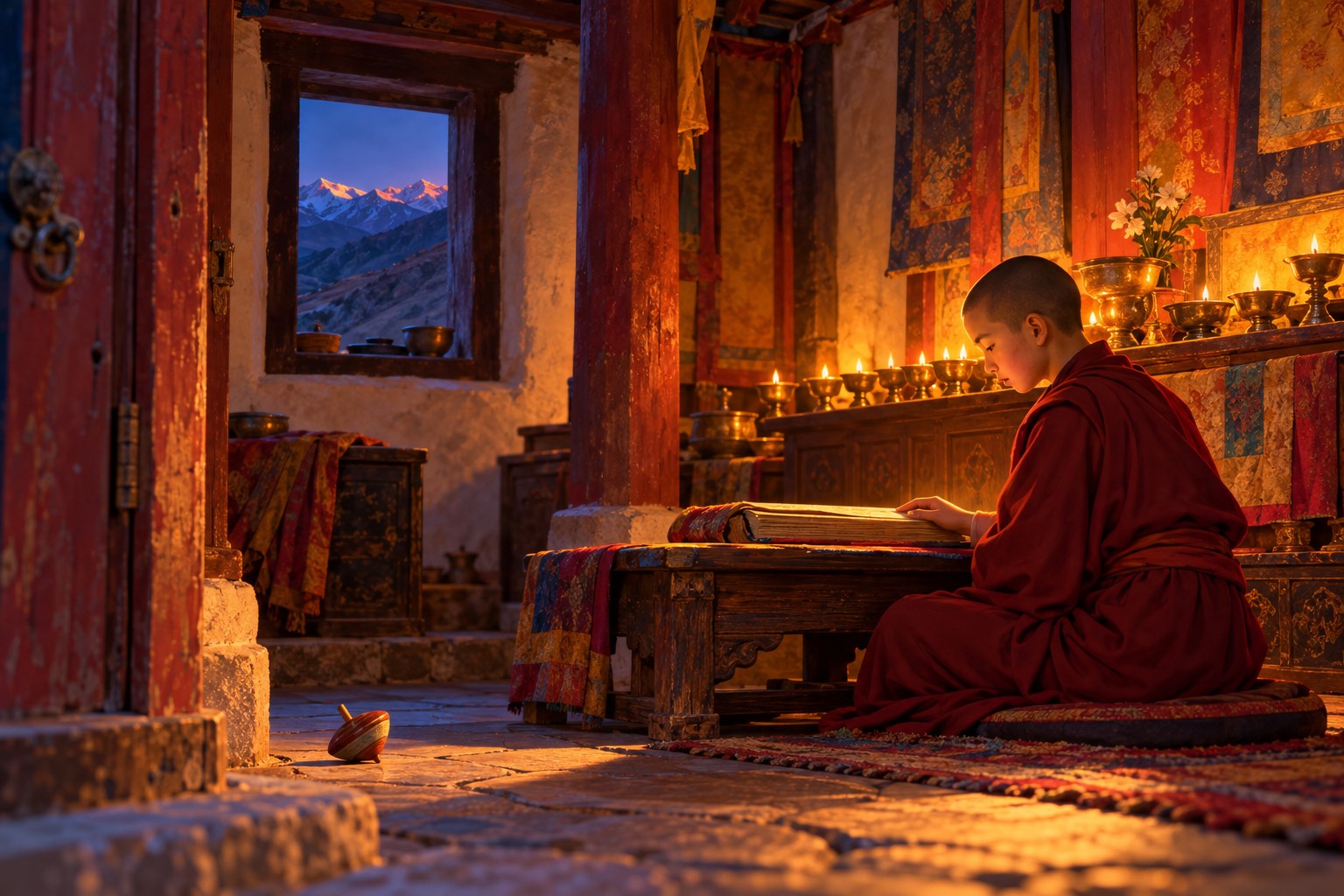
He never attended one of the great monastic colleges. He learned from the handful of teachers who came his way, and from his own reading. That reading included the life story of Guru Rinpoche, the Lotus-Born master to whom the Seven-Line Prayer is addressed.
Afterwards, he wrote, "I longed to wander alone in desolate places" (verse autobiography, translated by Han Kop for Lotsawa House).
The night at the great stupa
In 1757, in his late twenties, he began a three-year retreat at Palri. A retreat like this means staying in one small room or hut, seeing almost no one, and giving the days and nights to practice.

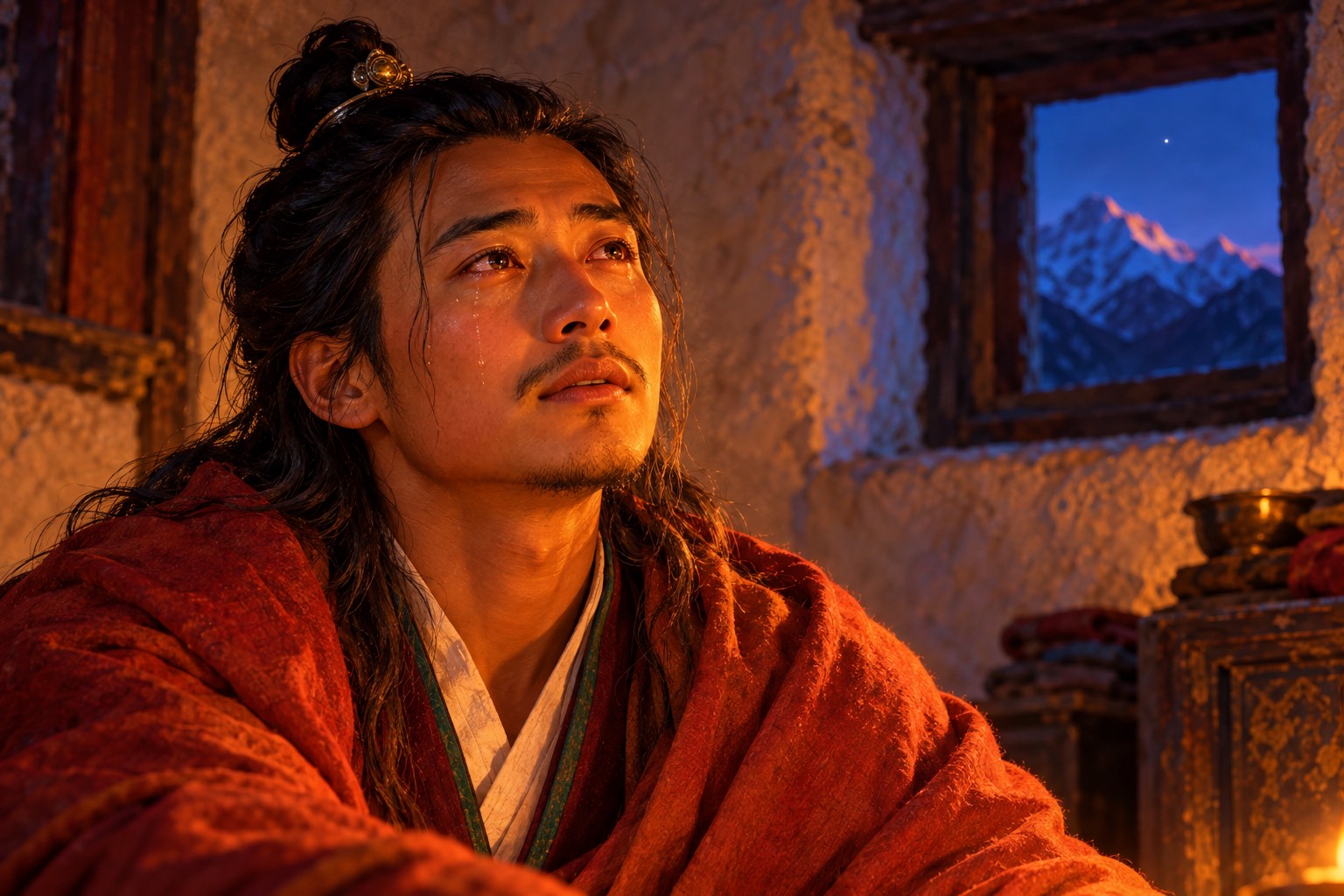
One winter night that year, as Tulku Thondup retells it, he lay down with an overwhelming devotion to Guru Rinpoche. Tears ran down his face because he could not meet him in person, and prayers kept rising with each breath.
In the luminous experience that followed, the traditional account says, he seemed to fly through the sky on a white lion until he reached the circular path around the great stupa of Boudhanath in the Kathmandu valley, which Tibetans call Jarung Khashor. There a wisdom dakini, a female embodiment of enlightened energy, gave him a small casket.

Inside were five rolls of yellow paper and seven crystal beads. His account, as summarised by Treasury of Lives, says the scent of camphor overwhelmed him and that the unfamiliar script suddenly became readable. When he grew eager to tell others, the dakini scolded him and told him to eat the scrolls. He swallowed them whole, and the tradition says every word and its meaning awoke in his mind.

The Nyingma tradition calls such a discovery a gongter, a "mind treasure": a teaching that Guru Rinpoche is believed to have planted in a disciple's mind long ago, to surface at the right time. This one became known as the Longchen Nyingtik, "the Heart-Essence of the Vast Expanse."
Seven years of silence
What he did next surprises many readers: nothing. He did not write the teachings down, and he did not teach them. Treasury of Lives says he kept them secret for seven years, even when those close to him urged him to share.
Around 1759 or 1760 (the sources differ by a year) he began a second three-year retreat, this time at Chimphu, in the upper and lower Nyang caves. Samye, below, is the monastery Guru Rinpoche helped to found, and Chimphu is remembered as a place where he and his disciple Yeshe Tsogyal practised.
There, the accounts say, Longchenpa appeared to him. Longchenpa (1308–1364), whose name means "Vast Expanse," was the great Nyingma scholar and yogi of four centuries earlier, and the cycle Jigme Lingpa carried, the Longchen Nyingtik, is often linked with him, though the Treasury of Lives notes that the "Longchen" in its title need not refer to Longchenpa himself.
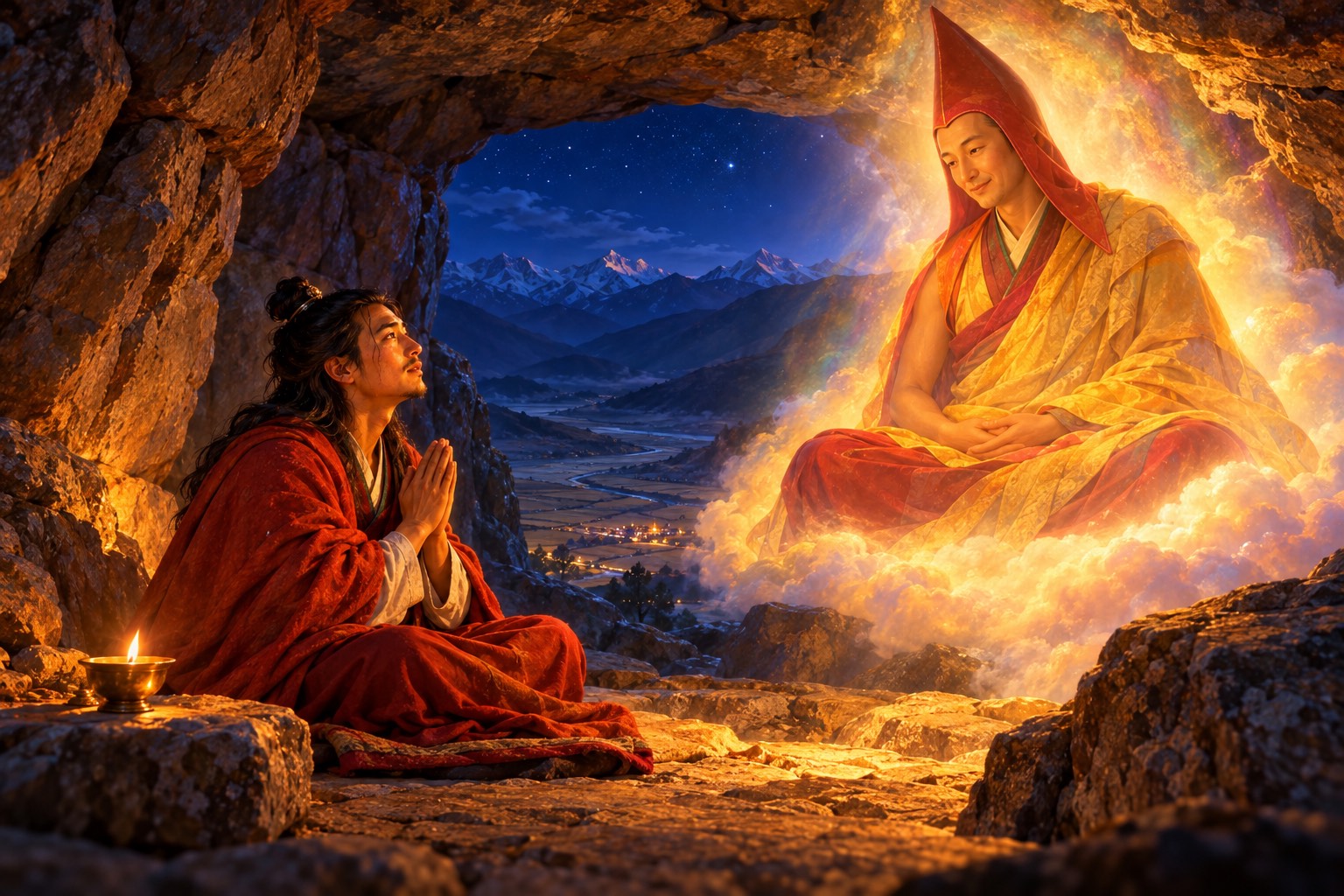
Tradition describes three visions, the blessings of Longchenpa's body, speech and mind. In one, Longchenpa handed him a book and said it held key points left unexpanded in his own writings. Jigme Lingpa took this as permission to write a great work of his own, the Treasury of Precious Qualities. In the last vision, the accounts say, his mind and Longchenpa's became one in the open expanse of awareness, and Longchenpa confirmed his realization.

Encouraged by these visions and, the tradition adds, by repeated requests from the dakinis, he at last wrote the Longchen Nyingtik down.
Opening the door
On the tenth day of the sixth Tibetan month of 1764, he gave the Longchen Nyingtik for the first time, to fifteen disciples. He conferred its empowerments, ceremonies in which a teacher formally introduces students to a practice, together with the instructions for it.
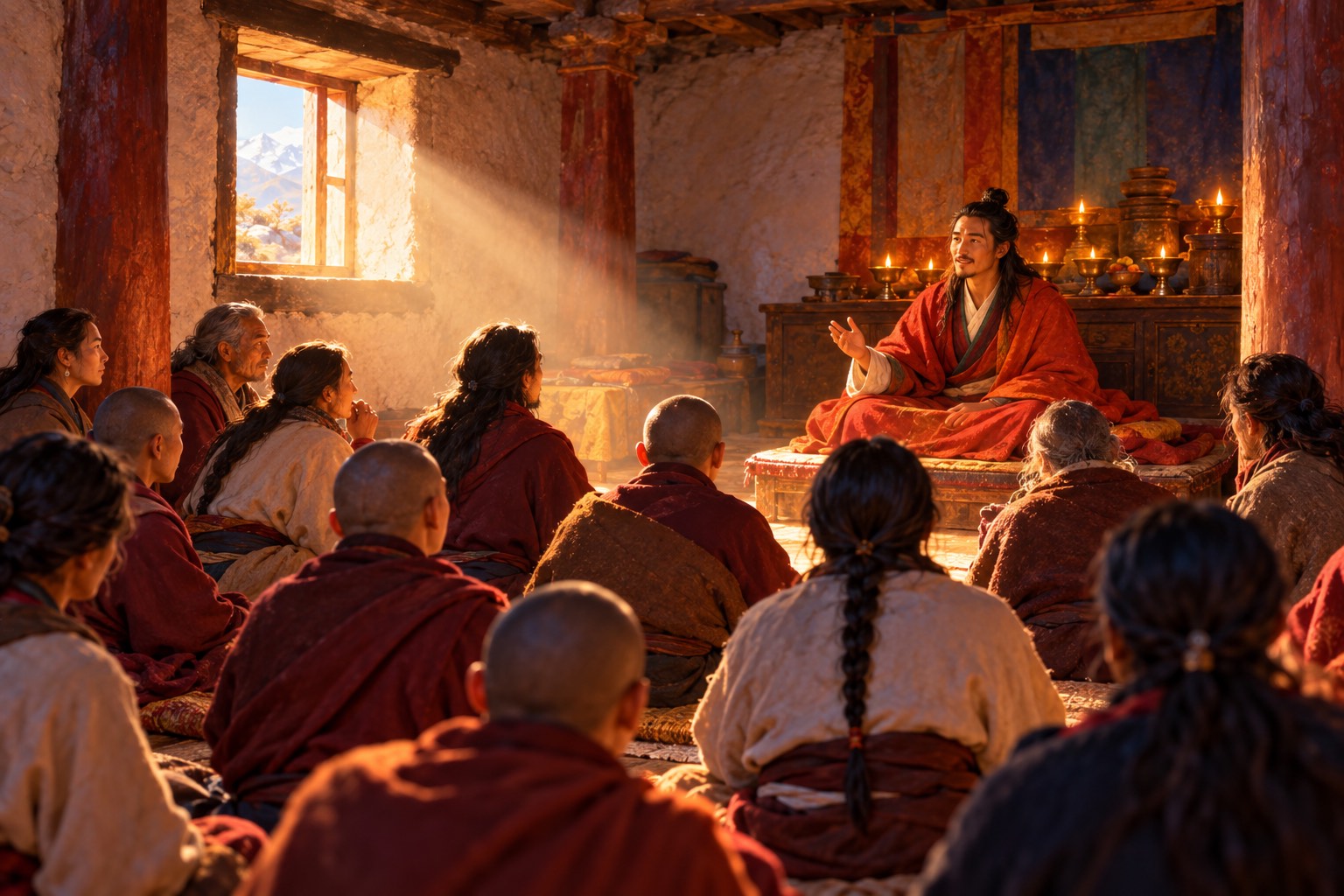
He settled in his home valley at a hermitage called Tsering Jong, "Land of Long Life." Treasury of Lives dates its founding to 1762, while a Rigpa Wiki timeline places his move there in 1765. It was his home for the rest of his life.

He lived there as a lay yogi rather than a fully ordained monk, with long hair tied in a topknot. The community stayed small, but his work did not. From 1771 he gathered and had copied the old Nyingma tantras, a collection called the Nyingma Gyübum, and wrote its history. Between 1779 and 1781 he composed the Treasury of Precious Qualities. He also helped restore old Nyingma temples, Samye among them.
Students from the east
Jigme Lingpa never travelled to Kham, in eastern Tibet, but Kham came to him. His foremost students, remembered as the "Four Jigmes," included Jigme Trinle Özer of Golok (1745–1821), later known as the first Dodrupchen, and Jigme Gyalwe Nyugu of Dzachukha (1765–1843).
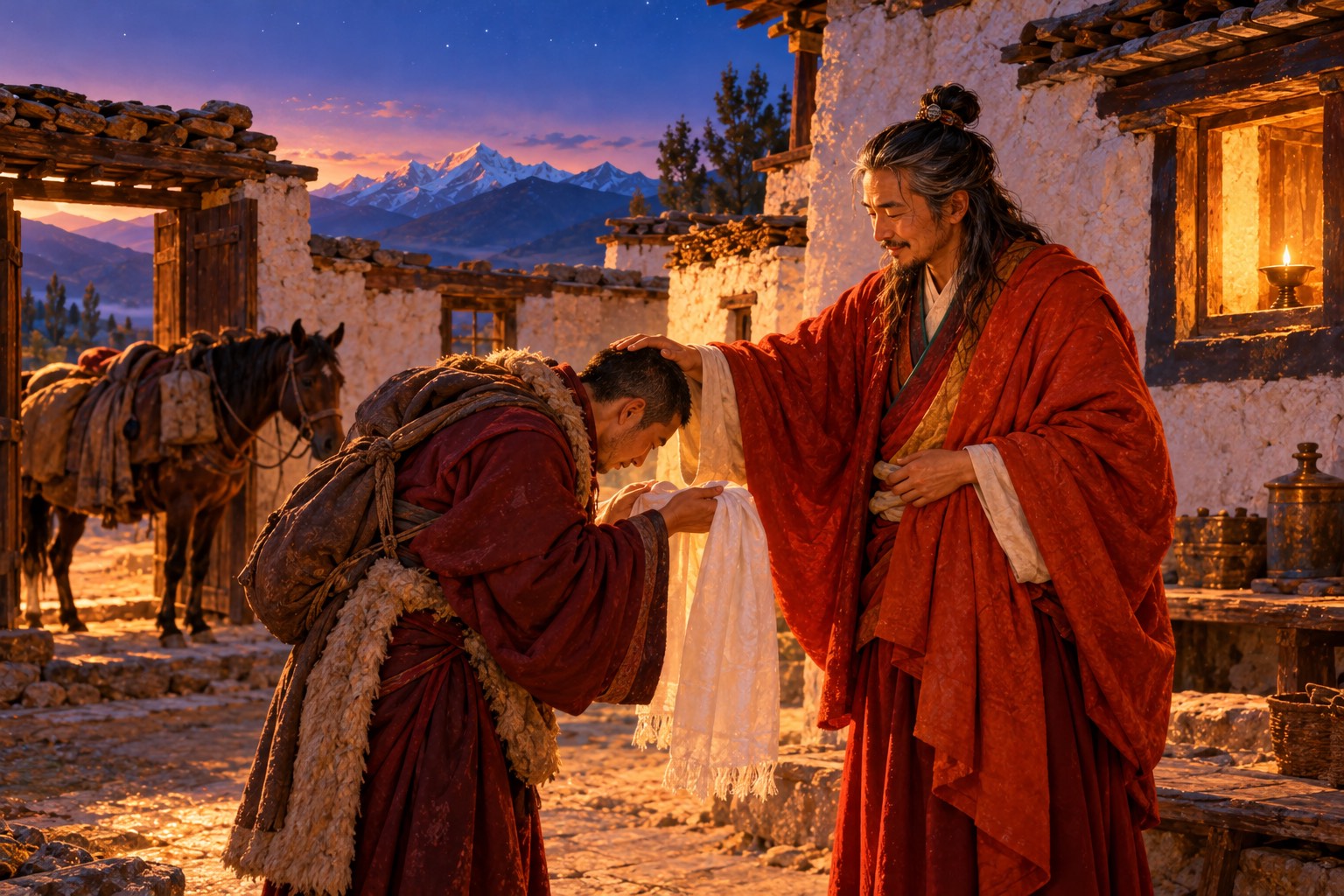
Dodrupchen, whom his teacher regarded as the principal holder of the Longchen Nyingtik, carried it east and taught it widely. Jigme Gyalwe Nyugu spent some twenty years in mountain retreat, then taught its preliminary practices again and again to a young student named Patrul Rinpoche. Patrul wrote those teachings down as The Words of My Perfect Teacher, still one of the best-loved books in Tibetan Buddhism.
In 1788 the king and queen of Derge, a great kingdom of eastern Tibet, came to see him. Treasury of Lives tells that he asked to meet them at Samye, so that his small hermitage would not have to host a royal entourage, and kept the visit short to spare local people its burden. Queen Tsewang Lhamo later sponsored the printing of his edition of the Nyingma tantras.
The link with Derge outlived him. Treasury of Lives notes that the queen raised Dodrupchen to a prominent place at her court, and the Katok scholar Getse Paṇḍita, another of Jigme Lingpa's students, edited his collected writings. Rigpa Wiki records a nine-volume set of them produced in Derge, so his works could be printed and carried across eastern Tibet.

Jigme Lingpa died at Tsering Jong in 1798, at about sixty-nine. Through his students and theirs, the Longchen Nyingtik became one of the most widely practised cycles of the Nyingma school, carried through Tibet and the Himalayan lands and, today, around the world. Tradition counts Patrul Rinpoche and Jamyang Khyentse Wangpo among his later incarnations.
The seven lines at the heart of it
The Longchen Nyingtik's main practice centred on Guru Rinpoche is called the Rigdzin Düpa, "the Gathering of the Awareness-Holders." Near its beginning, Guru Rinpoche is invited with the words of the Seven-Line Prayer, after one added opening line about the very beginning of an age long ago (as translated on Lotsawa House).
So wherever this practice is kept, in retreat huts, monasteries and living rooms, the seven lines are said again and again. The practice itself is something to receive from a qualified teacher; the Find a Teacher page can help. The prayer on its own is open to anyone.

The sixth line of the prayer expresses the wish to follow in Guru Rinpoche's footsteps. Jigme Lingpa's life was a long following: of Guru Rinpoche, whose story set him longing for solitude, and of Longchenpa, who met him in a cave above Samye. A prayer recalling his past lives even counts King Trisong Detsen, Guru Rinpoche's royal patron, and Longchenpa himself among them.
He began as a boy who preferred play to study. What changed him was devotion, and years of quiet practice.
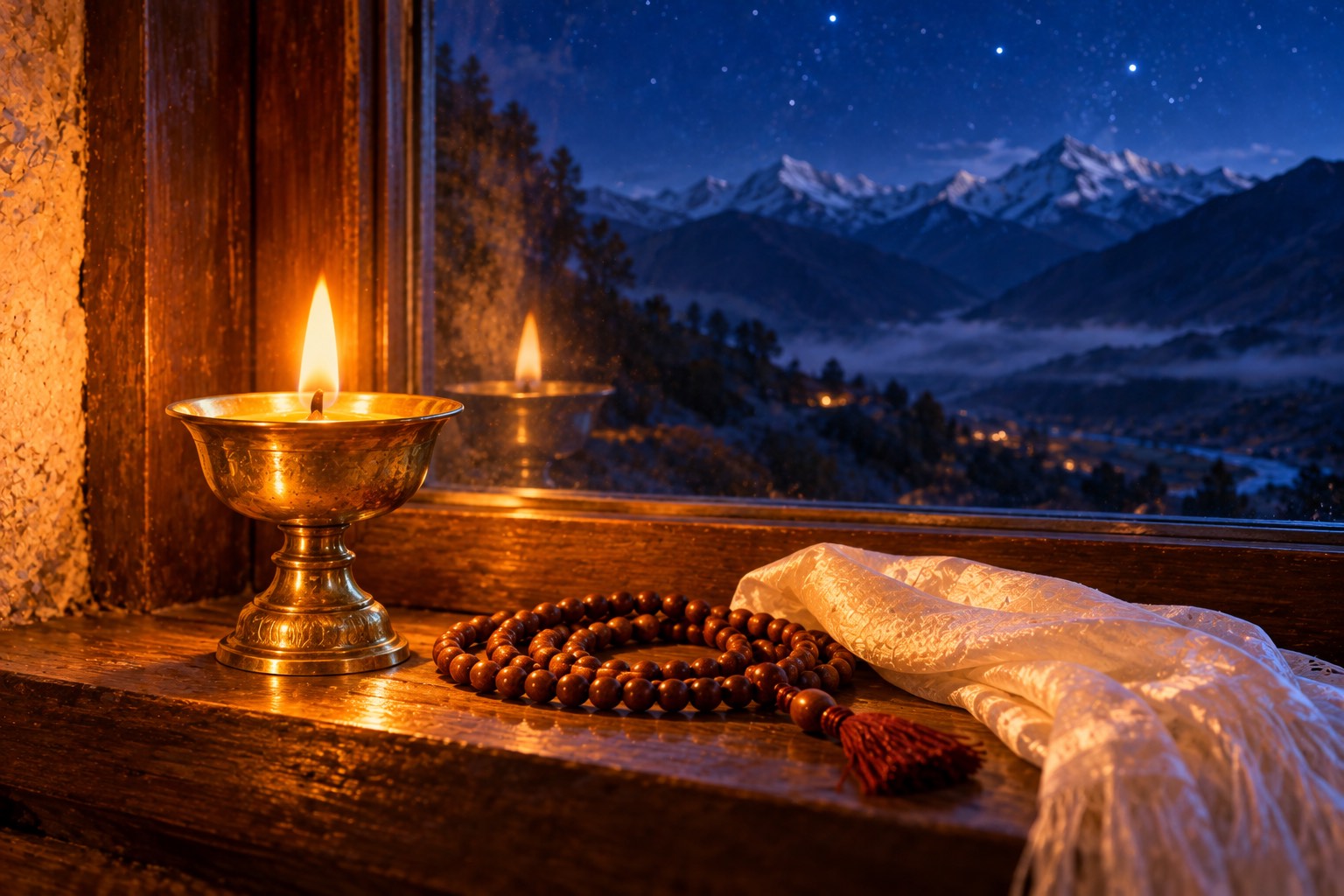
About the art
Jigme Lingpa is shown as his traditional portraits show him: a lay yogi, not a monk, with long hair tied in a topknot, a small beard, and a large red-orange cloak over a white shirt and sash. This follows four portraits on Himalayan Art Resources: an eighteenth-century bronze in the Rubin Museum of Art, a painting, a woodblock print from a Longchen Nyingtik lineage set and a line drawing from Nyingma Icons. None of them shows a hat. As a boy and teenager at Palri he is shown as a novice monk with a shaved head, because he took novice vows there; when he grew his hair long is not recorded in the sources used.
Longchenpa appears as he does in traditional paintings: a monk with a tall pointed red pandita hat and layered red and yellow-gold robes, his hands resting in meditation. The sources used do not say how he looked in Jigme Lingpa's visions, so he is painted in this standard form, softly luminous, to show that he came in a vision.
The vision at Boudhanath is pictured from far above, with the dakini in flowing silks and no wings, and the stupa without its painted eyes or any lettering. The casket holds five yellow scrolls and seven crystal beads, as the account says, with no visible writing. Guru Rinpoche appears once, in his best-known form: lotus hat with a half-vajra and a single vulture feather, a five-pronged vajra at his heart, a skull cup with a long-life vase in his lap and a slender khatvanga at his left shoulder, within a sphere of five-coloured light. That image pictures the invitation made with the Seven-Line Prayer, not a recorded event.
Palri, Tsering Jong and the eighteenth-century Chimphu caves are drawn from written descriptions rather than old pictures, so their buildings are careful reconstructions, not records. Faded prayer flags appear in the eighteenth-century valley scenes, where they are in period; Samye is shown far off, as it might have stood after its later rebuildings.
Why this matters for practice
The sixth line of the Seven-Line Prayer is the wish to follow in Guru Rinpoche's footsteps, and Jigme Lingpa's whole life was a following, of Guru Rinpoche and of Longchenpa. The great practice he revealed calls on Guru Rinpoche with the very words of the Seven-Line Prayer, so anyone who recites it joins a voice heard daily wherever the Longchen Nyingtik is kept. His story also shows that devotion can begin anywhere, even in a boy who preferred play to study.

If something in this story moved you, you might pause tonight and recite the prayer once, in the same seven lines with which the Longchen Nyingtik still calls on Guru Rinpoche.
Sources and further reading
- Jigme Lingpa, by Alexander Gardner (2010), Treasury of Lives (Internet Archive snapshot, 2014)
- Tseringjong (institution page), Treasury of Lives (Internet Archive snapshot, 2024)
- Jikme Lingpa, Rigpa Wiki (Internet Archive snapshot, 2024)
- Jikme Lingpa Timeline and Tsering Jong, Rigpa Wiki (Internet Archive snapshots, 2024)
- Rigdzin Jigme Lingpa Series (author page), Lotsawa House
- Adornment of Dohā: verse autobiography, translated by Han Kop (2023), Lotsawa House
- The Vidyādhara Assembly (Rigdzin Düpa), translated by Han Kop and Adam Pearcey (2020), Lotsawa House
- Prayer to Rigdzin Jigme Lingpa Invoking His Previous Incarnations, translated by Gyurme Avertin (2017), Lotsawa House
- The Great Perfection: Directly Seeing the Natural State, Lotsawa House
- The History (of the Longchen Nyingtik), Longchen Nyingtik Project
- Teacher: Jigme Lingpa (set 705), with items 65159, 66260, 77055 and 80185, Himalayan Art Resources
- Teacher: Longchen Drime Ozer Page (set 309), with items 631 and 64042, Himalayan Art Resources
- Apparitions of the Self: The Secret Autobiographies of a Tibetan Visionary, by Janet Gyatso (Princeton, 1998), Book
- Masters of Meditation and Miracles, by Tulku Thondup (Shambhala, 1996), Book
This retelling is waiting to be read by a knowledgeable practitioner. Where the traditional accounts differ, the story says so; if you notice a mistake, please tell us through Share Your Story.