The boy from the lotus
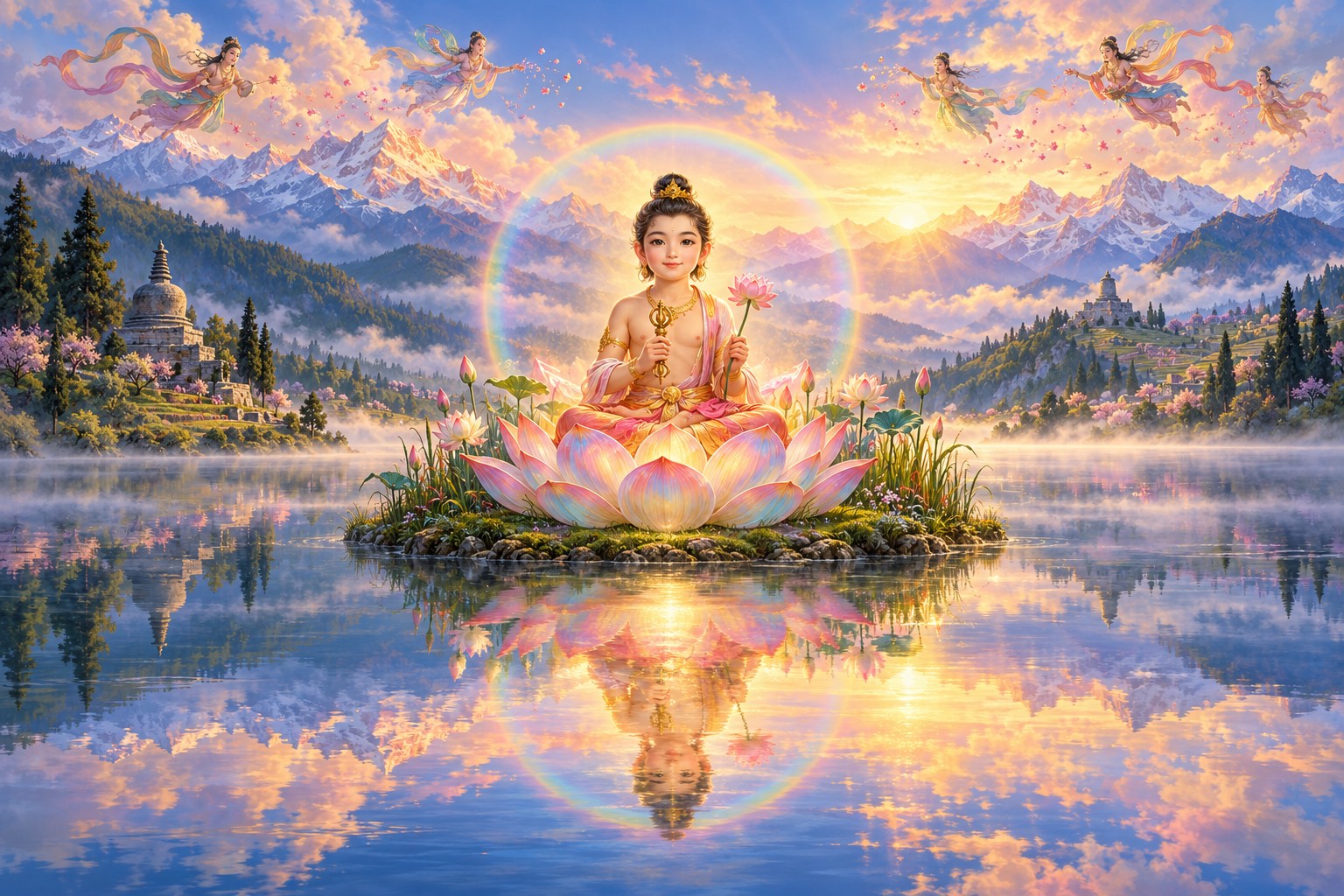
The first story on this site told how, according to the tradition, a child was found sitting on a lotus in a lake in Oddiyana, a kingdom the accounts place in the far northwest of ancient India. This story picks up where that one ended.
Oddiyana's king, Indrabhuti, had no son. The life stories say he had given so much to the poor that his treasury stood empty, and that he sailed out to find a wish-fulfilling jewel. On the way home he met the lotus child, marveled at him, and brought him back to the palace as his own.
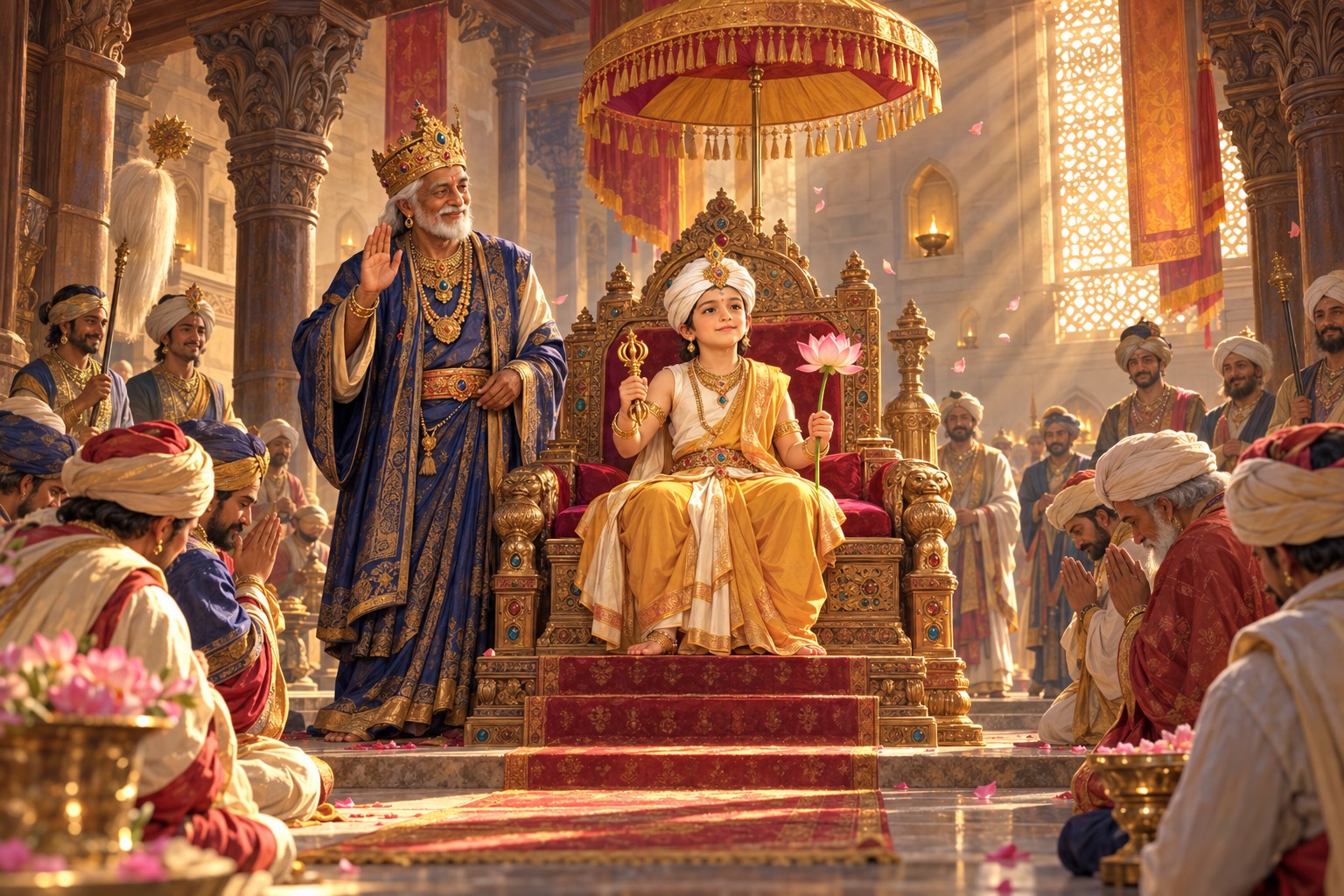
There the boy was seated on a jeweled throne and made crown prince. He was called Padmakara, “Lotus-Born,” and Tsokye Dorje, “Lake-Born Vajra.” A vajra is the small ritual scepter of Tibetan Buddhism, a sign of what cannot be broken.
The oldest full life story, the Zangling Ma (known in English as The Lotus-Born), remembers his arrival as a time of plenty. It says the empty treasury filled again, and that food and clothing came down like rain for anyone in need.
A prince, then a king
The prince grew up in the palace. Tradition says that even his games and his play turned the people around him toward kindness.
When he was grown, he married. Most accounts name his bride Prabhavati, “She Who Holds Light.” English books also give her name as Bhasadhara or Prabhadhara, different Sanskrit renderings of the same Tibetan name. One summary calls her Prabhadharani, a king's daughter.
Several accounts call her a dakini. In Tibetan Buddhism a dakini is a woman who embodies wisdom, often pictured moving freely through the sky. The Pema Kathang, a fourteenth-century life story, says he married to fit in with the ways of the world.
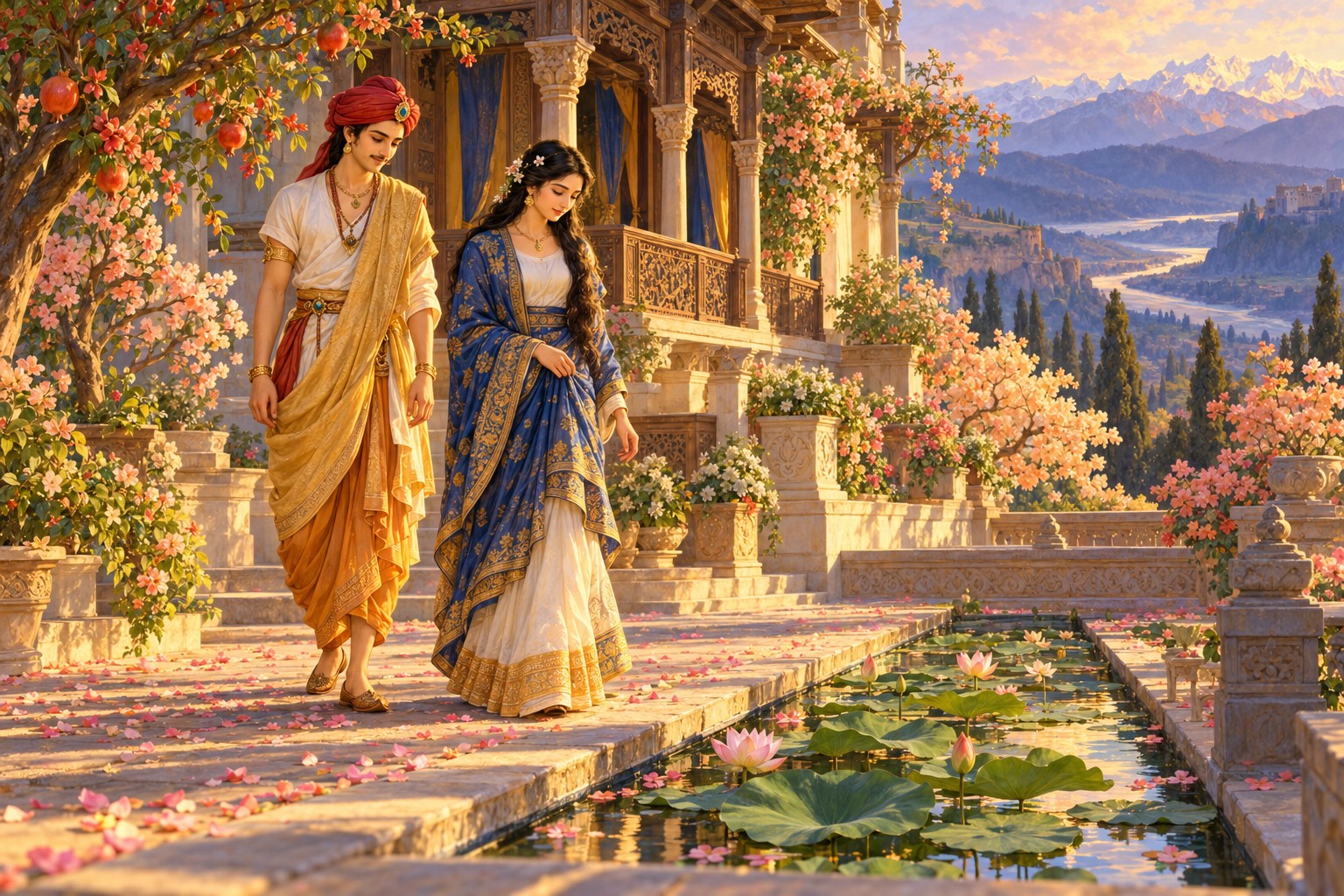
Later summaries say he went on to rule Oddiyana according to the Dharma, the Buddha's teaching, and that people called him the Turbaned King. In their telling, the land was peaceful and the people content.
The wish to leave
Yet the accounts agree that the palace could not hold him. However well he ruled, he saw that a king's duties would keep him from helping beings in the deeper way he had come to help them.
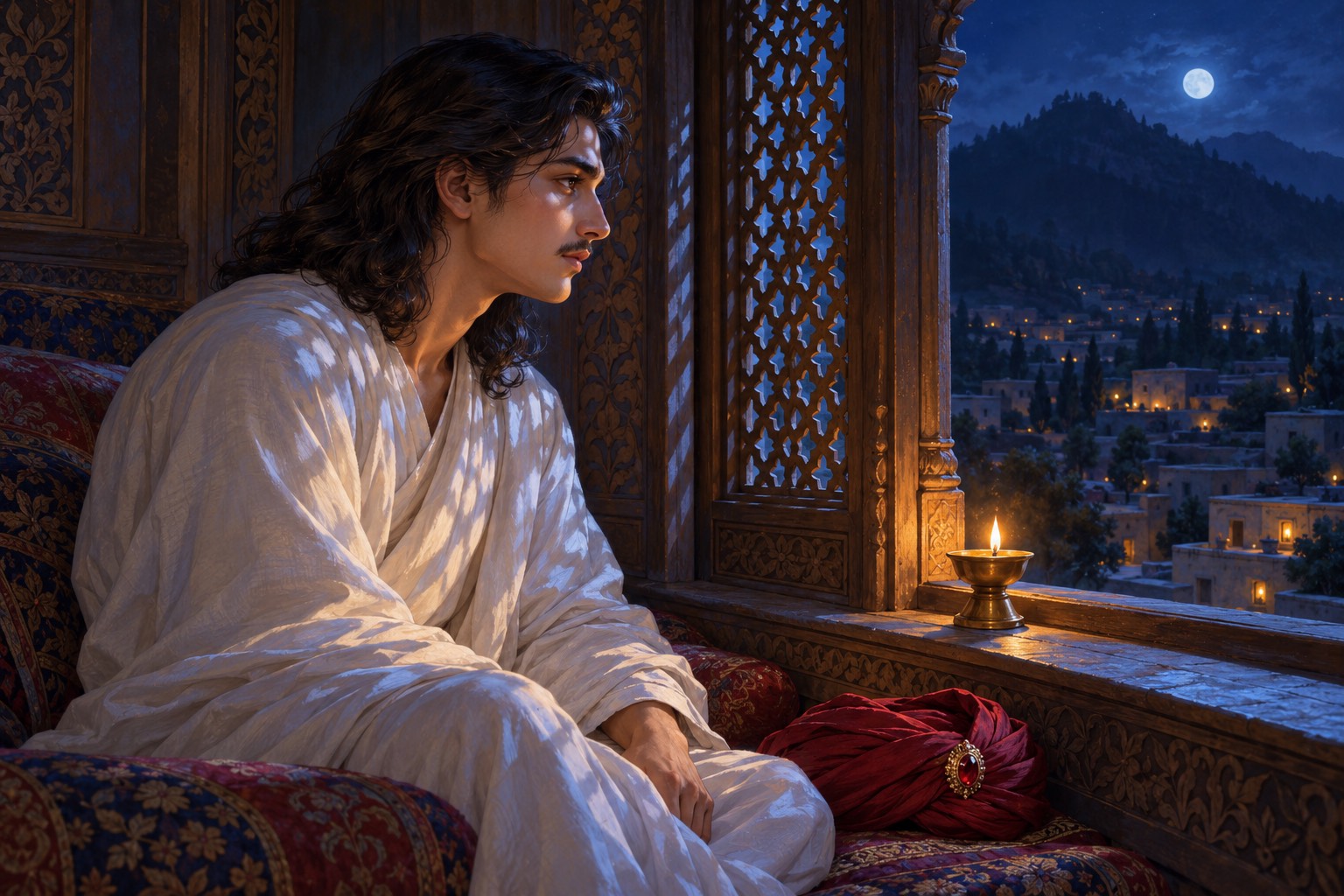
The great nineteenth-century scholar Jamgön Kongtrul, summarizing the old stories, says the prince asked his father for permission to give up the throne. The king refused.
It is not hard to understand why. Indrabhuti had waited his whole life for a son. He had found one on a lotus in the middle of a lake. He was not ready to let him go.
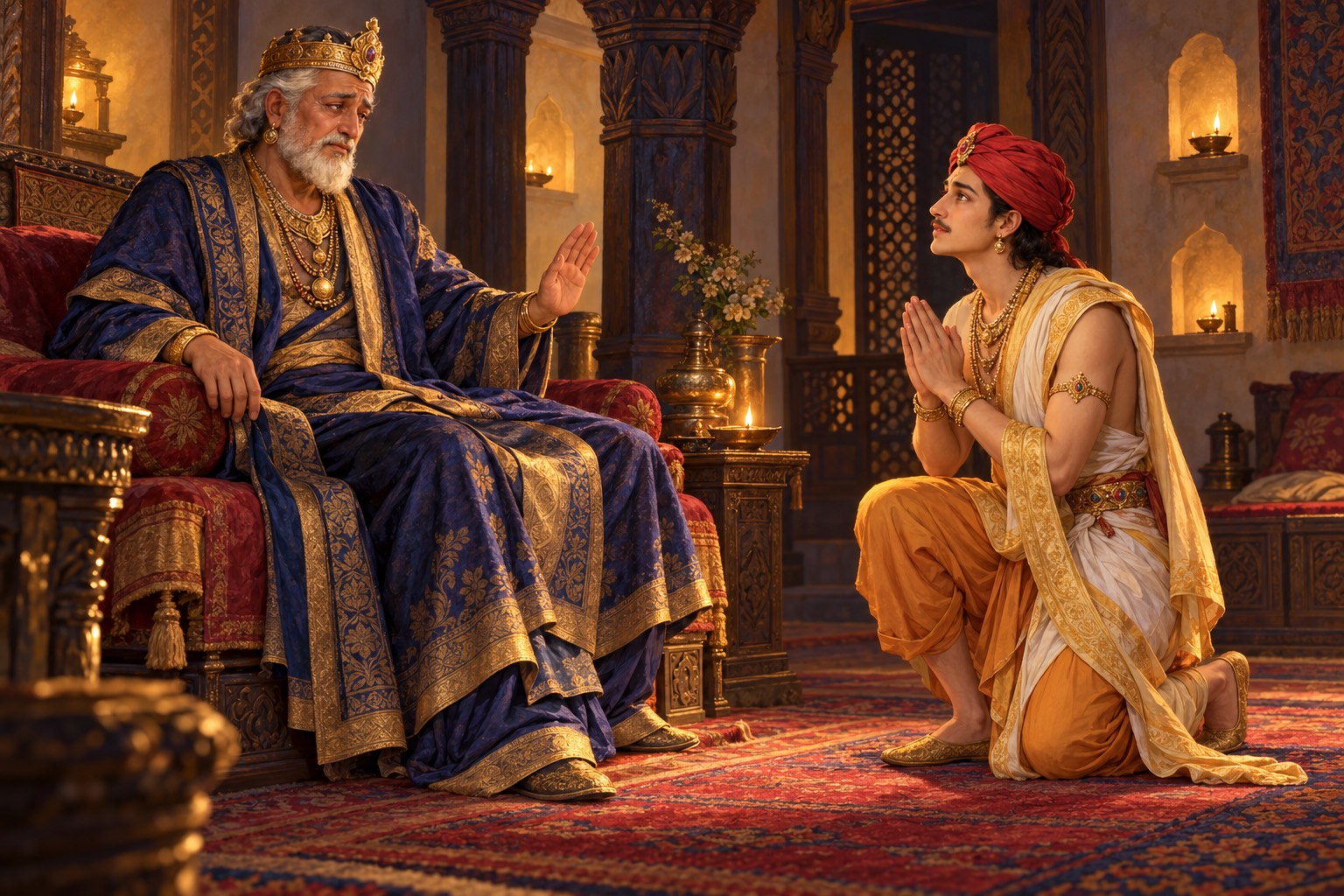
The Pema Kathang frames what followed as foretold. It says a buddha had prophesied that the prince would set the kingdom aside and take up the life of a yogi, someone who gives everything to meditation, and that he brought about his own exile to make that possible.
The day on the palace roof
Here the story turns grave, and the tellings differ, so it is worth going slowly.
According to The Lotus-Born, the prince began to act in ways meant to loosen the king's and the ministers' attachment to him. He set aside his royal clothes and wore ornaments of carved bone. He danced on the palace roof with a small hand drum, a damaru, and a yogi's staff called a khatvanga. Crowds gathered to watch.
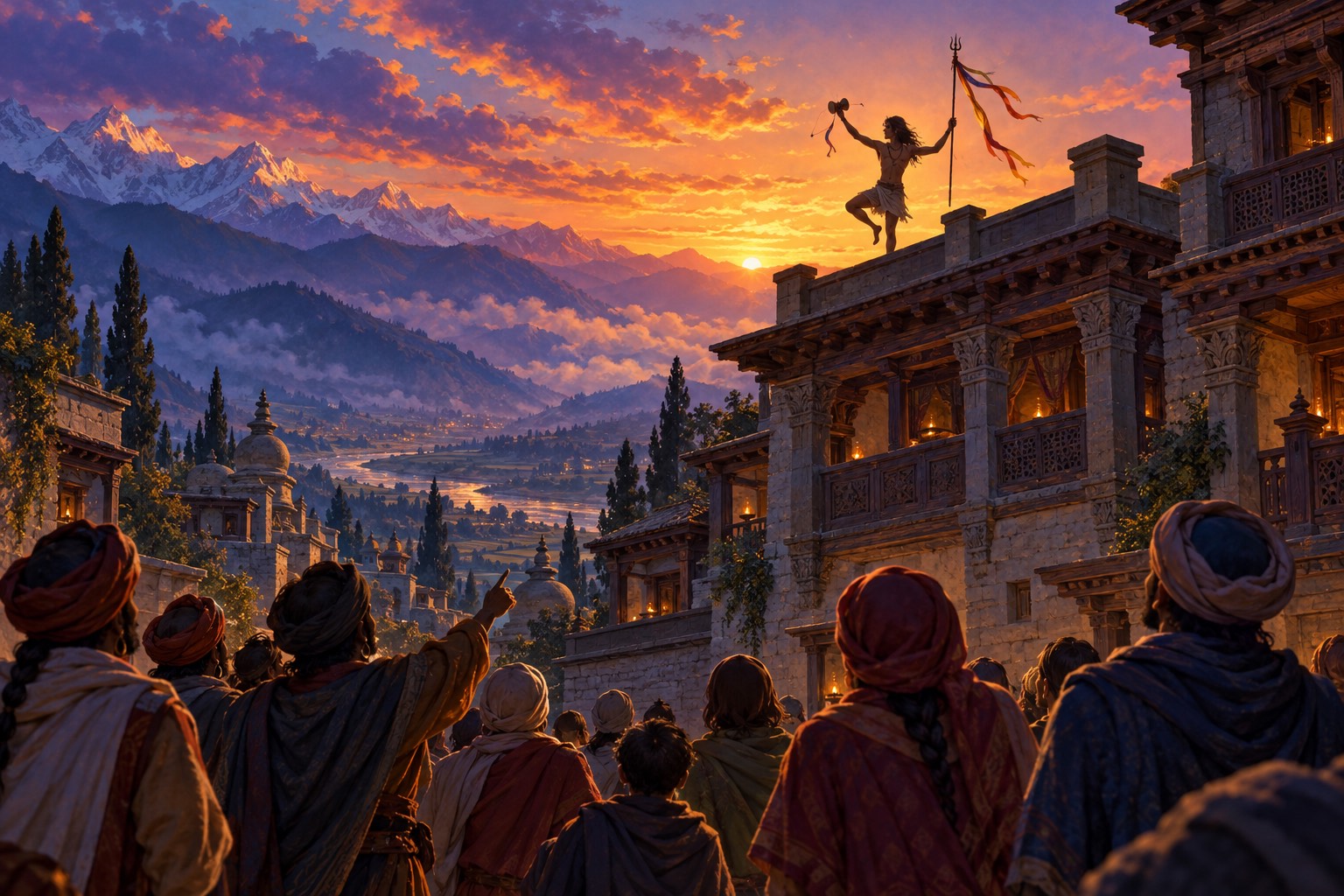
One day, that account says, the staff slipped from his hand. It struck the son of an important minister, and the boy died.
The accounts explain this through karma, the teaching that actions carry results across lifetimes. In Kongtrul's version the prince saw that the boy's life was already at its end and that he was headed for a painful rebirth, and the act freed him into a pure realm instead.
The tellings do not agree on everything. Some describe a slip, some say the prince let it fall on purpose, and one summary says he made the act look like an accident. An introduction to The Lotus-Born also mentions a version in which he was born as an ordinary prince and could only leave the palace by committing a crime and accepting banishment.
The tradition tells this as the act of an awakened being and does not hold it up as an example to follow. Teachers explain it in their own ways, and it is a fair thing to ask one about.
Exile
The law of the kingdom was strict. The Lotus-Born says the ministers demanded the harshest punishment, but the king could not bring himself to order it. He sentenced his son to exile instead, and grieved.
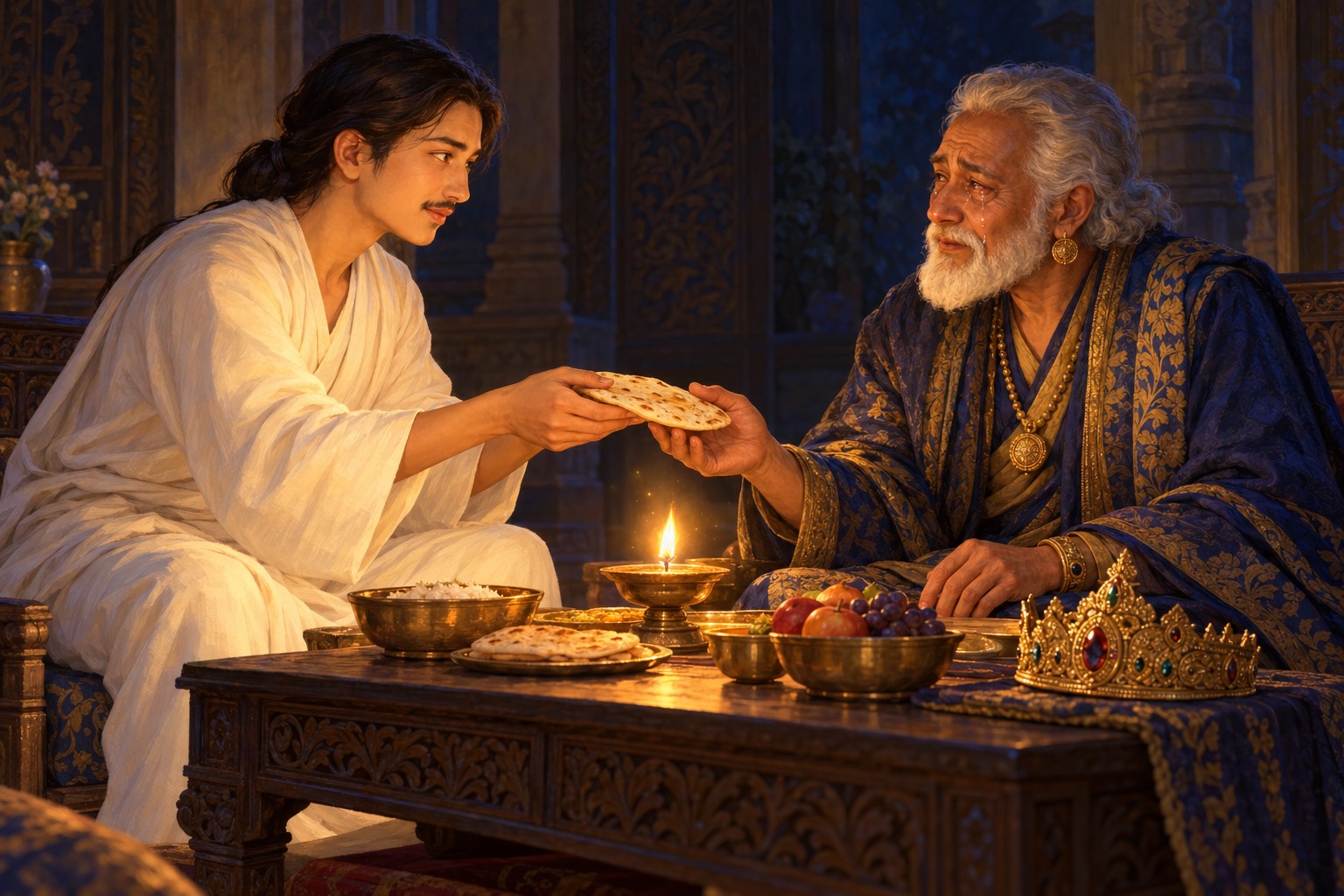
Before the prince left, Indrabhuti shared a last meal with him, and both of them wept. The prince offered his father the best of the food and thanked him for raising him. He said he was not afraid, because, in Erik Pema Kunsang's translation, “mind knows neither birth nor death.” He promised they would meet again.
Then the ministers led him out of the city, away from everything he had known.
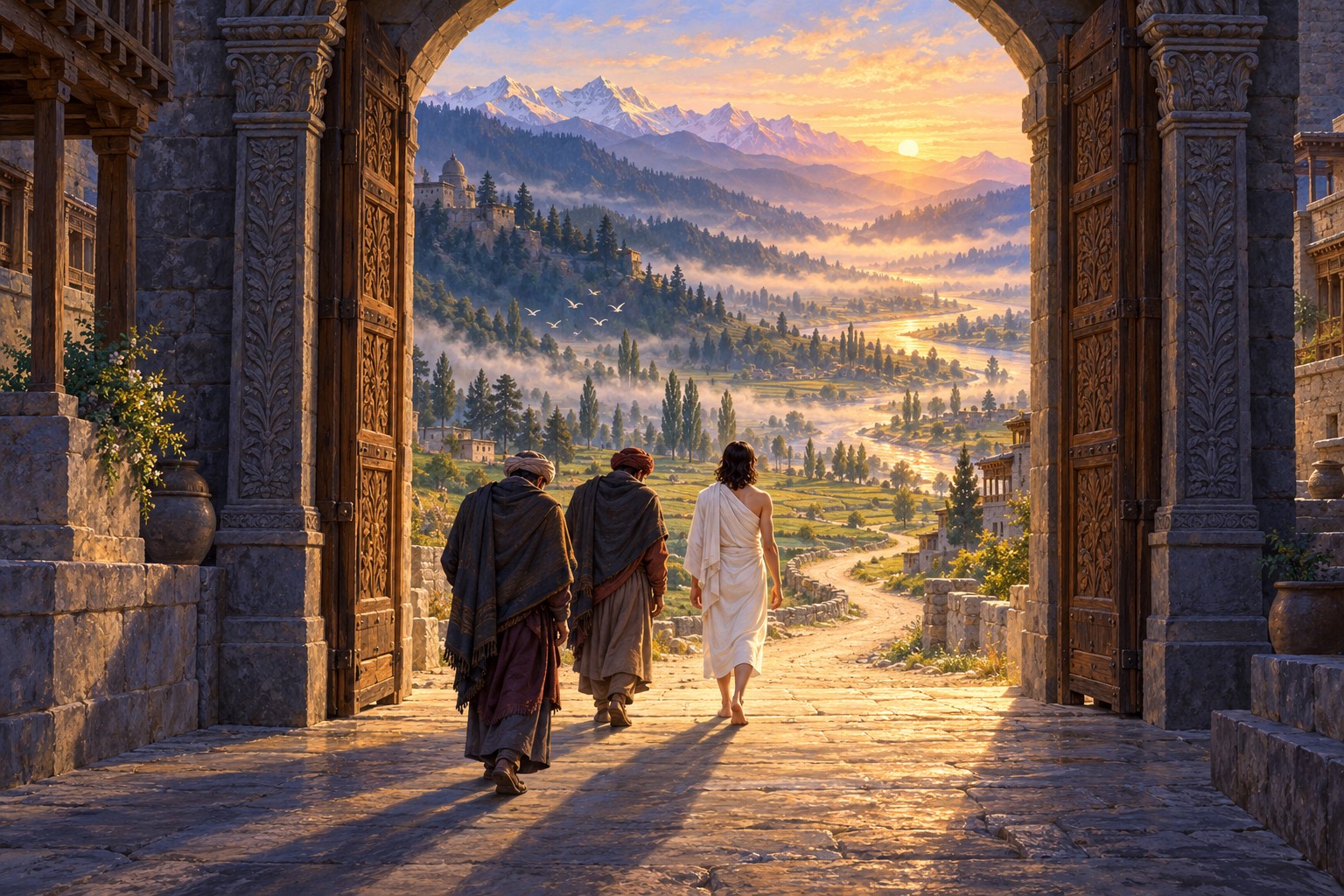
The Cool Grove
They brought him to a great cremation ground called Sitavana, the Cool Grove. The Lotus-Born places it east of Oddiyana. Other accounts place it in Magadha, near Bodh Gaya, where the Buddha awakened. The sources simply differ.
In ancient India, a cremation ground (also called a charnel ground) was where the dead were burned or laid to rest under the open sky. Most people kept away. Yogis went there on purpose, because nothing there hid the plain fact of death, and impermanence, the truth that everything changes and passes, could be looked at directly.
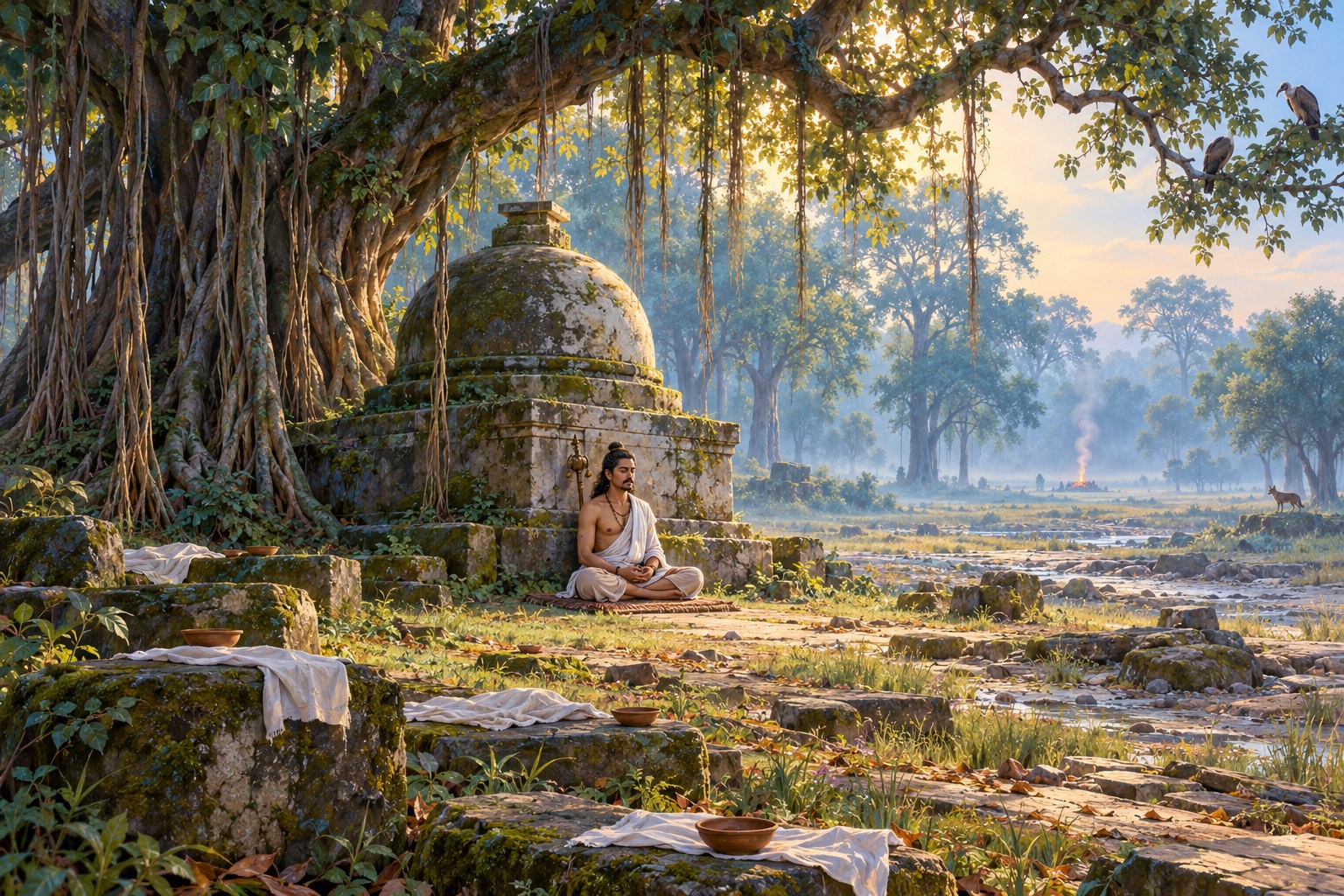
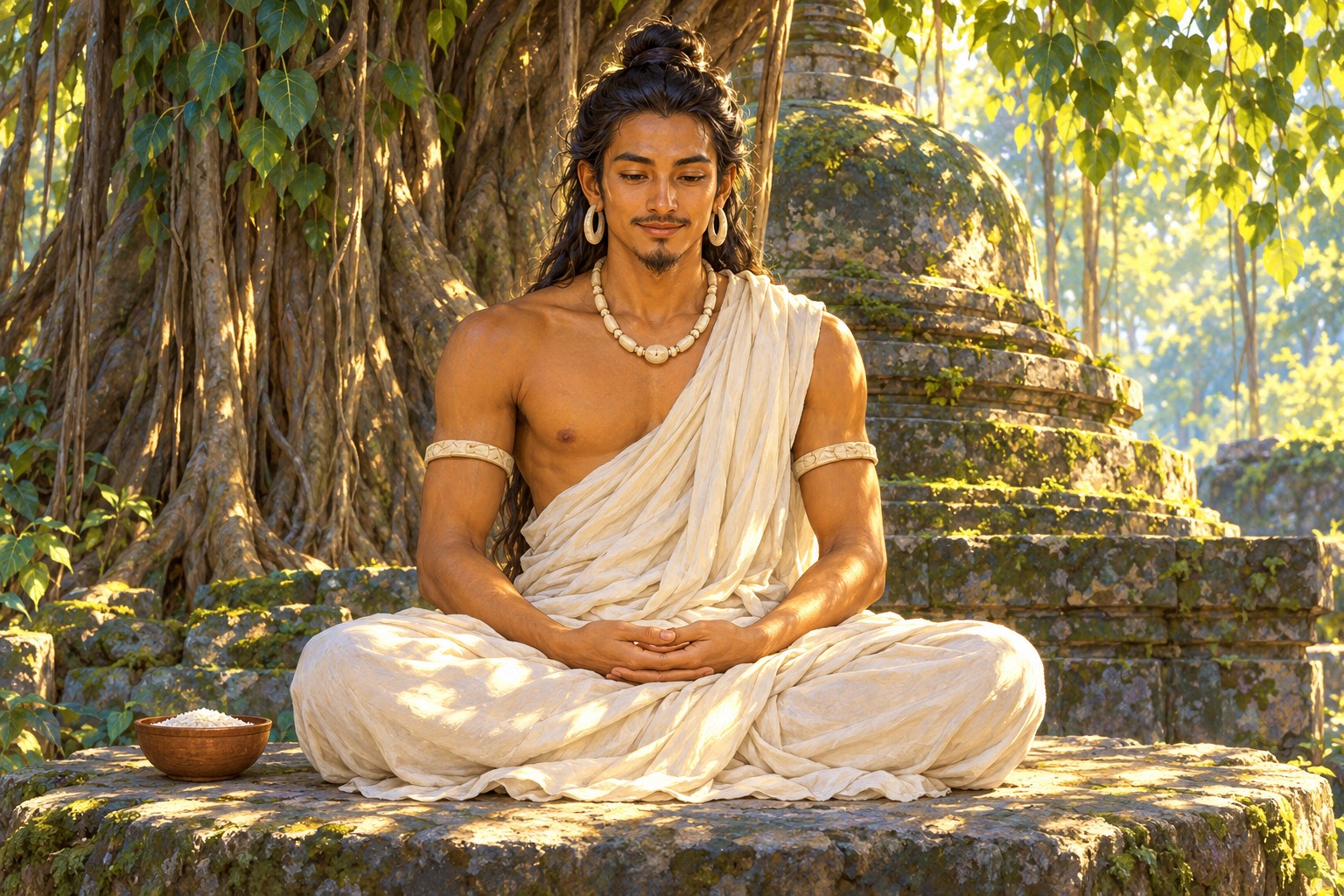
The Lotus-Born says the dead were brought there wrapped in cotton cloth, with a little rice beside them. The prince wore that cloth and ate that rice. He had once sat on a jeweled throne. Now he had nothing of his own.
And he was, the account says, at peace. It describes him resting in a meditation so steady that nothing could shake it, and staying there in great happiness.
A seventeenth-century master, Tsele Natsok Rangdrol, read the old Zangling Ma closely. He wrote that it gives about five years in the palace and five in the Cool Grove.
The dakinis
In these stories the cremation grounds also belong to the dakinis. In time, the accounts say, Padmakara moved between several of them: the Cool Grove, the Joyful Grove, and a place called Sosadvipa.
There, tradition says, wisdom dakinis appeared to him and gave him blessings and empowerments. Kongtrul names two of them as Tamer of Mara and Preserver of Peace. (Mara is the Buddhist name for everything that gets in the way of awakening.) The Lotus-Born places them at different grounds, and the names vary slightly in translation.
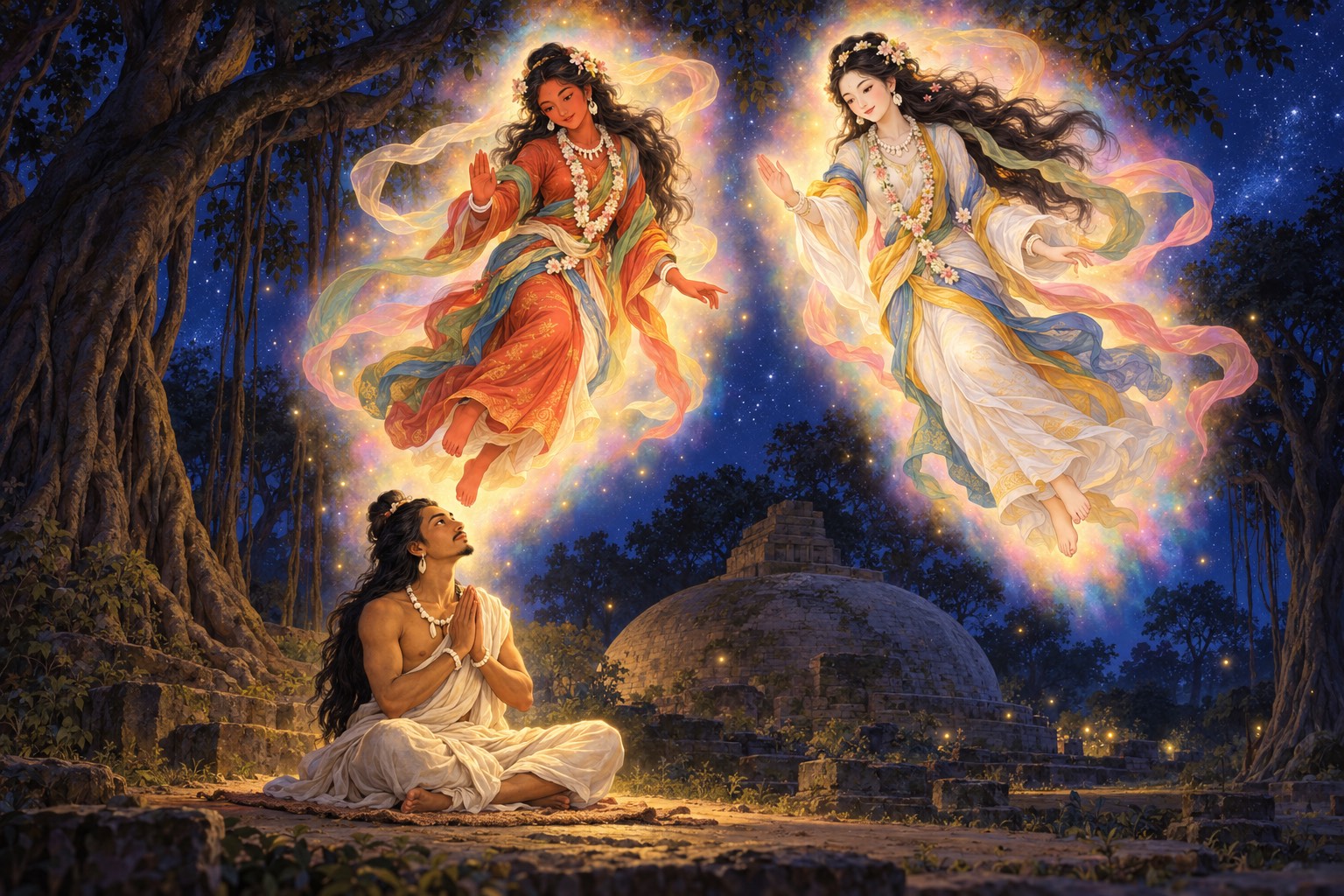
What passed between them belongs to the tantric teachings, which are received from a qualified teacher and not from a page like this. What the stories want us to see is simpler: the exile became a doorway.
Kongtrul adds that he was then known by a name meaning Preserver of Peace. That is Shantarakshita in Sanskrit, the same name as a great abbot who came to Tibet many years later. They are two different figures.
Back to the lake
The life stories say that afterward he went back to the island in Lake Dhanakosha, where he had first appeared on the lotus, and that the dakinis there blessed him too. From there his road led on into India, to the teachers he would seek and the princess he would meet. That is the next story.

What the story keeps
The third line of the Seven-Line Prayer says he attained a wondrous, supreme accomplishment. As the tradition tells it, this is where that accomplishment begins: with a prince who had everything, who went to the place everyone else feared, and found peace there.
Whatever you make of the wonders, the shape of the story is one many people know from their own lives. We leave what is comfortable. We face what we would rather not see. Sometimes we find the mind can be steady even there.
About the art
The prince is shown in the dress of a northwestern Indian ruler of the eighth century: a wrapped silk turban, layered silks and gold armlets. Later summaries remember him as the “Turbaned King.” Paintings of his life often show him in this period as Pema Gyalpo, the Lotus King, one of Guru Rinpoche's Eight Manifestations, who holds a small drum and a mirror. We have kept him simpler here.
The vajra the child holds is a small scepter with five prongs. It stands for what cannot be broken. The damaru is a two-headed hand drum. The khatvanga is a yogi's staff; The Lotus-Born describes it as three-pronged, and in later portraits of Guru Rinpoche the same staff rests in the crook of his left arm. On this page it appears only as a small silhouette.
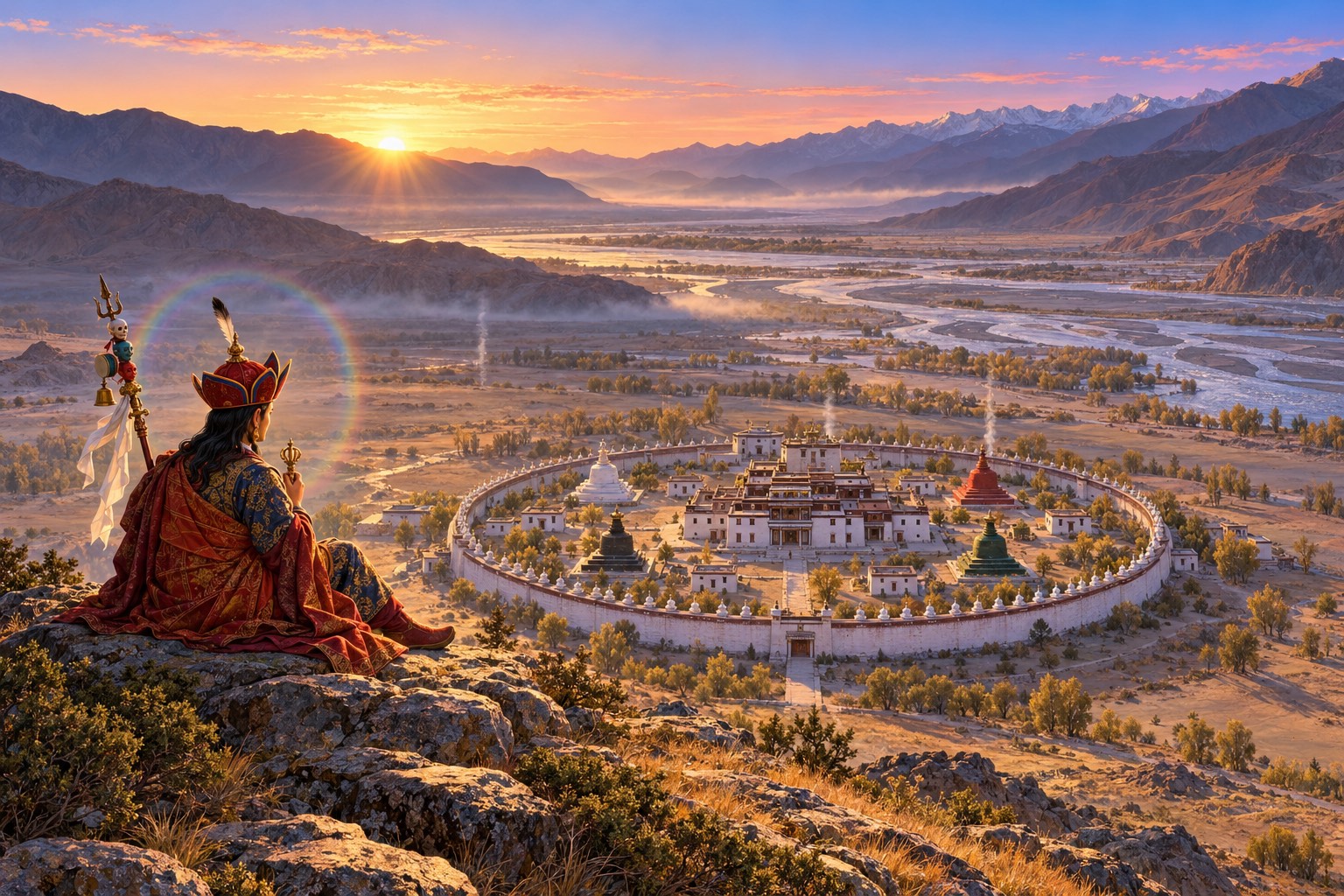
In the cremation ground the yogi wears plain cotton cloth, the cloth left with the dead, and ornaments of carved bone. In Indian and Tibetan art these mark a yogi who has let go of status and keeps impermanence in view. A Himalayan Art Resources painting shows him at the Cool Grove seated with his back to a stupa, a domed Buddhist monument; our images follow that detail.
The dakinis are shown as luminous women moving in the air, with silk scarves and simple ornaments. In traditional art they often carry ritual implements, which we have left out here.
Why this matters for practice
The third line of the Seven-Line Prayer honors Guru Rinpoche's wondrous, supreme accomplishment, and this is the story of where the tradition says that accomplishment began: in a prince's choice to leave comfort behind and sit where impermanence could not be ignored. Reciting the prayer, practitioners often remember that his courage was born in such places. Even one recitation can be a small turning toward what matters.

If something in this story stayed with you, you might pause and recite the prayer once, slowly, before you sleep.
Sources and further reading
- The Lotus-Born: The Life Story of Padmasambhava (Nyangral Nyima Özer's Zangling Ma, attributed to Yeshe Tsogyal), tr. Erik Pema Kunsang, Rangjung Yeshe Publications / Shambhala (print)
- Life and Liberation of Padmākara, by Jamgön Kongtrul, Lotsawa House
- A Beautiful and Wondrous Uḍumbara Garland (verse summary of the Pema Kathang), by Jamyang Khyentse Wangpo, Lotsawa House
- Orgyen Padma's Enlightened Deeds, by Orgyen Lingpa, Lotsawa House
- The Wish-Fulfilling Tree, by Chokgyur Dechen Lingpa, Lotsawa House
- Padmasambhava, Rigpa Wiki (archived)
- Padmasambhava life-story painting (item 36503), Himalayan Art Resources
- Padmasambhava life-story painting (item 90161), Himalayan Art Resources
- Padmasambhava and the Eight Manifestations (exhibition essay), Huntington Archive, Ohio State University
- The Story of Padmasambhava, Part 1 (from Oasis of Liberation, Ngagyur Nyingma Institute), muktinath.org
- Padmasambhava, Wikipedia
This retelling is waiting to be read by a knowledgeable practitioner. Where the traditional accounts differ, the story says so; if you notice a mistake, please tell us through Share Your Story.